Don't Bolt Solar Onto a Roof That's Running Out of Time
Your electric bill keeps climbing, but panels on a worn-out roof just mean paying twice when it needs replacing. We look at your roof first and tell you straight what it needs. If it’s ready, we design and install your system. One team, one plan, nobody pointing fingers.
4.9 on Google
Based on 77 reviews
GAF Master Elite
Roofing contractor
Free Estimates
Serving Nassau County
If you are comparing solar companies in Nassau County, NY, start with what you are dealing with today. Pick the line that sounds like you, and we will show you how we handle it.
“I want solar panels on my house.”
We inspect your roof, size your solar power system to the way you use energy, and handle your solar panel installation in Nassau County from design to activation. The estimate reflects the roof too, so your solar panel cost is not a guess.
“My panels are not producing like they used to.”
We trace the fault, whether it is a panel, an inverter, wiring, or a leak around the mounts, and fix it so your system stops losing energy.
“I just want to know my system is working.”
A routine check catches problems early, before small issues turn into lost production. We look at the panels, the wiring, and the roof underneath them.
“My system is old and I am not sure it is worth keeping.”
When repairs stop making sense, we replace outdated or damaged panels with equipment matched to your roof and your usage, so your home solar panels keep earning their place.
“My roof needs work, but I already have panels on it.”
We take the panels off, your roof gets the work it needs, and we put the system back on. One team on both jobs means the roofer and the solar crew are never working against each other.
Not sure which one fits? As solar installers who also do roofing, we will tell you straight what your roof and your system need. If you want a solar contractor in Nassau County who looks at the whole picture, start with a free estimate.
A pitched roof on a house and a flat roof on a building need two different plans. Pick the one that matches your property.
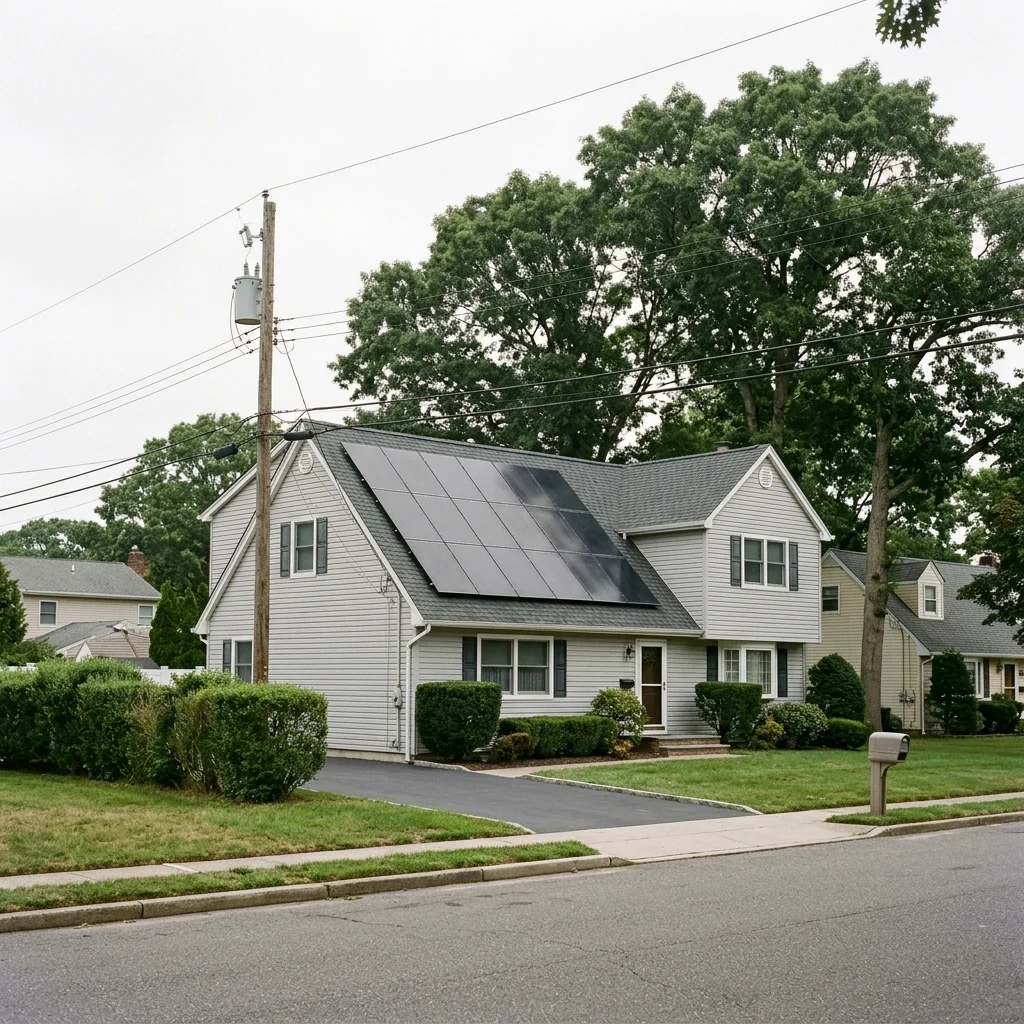
Residential solar in Nassau County starts with the roof over your head. A home solar system has to sit on a roof that lasts as long as the panels do, so we check it first, then size your system around how your household actually uses power. If the roof needs work, we plan that together with the solar, so you deal with one team.
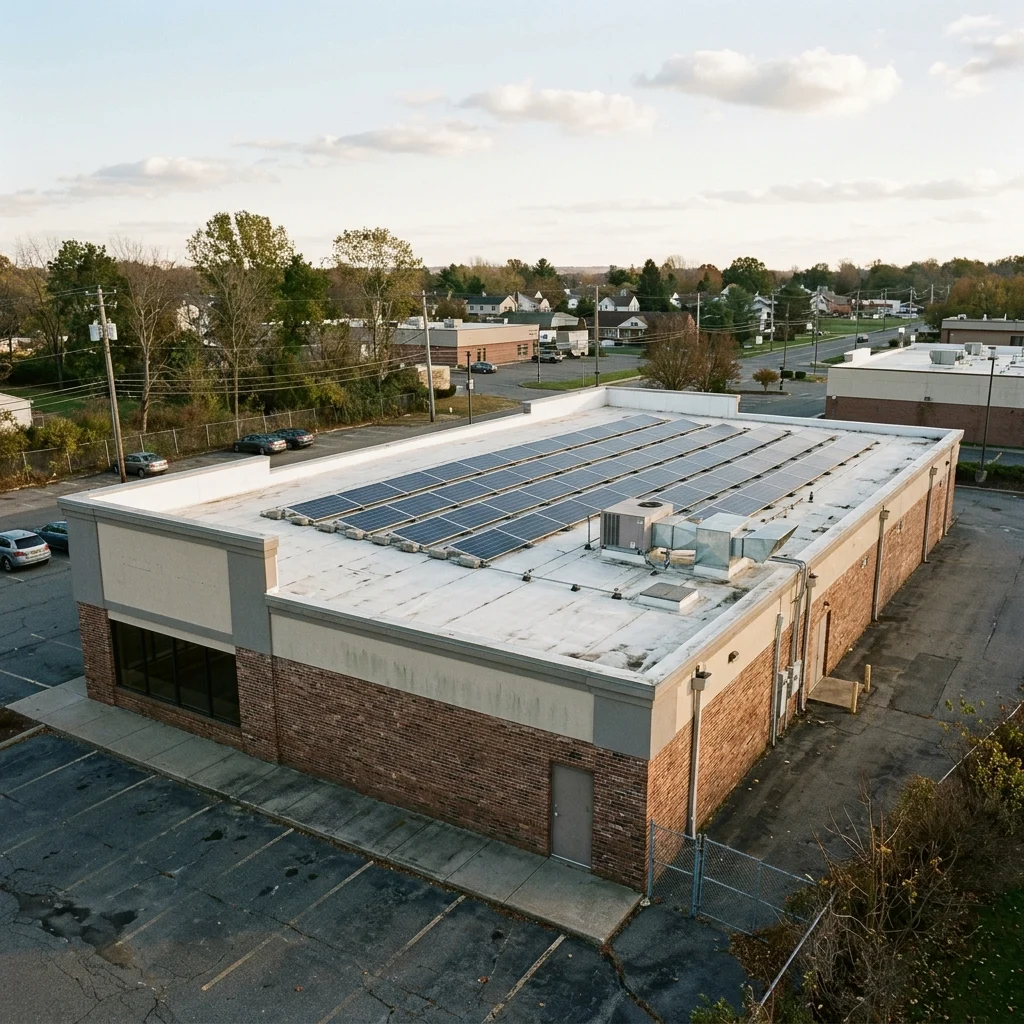
Commercial solar in Nassau County is a different job. Flat and low slope roofs need close attention to drainage, waterproofing, and how much weight the roof can carry before a single panel goes up. We look at the roof, your power demand, and how your building runs day to day, then design a commercial solar system that fits around your operations. If the roof needs work first, see our flat roofing service.
Permit offices, electric utilities, and site conditions are not the same on every street. Here is what we look at for your address before we design your system.
Nassau County is made up of towns, cities, and villages, and the building department that reviews a solar project depends on where your property sits. Forms and requirements can differ from one to the next. The work has to follow the New York State Uniform Code and your local rules.
Ask any installer: who files the permit, and who is there for the inspection?
For most Nassau County properties, the electric utility is PSEG Long Island, and a new solar system needs the utility’s approval to connect to the grid before it is switched on. Some villages, including Freeport and Rockville Centre, run their own electric departments, so the connection steps there go through the village instead. We check who serves your address first so the paperwork goes to the right place.
Not sure who your provider is? Your electric bill names it.
Many south shore neighborhoods are near the bays and the ocean, which means salt air, wind exposure, and in some places mapped flood zones. That can affect where equipment goes and which materials make sense. If your address is in a flood zone, ground-level equipment may face extra local requirements, so ask any installer whether they check.
Anywhere in the county: tree cover and neighboring buildings change how much sun your roof really gets.
Rules, forms, and utility procedures change, and they can differ by address. We confirm the current requirements for your property during your estimate, and your local building department and your utility make the final decisions.
We do not post prices, because no two roofs are the same. Here is what moves the number, how people usually pay, and the savings worth asking about.
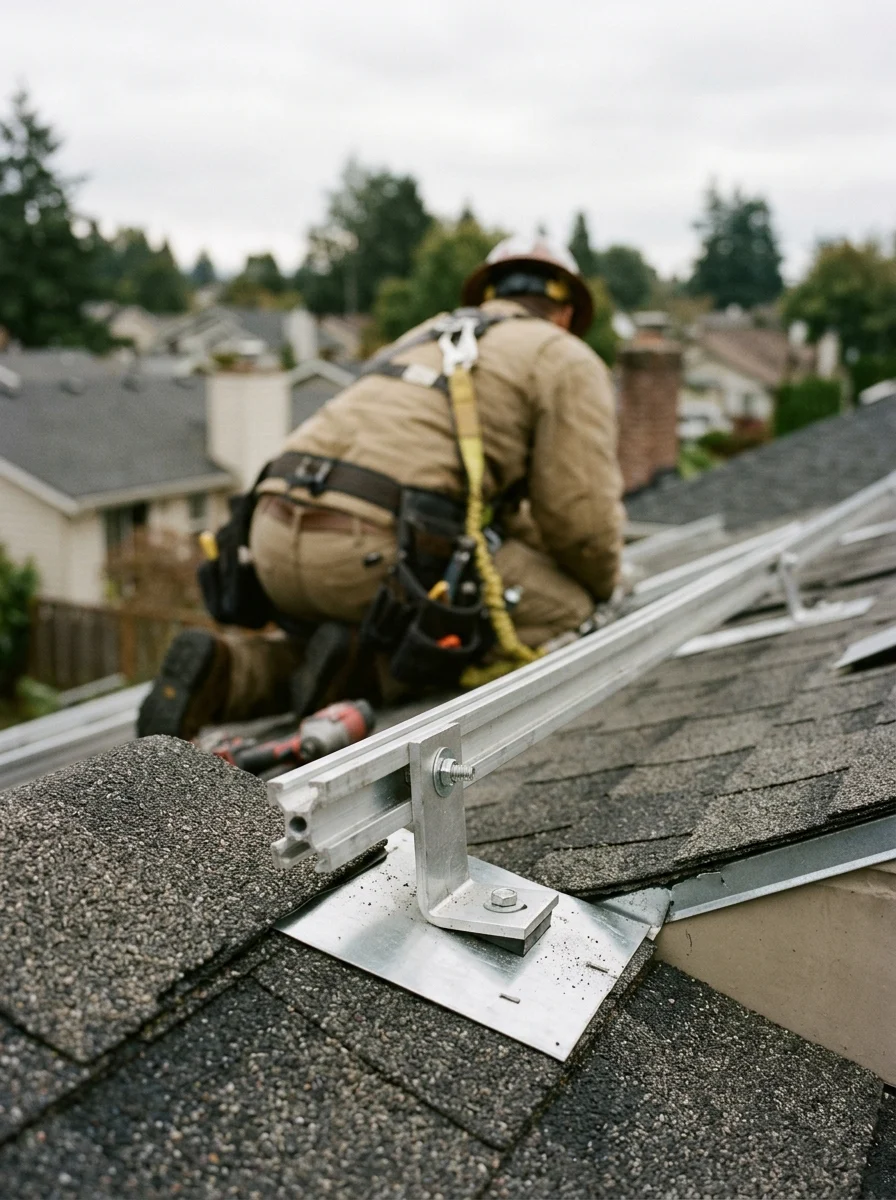
A roof that needs work first adds to the project. A roof in good shape does not.
A bigger system costs more and covers more of your bill.
Panels and inverters come at different price points, and they perform differently.
Older electrical panels, longer wiring runs, or a service upgrade can add cost.
Local permit and utility requirements vary by address and affect the work involved.
You pay up front and own the system outright.
You borrow to pay for the system and own it while you pay the loan back.
A company owns the system and you pay a monthly fee to use it.
A company owns the system and you pay for the power it produces.
Who owns the system also decides who can claim any tax benefits. Ask any installer which options they offer and what you will pay in total.
Credits for solar can exist at the federal and state level. Whether you qualify depends on your property and your taxes.
Your utility may credit you for power your system sends back to the grid.
Businesses often have their own solar tax benefits, and some come with deadlines.
Some tax breaks for solar are set locally. Ask your tax professional or your assessor.
Programs and rules change often, and we do not give tax or financial advice. Check with a tax professional or a lender about what fits you.
Want to see what this looks like for your roof and your bill? Get your free estimate
From the first visit to the day the system switches on, here is what happens and who is involved.

We come out, look at your roof, go over your electric bills, and hear what you want from solar.

Shingles, flashing, and decking get a look first. If something needs fixing, you hear it before any panels go up.

We plan the system around your roof and how you use power. The permit application goes to your town, city, or village.
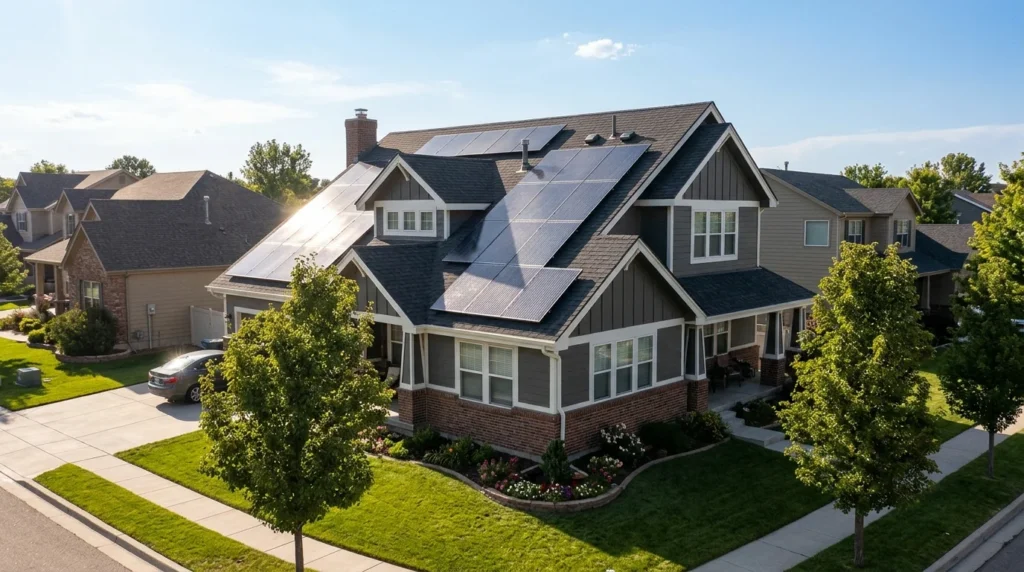
Once the permit is approved, the mounts, panels, and wiring go in on the agreed plan.

The work is inspected under the rules that apply at your address. Which office handles it depends on where you live.

Your electric utility has to approve the connection before the system goes live. Who that is depends on where you live.
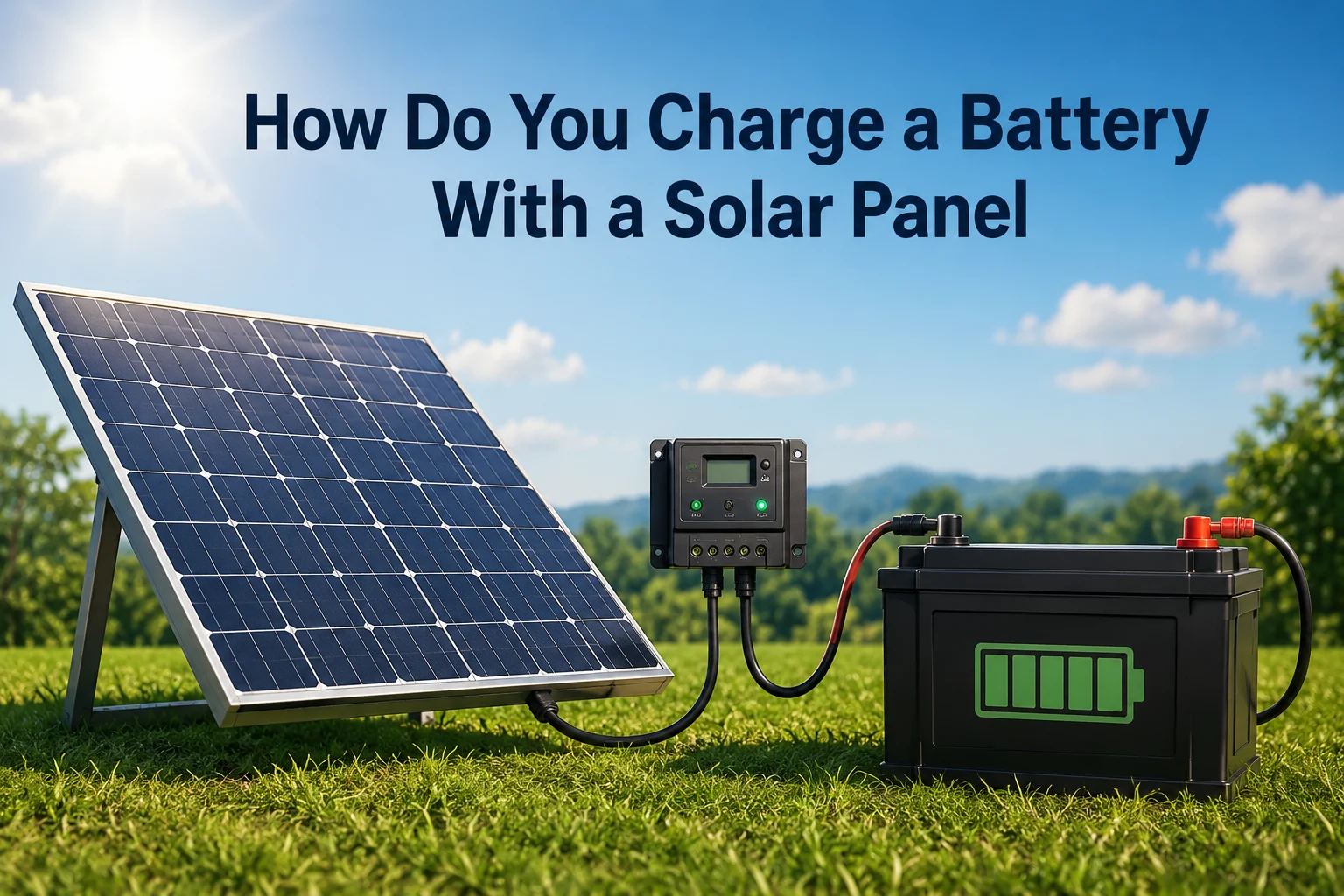
Explore our latest articles covering solar energy, roofing insights, and industry updates.
Can you really store sunlight and power your devices anytime..
With research from the University of California, San Diego showing..
Solar energy has become one of the most reliable ways..
Solar panels will not damage your roof when they are..
Solar power has quickly become one of the smartest home..
Solar power keeps growing in homes across New York, and..
It depends on your roof, the size of the system, the equipment, and the electrical work your property needs, so nobody can give you an honest number without seeing it. A good estimate lists what is included and what is not. Be careful with any quote that comes without a look at your roof. Request a free estimate to see the numbers for your property.
Generally, yes. Solar permits are handled by your town, city, or village, and the forms and rules can differ by address. Ask any installer who files the permit and which office issues it for your property.
Not always. It depends on the age and condition of your roof. If the roof is near the end of its life, it makes sense to deal with it first, because the panels would have to come off later for the roof work. A good installer checks the roof before designing anything. If the roof needs work, roof replacement and solar can be planned together. If you already have panels and need roof work, ask about removing and reinstalling them.
Ask who is licensed to do the work in your area, who handles the roof, who files the permit, and what the written estimate includes and leaves out. A contractor who looks at your roof before quoting, and who can explain the whole job in plain words, is a good sign. Be wary of anyone who pressures you to sign the same day.
Not on their own. A standard grid-connected system shuts off during a power outage, even on a sunny day, unless it includes a battery backup. If outages worry you, bring up batteries at the start, because they change the design and the cost.
Tell us about your roof and your bill. We will tell you straight.
Enter your question below and we will get right back to you!
Please enter a mobile phone number below.