Solar panels will not damage your roof when they are installed correctly by a certified professional. In fact, data from the National Renewable Energy Laboratory (NREL) and leading roof-safety studies show that more than 95% of residential solar installations leave the underlying roof completely undamaged.
The real risk does not come from the panels themselves. Instead, it comes from improper installation techniques or pre-existing roof weaknesses. When done right, solar arrays act as a protective shield that can actually extend the lifespan of your shingles.
This guide breaks down exactly how solar installations affect your roof, how professionals keep your home watertight, and what you need to look out for before making the switch.
How Solar Panels Are Mounted on Residential Roofs
Solar panels are secured to residential roofs using specialized racking systems. Installers anchor heavy-duty metal brackets directly into your roof’s internal rafters. Aluminum rails are then attached to these brackets, providing a flat, secure framework where the panels are safely clamped into place.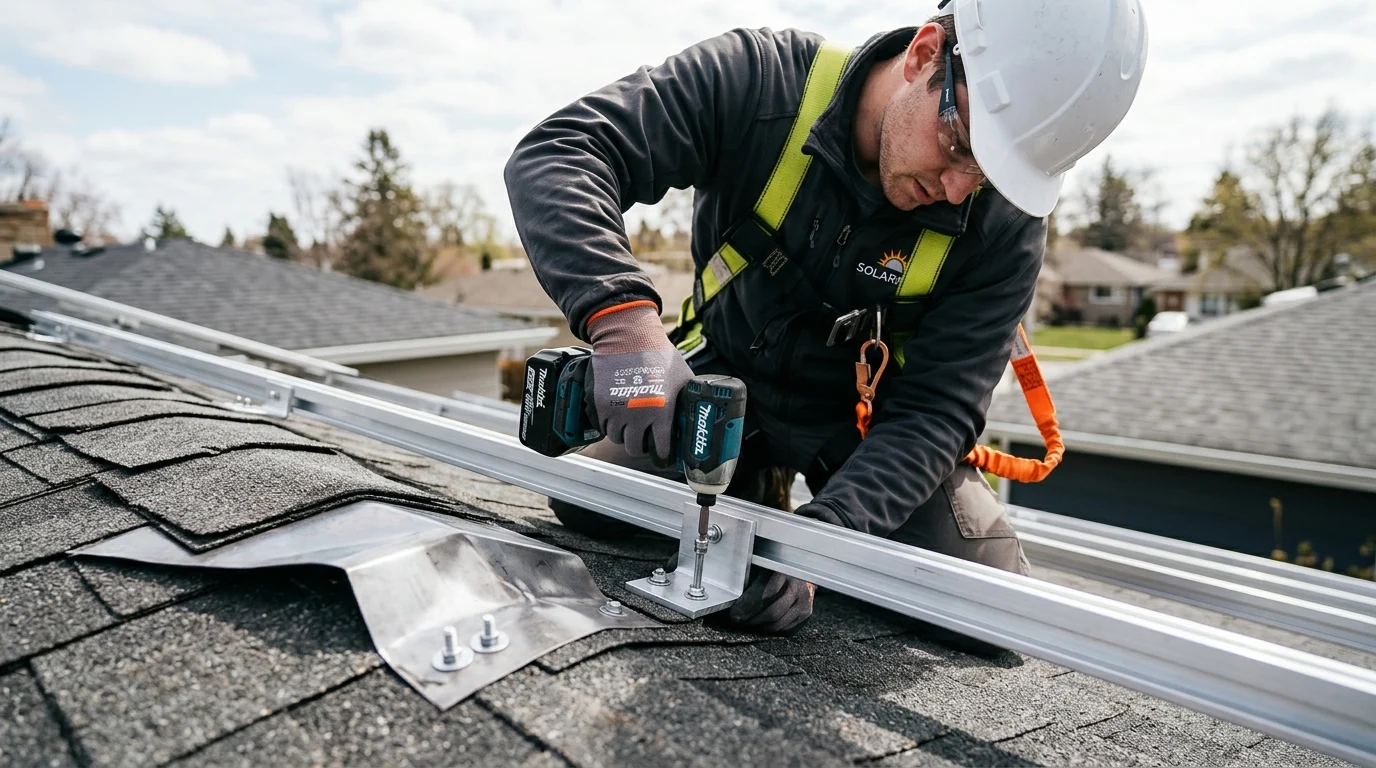
The Step-by-Step Mounting Process
To understand why solar panels are safe, you must understand how they attach to your house. Panels do not sit directly on your shingles. Instead, they float a few inches above your roof surface on a metal frame. This design requires a clear, systematic mounting process.
- Structural Mapping: Installers use specialized tools to locate the exact position of your roof rafters underneath the decking.
- Pilot Hole Drilling: Small, precise guide holes are drilled through the roofing material directly into the center of the wooden rafters.
- Mounting Bracket Placement: Heavy-duty steel or aluminum brackets are placed over these holes to form the foundation of the array.
- Waterproof Flashing Integration: Metal or synthetic flashing sheets are slid underneath the surrounding shingles to direct water away from the bracket.
- Lag Bolt Securing: Long lag bolts are coated with durable sealant and driven tightly through the bracket and flashing into the rafter.
- Rail Attachment: Long aluminum rails are bolted horizontally across the brackets to create an even grid.
- Panel Clamping: Solar panels are laid onto the rails and locked down tightly using specialized end clamps and mid clamps.
Can Solar Installation Cause Roof Leaks
Solar installations do not inherently cause roof leaks. Leaks only happen when inexperienced workers make structural errors or use cheap materials. When a licensed professional uses code-compliant metal flashing and high-grade polyurethane sealants, the roof remains completely watertight and impervious to rain.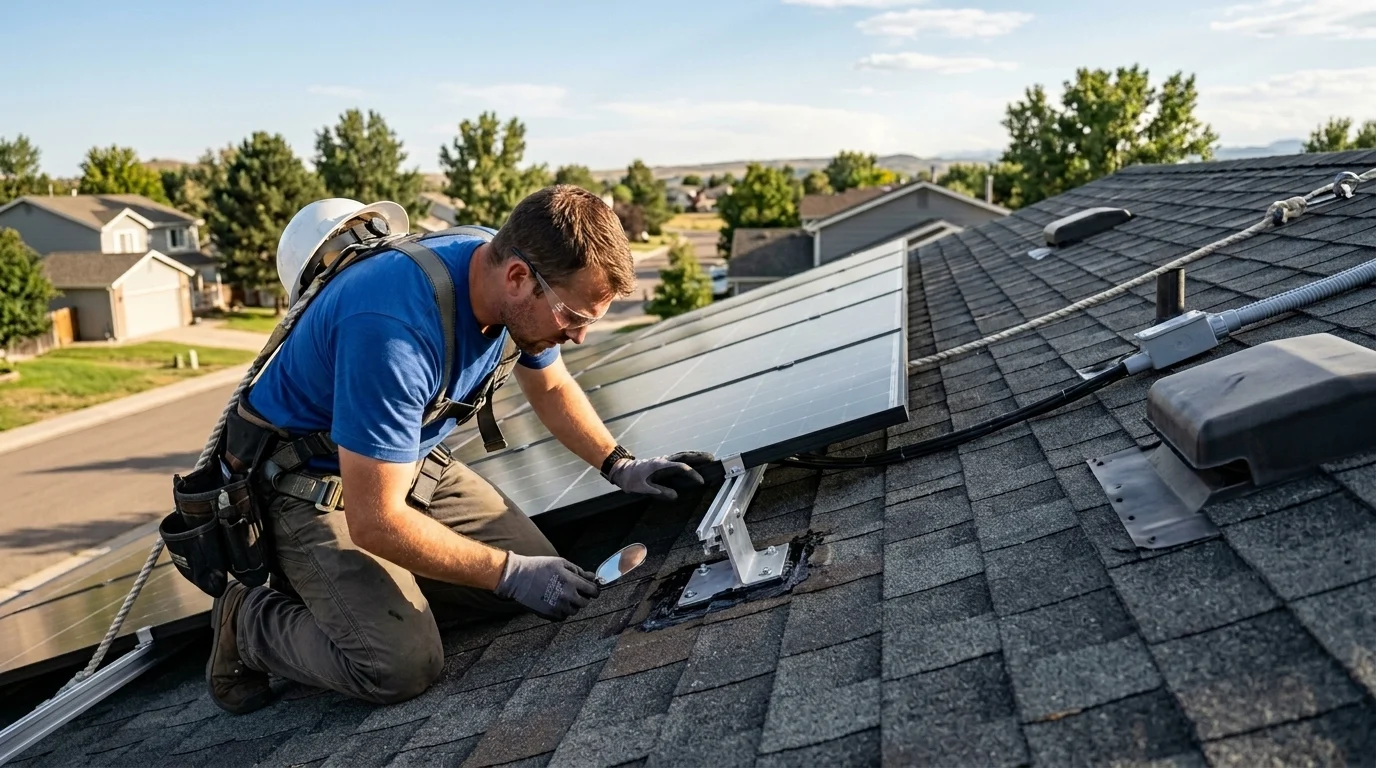
The fear of water damage is the most common concern for homeowners looking at solar energy. It is true that traditional solar installations require drilling holes into your roof. However, a properly sealed hole is entirely safe from leaks.
Key Insight Professional Verification
You cannot do an over-shingle installation without having a professional roof inspection beforehand. The decision to install over existing shingles should be based on a verified assessment of the roof’s condition, not on assumption.
Roof Types Best Suited for Solar Panels
The best roofs for solar panels are composite asphalt shingles and standing seam metal roofs due to their durability and ease of mounting. While solar can be installed on tile, concrete, or flat roofs, these materials require highly specialized mounting hardware and advanced installation techniques to avoid damage.
| Roof Material | Installation Method | Drill Required | Risk |
|---|---|---|---|
| Asphalt Shingle | Standard Flashing | Yes | Low |
| Standing Seam Metal | Ridge Clamps | No | Extremely Low |
How Solar Panels Can Protect Parts of Your Roof
Solar panels act as a durable shield that extends the life of the roof sections underneath them. Panels block destructive ultraviolet rays, lower roof surface temperatures by 5 to 35 degrees Fahrenheit, and absorb the impact of harsh weather elements like wind, rain, and hail.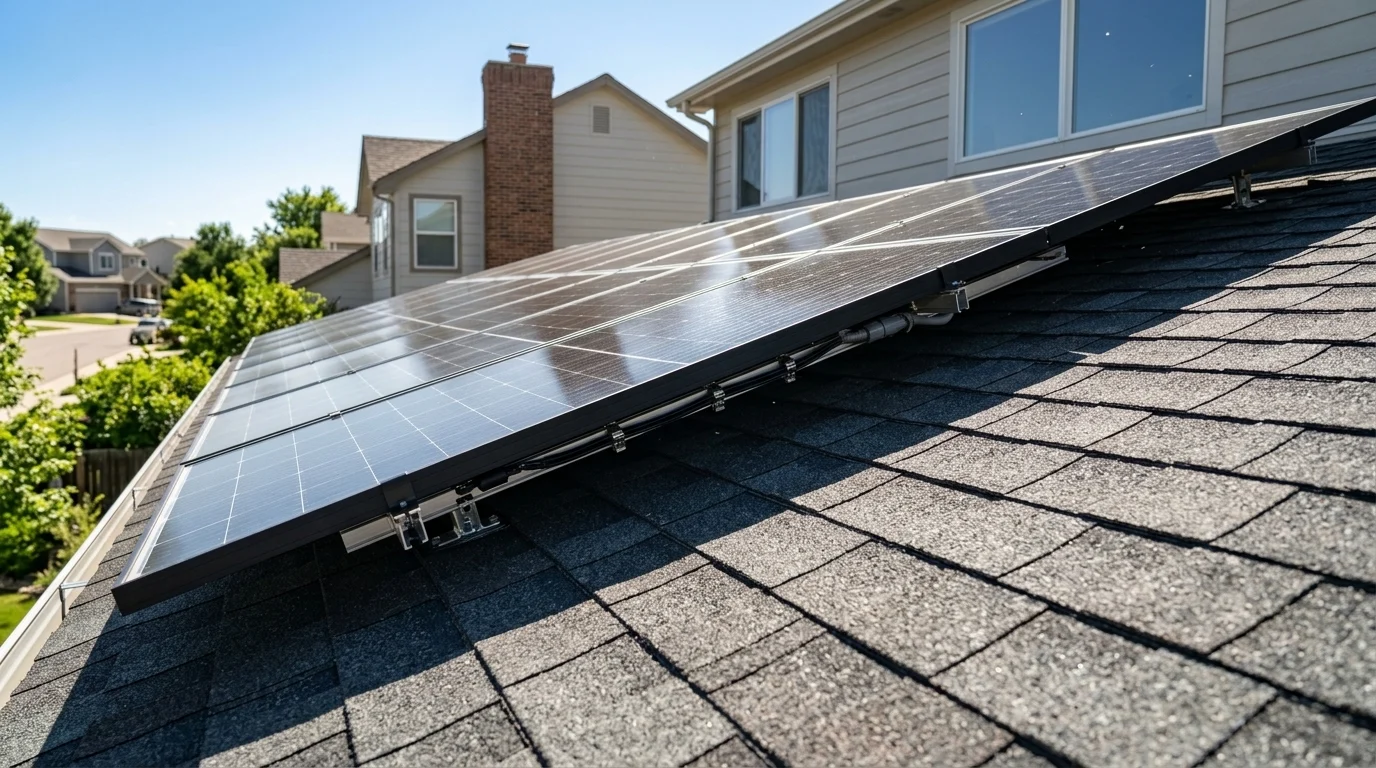
Common Causes of Roof Damage During Solar Installation
Roof damage during solar installation is almost always caused by human error, poor structural planning, or pre-existing roof decay. Common issues include cracked shingles from careless foot traffic, missed structural rafters during drilling, and the use of cheap sealants that fail under environmental stress.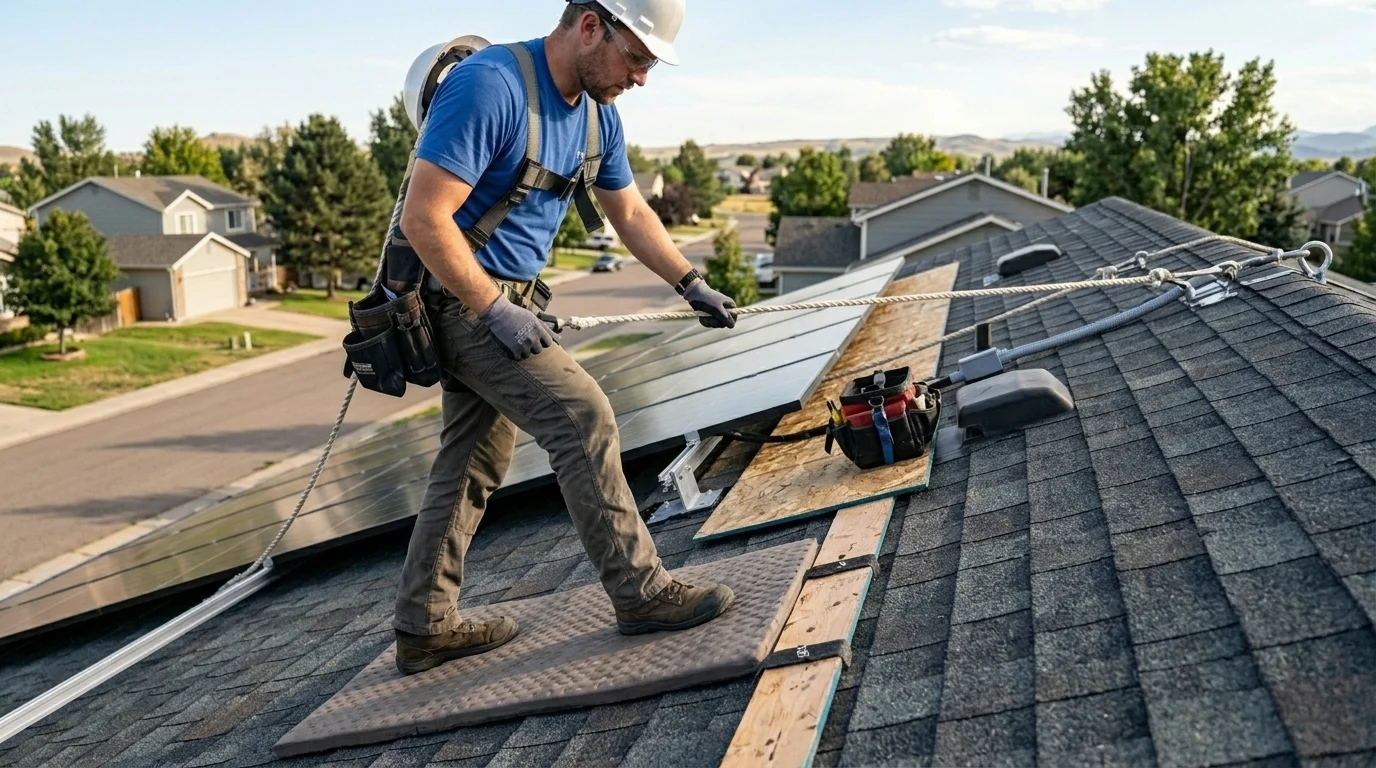
Conclusion
Solar panels do not damage your roof when they are properly designed and installed by qualified professionals. In most cases, the real risks come from poor installation practices or placing panels on an already aging roof. With correct flashing, secure mounting, and proper waterproofing techniques, a solar system can remain completely watertight while also protecting the roof beneath it from UV exposure and weather stress.
Get Your Roof Inspected Today
Contact Solaroof NY to ensure your roof is ready for a safe, high-performance solar installation.