Solar energy has become one of the most reliable ways to power a home. Still, installation is only the first step. Solar energy yield reflects real-world output, not just lab-tested efficiency. Heat, dirt, and shade can affect how much electricity a system produces. Knowing how to increase solar panel efficiency is what separates a good solar investment from a great one.
Most homeowners assume their panels will simply work at peak capacity once installed. In reality, many variables affect daily output. Roof orientation, seasonal temperature swings, and aging components can all influence performance. This guide covers the major factors that affect output. It also explains practical steps for getting more from a solar system.
What Affects Solar Panel Performance
Solar panels do not operate in isolation. Their output is shaped by a combination of environmental, physical, and technical factors that interact with each other throughout the day. The most common performance variables include:
- Sunlight exposure: The amount of direct, unobstructed sunlight reaching the panel surface.
- Panel angle and orientation: How well the panel faces the sun’s path across the sky.
- Temperature: Higher ambient heat reduces the electrical output of most silicon-based cells.
- Shading: Even partial shade on one panel can reduce output across an entire string.
- Cleanliness: Dust, pollen, and debris create a physical barrier between the sun and the cells.
- System components: Inverter quality, wiring, and battery setup all affect how much usable energy reaches your home.
Proper Panel Placement and Tilt Angle
Placement is the foundation of solar efficiency. A panel that is poorly oriented will underperform no matter how advanced its technology. In the United States, south-facing rooftops receive the most consistent sunlight throughout the year. The ideal tilt angle for solar panels is approximately equal to the latitude of your location. For most of New York, that sits between 40 and 42 degrees.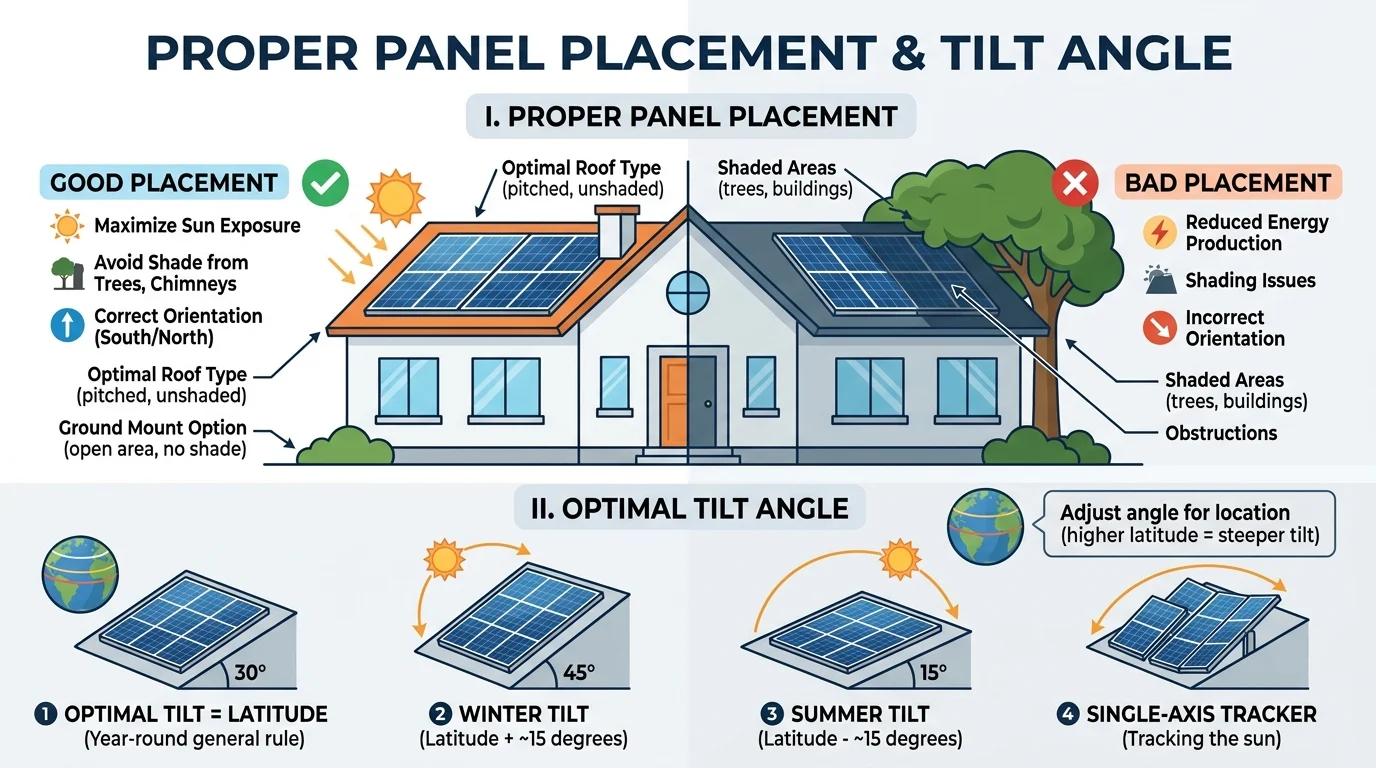
Keeping Solar Panels Clean for Better Output
Dirty panels are one of the most overlooked causes of energy loss. A thin film of pollen, dust, or bird droppings may not look serious, but it blocks sunlight from reaching the photovoltaic cells beneath. Here is a straightforward cleaning schedule: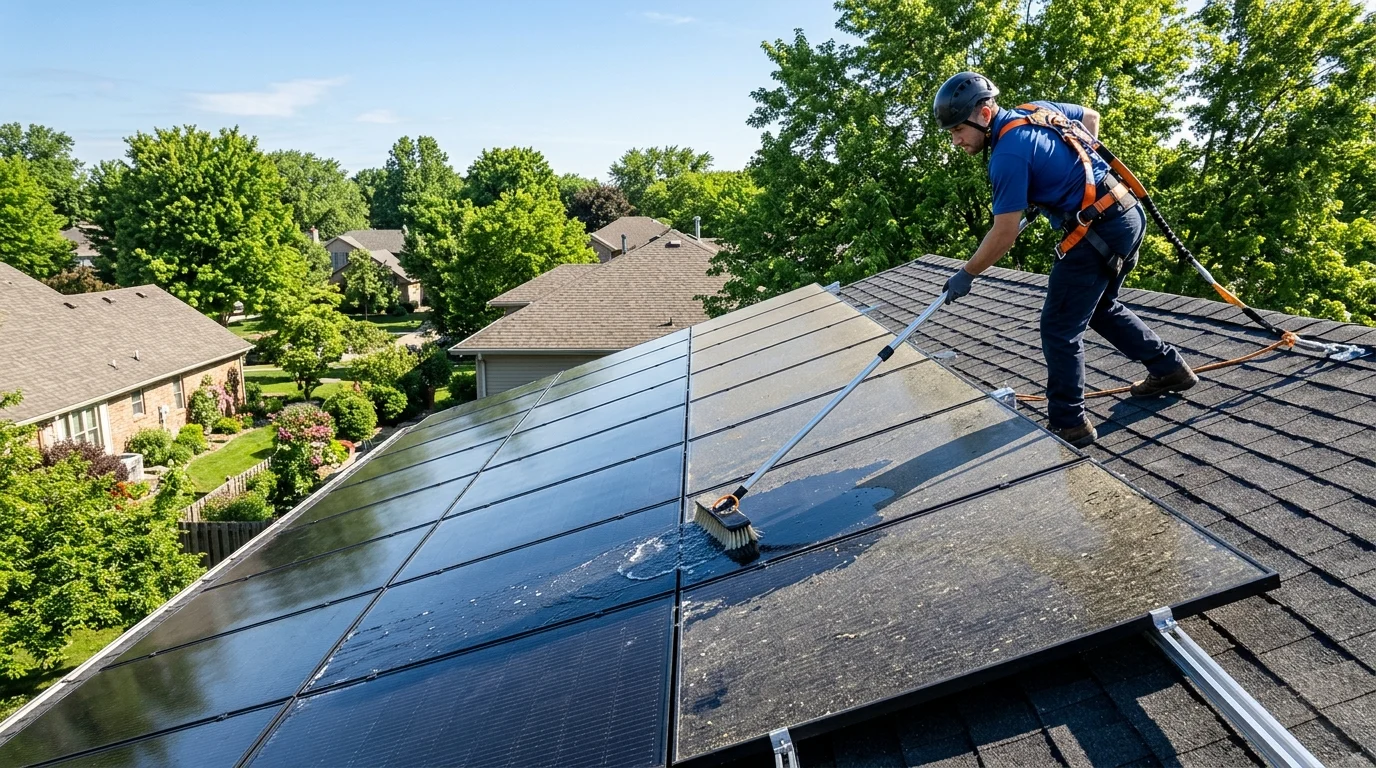
| Environment | Recommended Frequency |
|---|---|
| Urban or industrial area | Every 2 to 3 months |
| Suburban with trees nearby | Every 3 to 4 months |
| Rural with low pollution | Twice per year |
| After major storms/snow | As needed |
Key Insight Advanced Technology
Premium N-type panels, including TOPCon and HJT designs, offer superior temperature coefficients of -0.26% to -0.30% per °C. This makes them significantly more efficient than standard panels when operating in the intense heat of a New York summer.
Reducing Shade Around Solar Panels
Shade is one of the most damaging threats to solar performance. A homeowner may lose up to 40% of their solar capacity due to shading. If shade is unavoidable, technologies like microinverters and power optimizers allow each panel to operate independently, ensuring a shaded panel never pulls down the entire system’s output.
Upgrading to High-Efficiency Solar Panels
If your current panels are more than a decade old, upgrading to a newer model can deliver a significant performance boost. Modern N-Type panels are achieving efficiencies exceeding 22% to 24%, compared to older polycrystalline models.
| Panel Type | Efficiency Range |
|---|---|
| Polycrystalline | 15% to 17% |
| Standard Monocrystalline | 17% to 20% |
| High-Efficiency Monocrystalline (PERC) | 20% to 22% |
| Premium N-Type (TOPCon/HJT) | 22% to 24%+ |
Importance of Quality Inverters and Maintenance
The inverter is the heart of your solar system. A low-quality or aging inverter can become the weakest link. Regular monitoring of your system via apps helps spot performance dips early. Furthermore, an annual professional maintenance visit ensures that electrical connections remain secure, mounting hardware is stable, and your panels are performing within their original specifications.
Maximize Your Energy Savings
Ready to optimize your solar system? Contact Solaroof NY for a professional performance assessment.