Solar power keeps growing in homes across New York, and with that growth comes a fair share of questions. One of the most common concerns homeowners raise is whether rooftop panels emit harmful radiation. According to the World Health Organization, most everyday devices including solar systems produce low level electromagnetic fields that fall well within international safety guidelines. So the real question is not whether solar panels emit anything, but whether what they emit is actually dangerous.
The short answer is that solar panels are considered safe for residential use, but the longer answer involves understanding how electricity, EMF, and panel design actually work together. Let us walk through what really happens on your roof, what the research shows, and does solar panels cause radiation, so you can make an informed decision for your home.
What Kind of Radiation Solar Panels Produce
When people hear the word radiation, they often think of nuclear plants or medical scans. Solar panels do produce a form of electromagnetic energy, but it sits on a very different part of the spectrum. The radiation produced by solar systems is non ionizing, meaning it does not have enough energy to damage DNA or living cells. This is the same category as radio waves, visible light, and the signals from your phone.
Difference Between Ionizing and Non Ionizing Radiation
Understanding this difference is the foundation of any honest conversation about solar safety. The two types behave very differently inside the human body. Ionizing radiation comes from sources like X rays, gamma rays, and radioactive materials. It carries enough energy to break chemical bonds and harm cells. Non ionizing radiation comes from sources like sunlight, microwaves, Wi Fi, and solar panels. It cannot break molecular bonds in human tissue.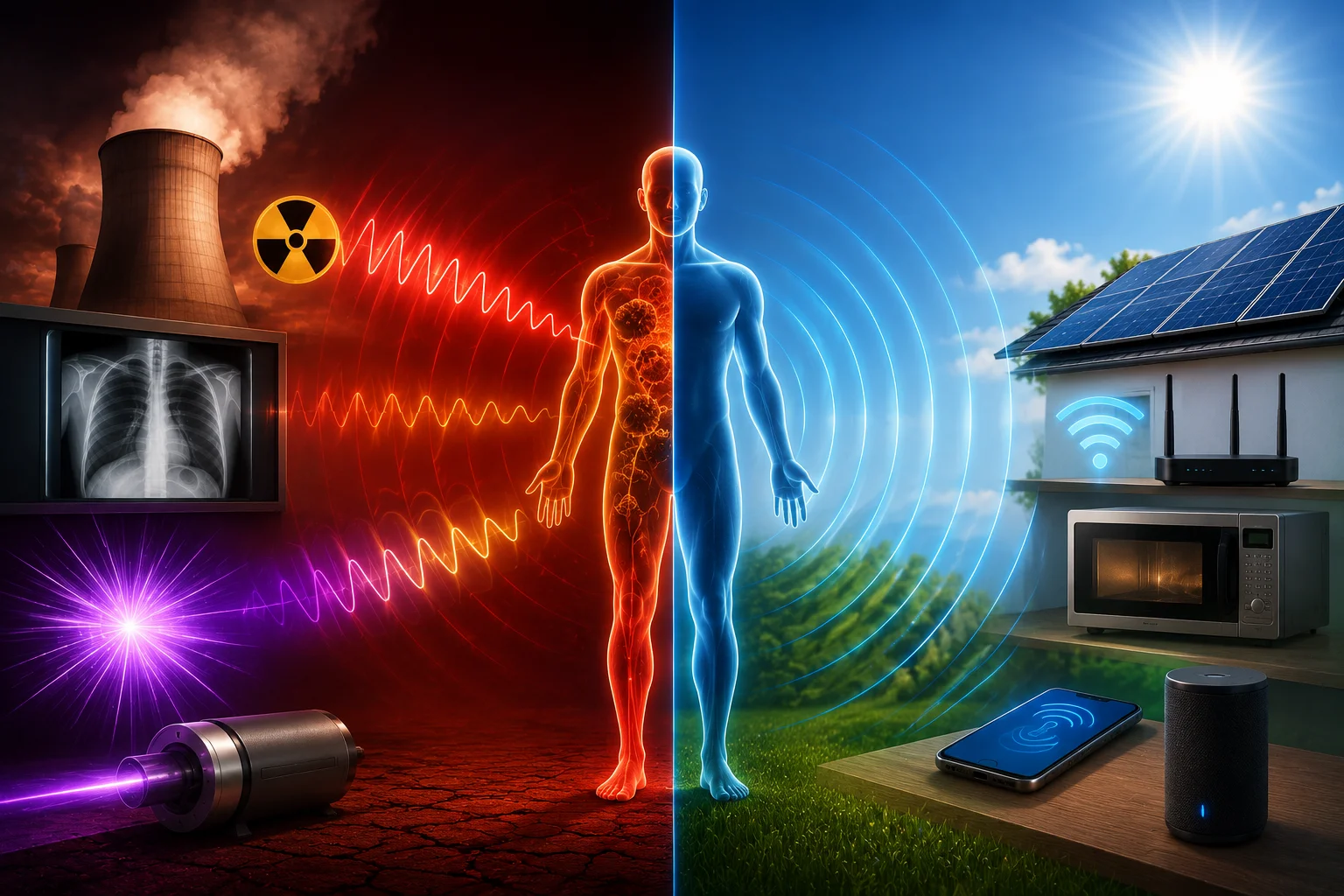
Key Insight Understanding EMF Safety
Solar systems generate non ionizing radiation, which is fundamentally different from the harmful ionizing radiation associated with nuclear or medical sources. Proper installation and grounding ensure your family’s exposure remains well below established safety limits.
How Solar Panels Generate Electricity
To understand the radiation question, it helps to know what is actually happening on your roof. Solar panels are surprisingly quiet machines with no moving parts. Photovoltaic cells absorb sunlight and shift electrons inside silicon layers, which creates a flow of direct current electricity. That current then travels through wiring to an inverter, which converts it into the alternating current your home uses. This process does not involve combustion, chemical reactions, or radioactive material.
Electromagnetic Fields From Solar Panel Systems
Any wire carrying electricity creates a small electromagnetic field. This is true for your refrigerator, your laptop charger, and yes, your solar system. Measurements taken near rooftop arrays generally show EMF readings that drop off quickly with distance. By the time the field reaches living spaces inside the home, the levels are usually a fraction of what you would find near a kitchen appliance.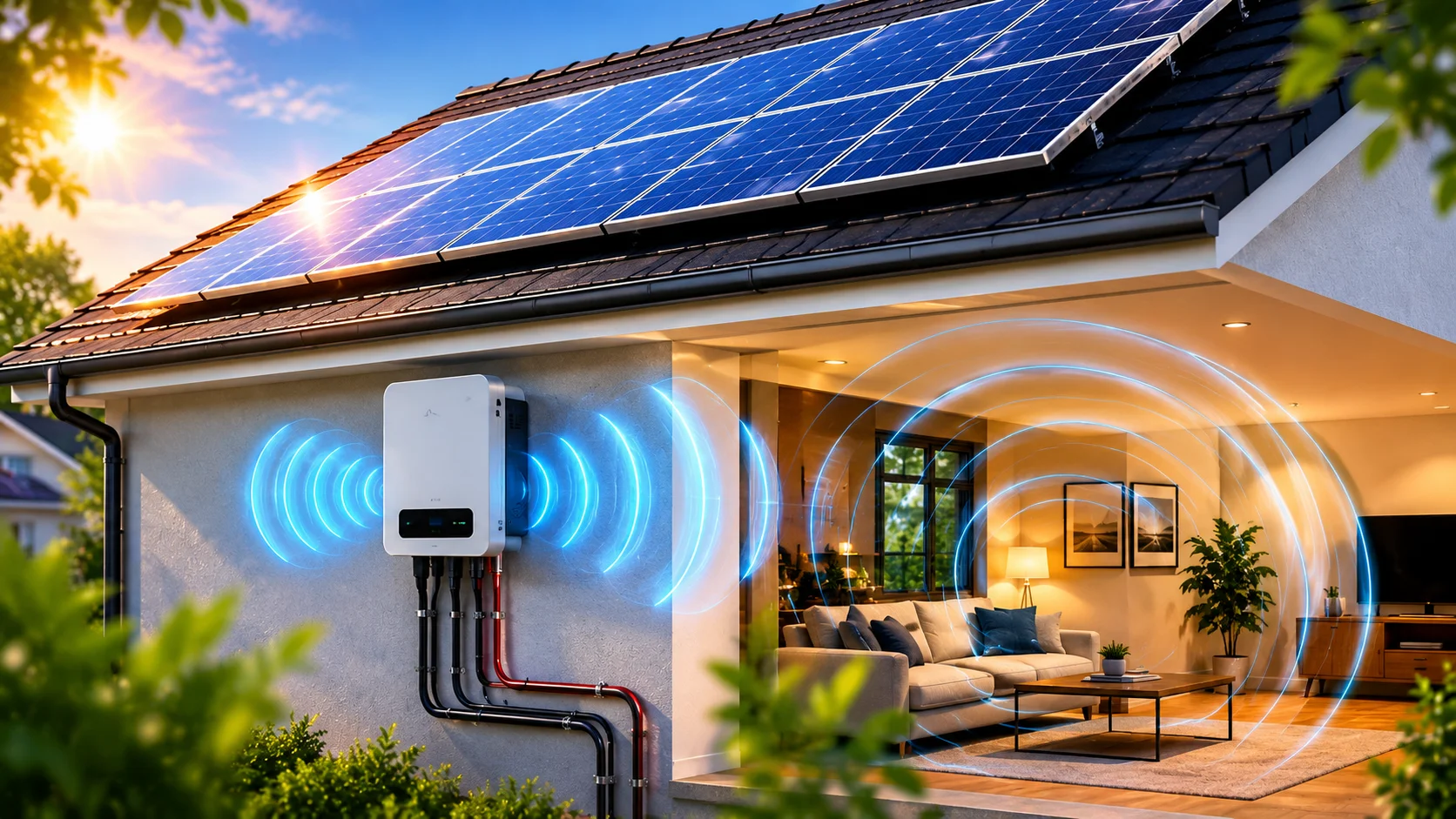
Solar Inverters and EMF Exposure
The inverter is the part of your system that converts DC to AC electricity, and it is the strongest EMF source in the setup. Knowing where it sits matters more than worrying about the panels themselves. Inverters are usually mounted on an exterior wall, in a garage, or in a utility room rather than inside main living areas. EMF strength from an inverter falls sharply within three to six feet, similar to how a microwave field weakens as you step back.
Comparing Solar Panel Radiation to Everyday Electronics
Putting solar EMF in context helps cut through the noise. Many common household items produce stronger fields than a rooftop array ever will. A microwave oven at one foot away produces far higher EMF than a solar inverter at the same distance. A hair dryer held near the head delivers EMF exposure many times stronger than standing under a solar panel.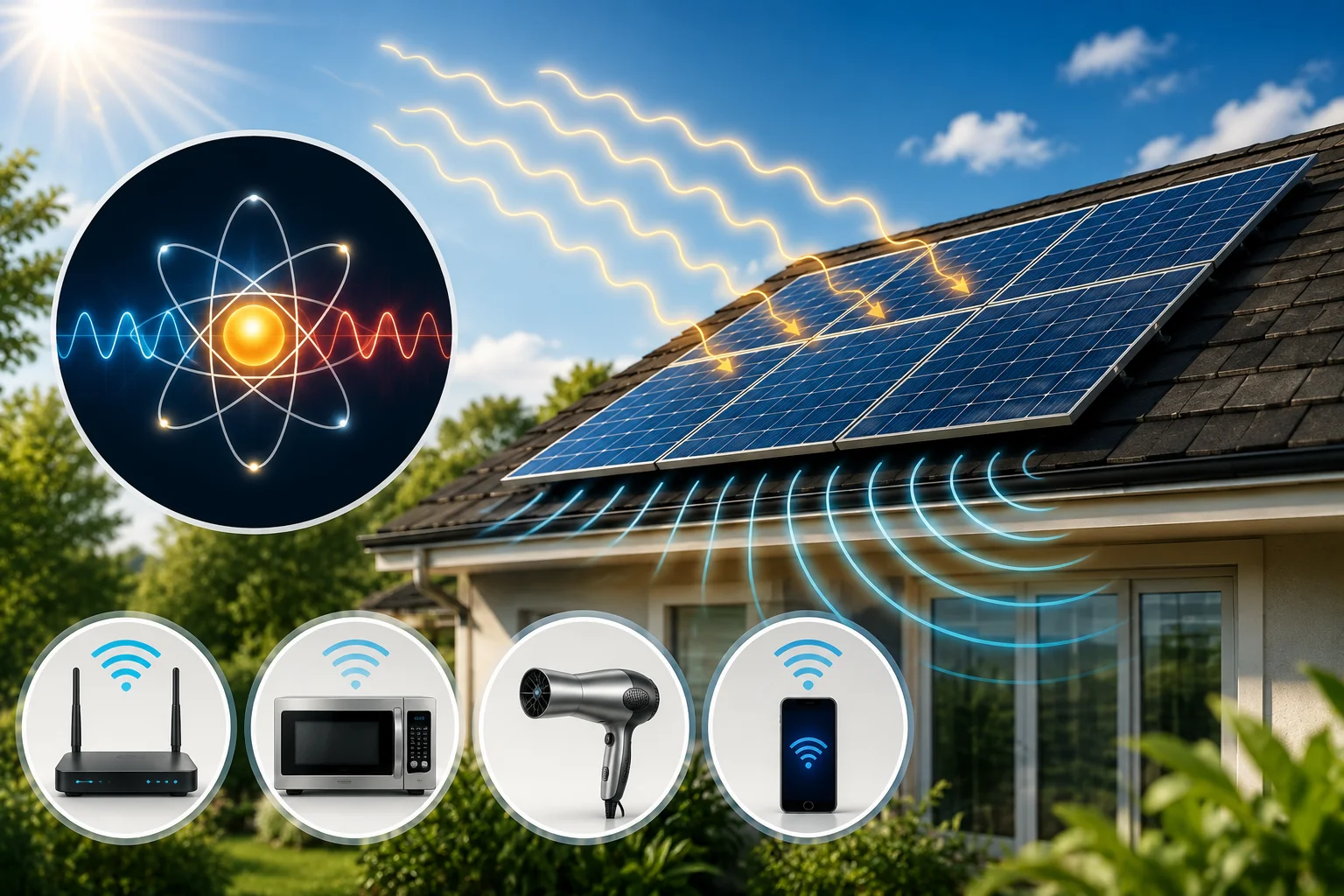
Conclusion
The honest answer to, “Does solar panels cause radiation?” is that they produce only weak, non ionizing electromagnetic fields that are not associated with harmful health effects in residential settings. Decades of research, strict safety codes, and real world measurements all point in the same direction. Solar panels are one of the cleanest and safest energy options a homeowner can choose, especially when compared with the EMF profile of everyday electronics already inside the house.
Get Straight Answers About Solar Safety
Schedule a personalized site assessment with SolarRoofNY today.