Quick answer: No, a black metal roof is not inherently a bad idea. It absorbs more heat than lighter colors, but for most homes, especially in cooler and mixed climates, that tradeoff is manageable with proper attic insulation and ventilation. In consistently hot climates, pairing black metal with a reflective coating largely closes the gap.
Choosing a roof color feels like a small decision until you realize how much it affects your home’s comfort and energy use. Many homeowners search for answers before committing, and one popular question keeps surfacing across renovation forums and roofing consultations. Roof color and reflectivity can meaningfully influence a building’s cooling load, especially in warmer climates.
So is a black metal roof a bad idea for your specific home? The honest answer depends on where you live, how your roof is insulated, and whether it includes modern reflective coatings. This guide breaks down the science, the style appeal, and the practical tradeoffs so you can make a confident decision.
Why Black Metal Roofs Are So Popular
Black metal roofing has become a favorite among homeowners who want a sleek, modern look without sacrificing durability. The deep, matte finish creates striking contrast against light colored siding and stonework.
Beyond aesthetics, metal roofing offers impressive longevity. Standing seam systems can last 40 to 70 years with minimal maintenance, far outpacing traditional asphalt shingles, though it’s worth noting that more affordable exposed-fastener metal panels typically last closer to 20 to 30 years, so the lifespan claim depends on which metal roofing system you choose.
Homeowners also appreciate that black roofing hides dirt and streaking better than lighter shades. This keeps the roof looking clean and sharp for years after installation.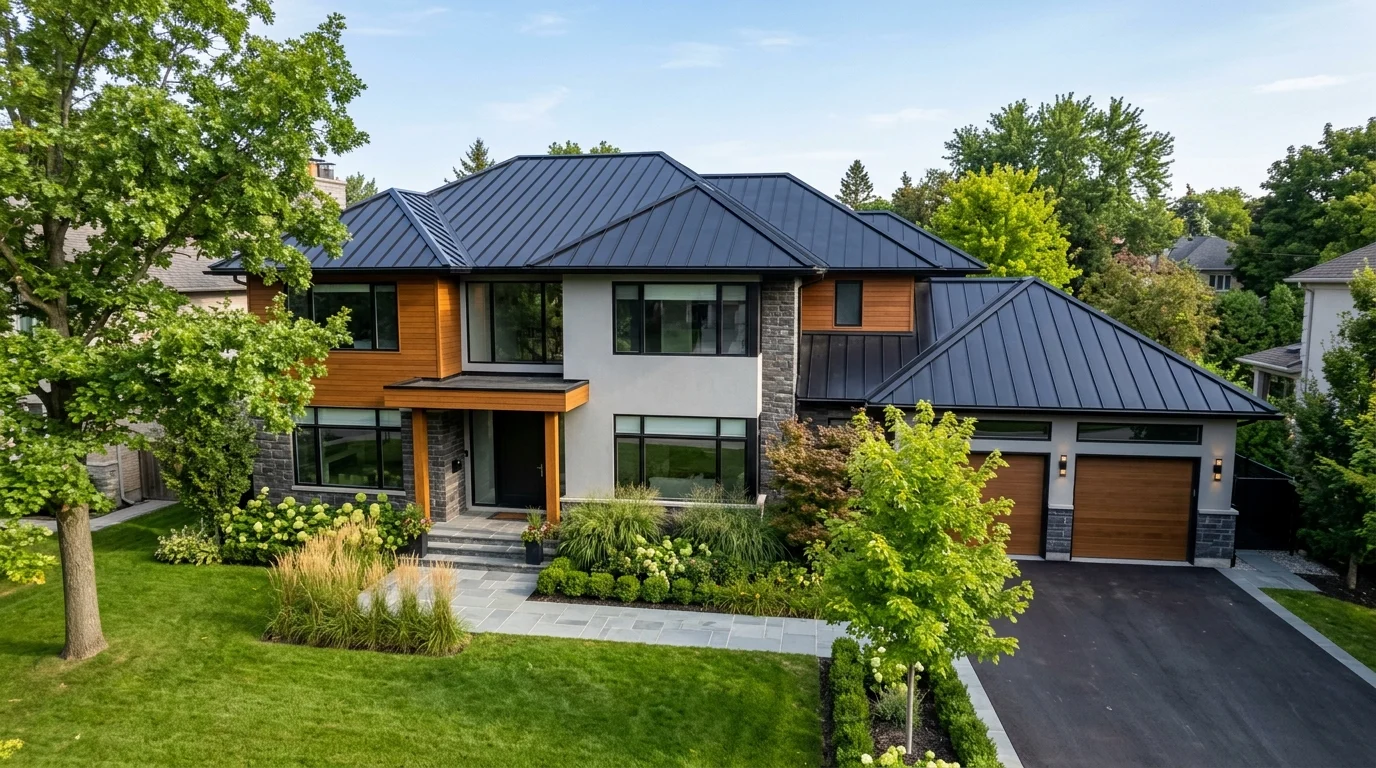
Pros and Cons of Choosing a Black Metal Roof
Every roofing decision involves tradeoffs, and black metal is no exception. The table below breaks down the key advantages and drawbacks to help you weigh your options.
| Pros | Cons |
|---|---|
| Sleek, modern curb appeal | Absorbs more solar heat than lighter colors |
| Long lifespan and low maintenance (standing seam systems) | May increase cooling costs modestly in hot climates |
| Hides dirt and streaking well | Can feel warmer in attics without proper insulation |
| Pairs well with many architectural styles | Runs noticeably hotter on the surface in direct sun |
| Compatible with reflective coatings | Requires careful climate consideration |
How Black Metal Roofs Affect Heat Absorption
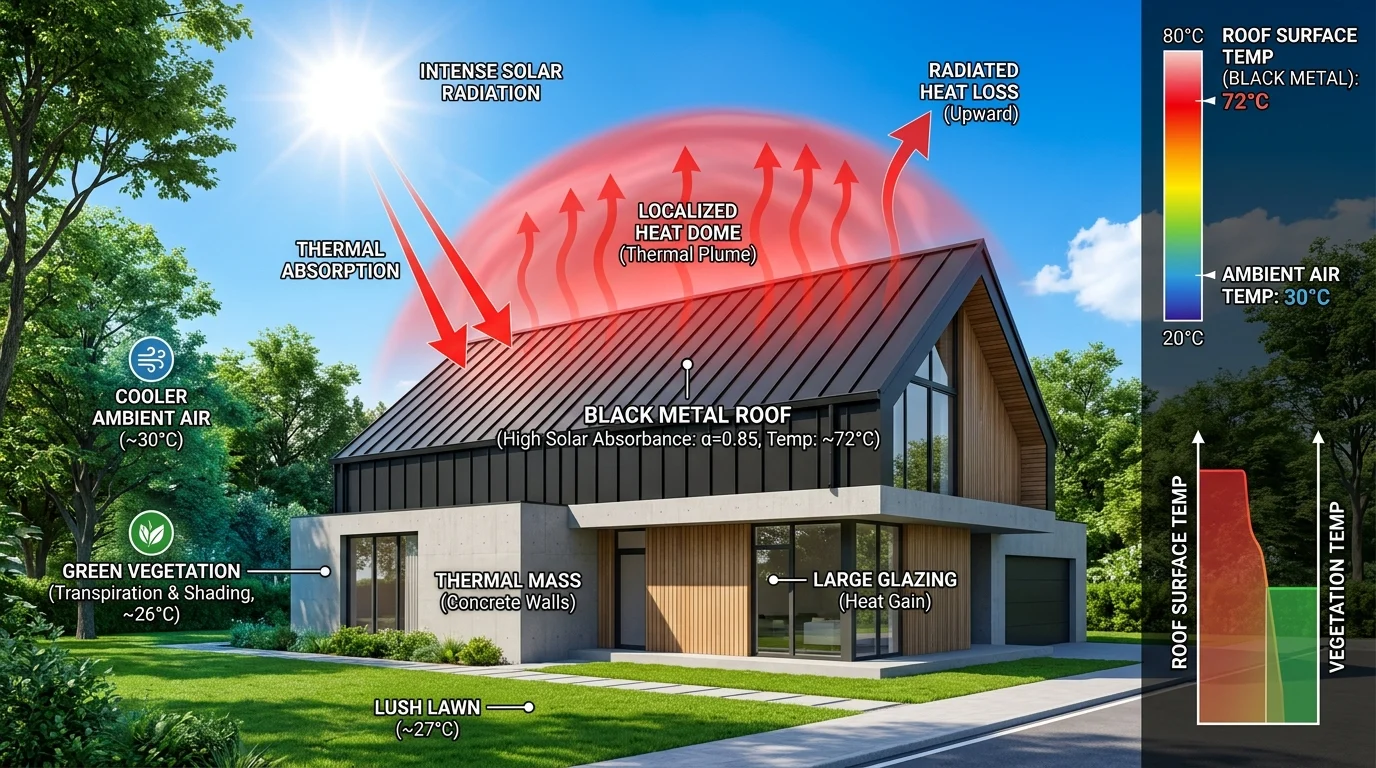
Quick answer: Dark colors absorb more sunlight than light colors because of basic physics, not a flaw in the material. A black metal roof can reach surface temperatures well above 150°F in direct summer sun, compared to significantly cooler surfaces on white or light gray roofing.
Metal itself dissipates heat quickly once shade or evening arrives, unlike materials that retain heat longer. If you’re curious how this compares across materials more broadly, we’ve covered do dark roofs make houses hotter in general, not just metal ones. The real impact on your home’s interior depends heavily on attic ventilation and insulation quality underneath the roofing panels. A well ventilated, properly insulated attic significantly reduces how much of that surface heat ever transfers indoors, which is why two homes with the same black roof can have very different comfort levels depending on what’s happening beneath the metal.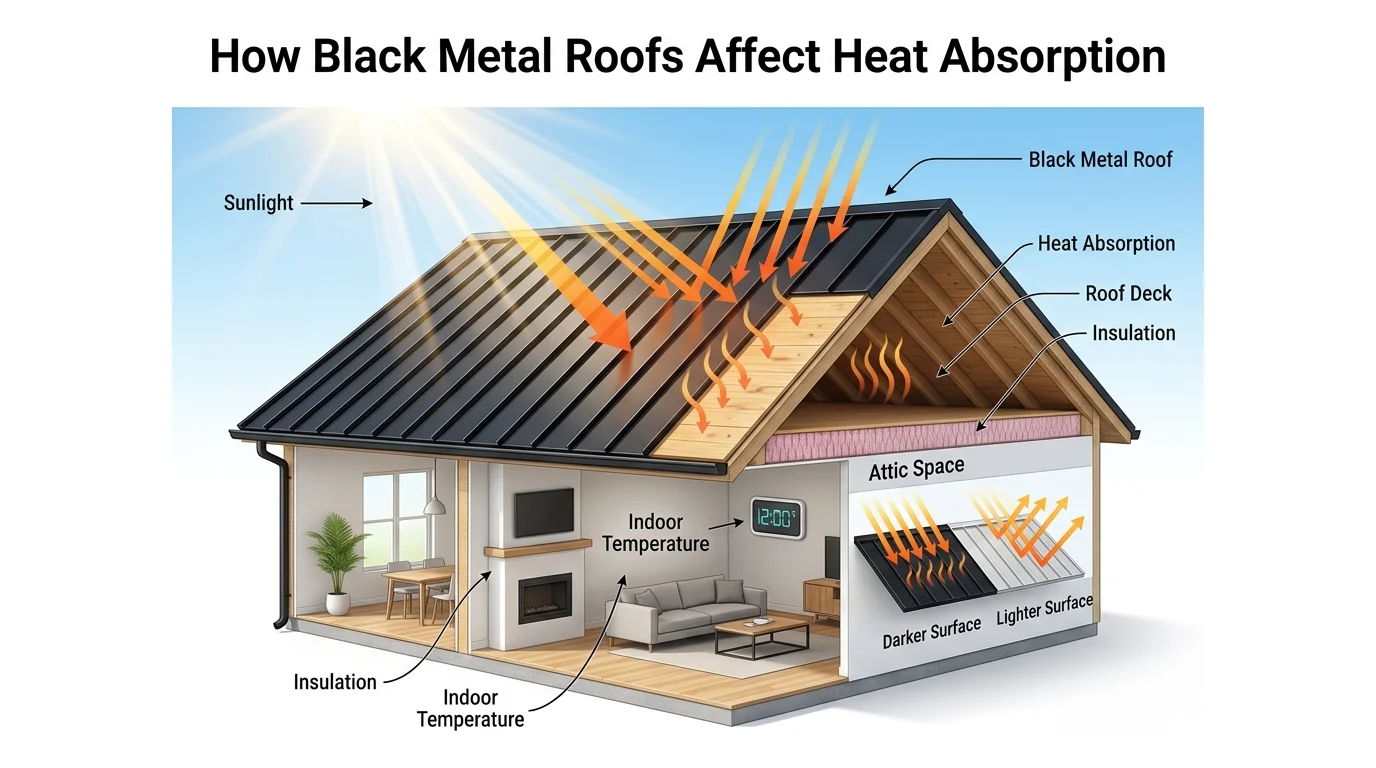
Energy Efficiency of Black Metal Roofing
Energy efficiency in roofing comes down to two factors: solar reflectance and thermal emittance. Black metal roofs score lower on reflectance than light colors, but modern coating technology has narrowed that gap considerably.
Manufacturers now offer “cool black” coatings using spectrally selective pigments that reflect invisible near-infrared heat while keeping the visible black appearance homeowners want. It’s important to set realistic expectations here: fully white cool roof coatings can reduce surface temperature by up to 50°F compared to a standard dark roof, but cool-pigment coatings that preserve a black finish typically deliver a more modest 10 to 20°F reduction compared to an uncoated black roof, since dark pigments simply can’t reflect visible light the way white coatings can. That’s still a meaningful improvement, just not as dramatic as switching to a light color entirely.
Metal roofing also reflects more heat overall than asphalt shingles, even in darker shades, giving black metal a genuine efficiency edge over black asphalt alternatives.
Does a Black Metal Roof Increase Cooling Costs?
Quick answer: For homes in consistently hot climates, cooling costs can rise somewhat with a dark colored roof compared to a white or reflective one, but the increase is usually modest rather than dramatic, particularly when attics are properly insulated and ventilated.
Many homeowners report only a small difference in their summer utility bills, especially in homes built with modern insulation standards. Adding a reflective cool-black coating or a radiant barrier in the attic can further minimize any cooling cost increase, and these upgrades often pay for themselves through improved comfort over several summers.
Climate Considerations Before Choosing a Black Metal Roof
Your regional climate plays the biggest role in whether black metal roofing makes sense for your home. This single factor often outweighs every other consideration.
Homeowners in cooler or mixed climates typically see fewer downsides, since some of the extra winter solar gain can offset heating costs slightly. That said, this benefit is usually smaller than most people expect in a properly insulated, well-ventilated attic, because good insulation limits how much roof heat reaches the living space in either direction, summer or winter. Consider these regional patterns before making your final decision:
- Northern and mixed climates: Dark roofing can offer a modest heating benefit during colder months, though the effect is smaller in a well-insulated attic.
- Hot, sunny southern regions: Cooling costs may increase without reflective coatings or added insulation.
- Coastal areas with high humidity: Ventilation matters more than color for preventing moisture issues.
- High altitude or mountain regions: Intense UV exposure makes coatings especially valuable regardless of roof color.
How Roof Coatings Improve Black Metal Roof Performance
Coatings have transformed what black metal roofing can offer in terms of energy performance. What once was a simple aesthetic choice now comes with genuine efficiency upgrades. If you’re weighing a coating project, it’s worth reading about how long roof coating needs to dry before it rains, since proper curing time affects how well the coating performs long term.
Types of Coatings Worth Considering
- Cool black coatings: Use spectrally selective pigments to reflect near-infrared heat while keeping a black appearance, typically reducing surface temperature 10 to 20°F versus uncoated black.
- Elastomeric coatings: Add flexibility and weather resistance alongside some reflective benefit.
- Ceramic based coatings: Provide additional thermal insulation properties, useful in extreme climates.
- Low emissivity coatings: Reduce how much absorbed heat radiates into the attic space below.
Applying Coatings to Existing Roofs
Homeowners with an existing black metal roof don’t need to start over to gain these benefits. Many coatings can be applied directly to properly prepared existing panels. This retrofit option makes upgrading energy performance more accessible and affordable, and it also extends the roof’s protective lifespan in many cases.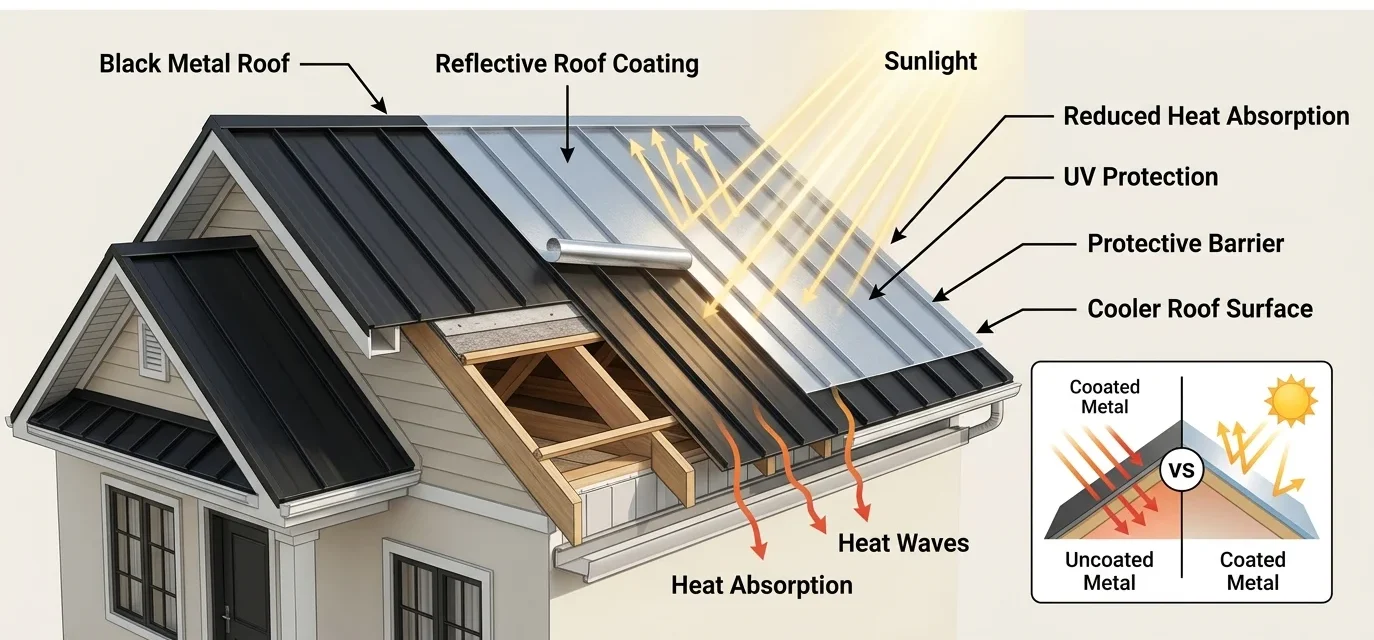
Will a Black Metal Roof Fade Over Time?
Quick answer: Yes, some gradual fading is normal over decades, but high-quality PVDF (Kynar 500) finishes resist it far better than basic paint systems, commonly carrying 30-year fade and chalk warranties.
Dark colors do experience somewhat faster fading than light colors in direct comparison, since they absorb more UV energy, but a premium PVDF finish still holds its color remarkably well across decades. For a deeper look at this topic, see our guide on whether metal roofs fade. Proper installation and periodic cleaning also help maintain the roof’s original appearance longer, and choosing a reputable manufacturer with proven PVDF coating technology matters significantly here.
Best Home Styles for Black Metal Roofing
Black metal roofing complements a wide range of architectural styles beautifully. Its clean lines and bold contrast work especially well with contemporary and farmhouse designs.
Modern and minimalist homes benefit from the sharp, geometric look that black panels create against simple facades. Farmhouse and craftsman style homes also look striking with black metal against white or wood toned siding, a combination that’s become especially popular in recent renovation trends. Traditional colonial homes can work well too, particularly when black roofing is paired with brick or stone exteriors, adding a sophisticated, updated feel without overwhelming classic architectural details.
Common Misconceptions About Black Metal Roofs
One common misconception claims black metal roofs always dramatically increase energy bills. In reality, the increase is often minor in a well-insulated home and can be substantially offset through coatings.
Another myth suggests black roofs fade dramatically faster than other colors. Quality PVDF coatings actually perform reasonably close across most color choices when properly manufactured and applied, though very dark colors will always fade somewhat faster than very light ones due to UV exposure differences.
Some homeowners also believe metal roofing is noisy in rain regardless of color. Modern installations with solid decking, proper underlayment, and attic insulation are quiet, comparable to asphalt shingle roofs.
When a Black Metal Roof Is the Right Choice
Black metal roofing makes excellent sense for homeowners prioritizing style, durability, and long term value, particularly in cooler and mixed climates where heat absorption poses fewer challenges. Homeowners in hotter regions can still choose black metal successfully by pairing it with a cool-black coating and solid attic insulation, a combination that meaningfully narrows the heat concerns that might otherwise apply.
If you’re also evaluating your roof for future solar, it’s worth reading about installing solar panels on a metal roof, since standing seam black metal roofs are one of the best surfaces for non-penetrating solar mounting.
Not Sure If Black Metal Roofing Fits Your Home?
Let our team evaluate your climate, insulation, and style goals before you commit to a color.
Conclusion
So is a black metal roof a bad idea? Not inherently. The color does absorb more heat than lighter alternatives, but modern coatings, proper insulation, and honest climate awareness can offset most of the downsides. For many homeowners, the durability and striking appearance make black metal roofing a worthwhile investment, as long as the heat tradeoffs are addressed at the planning stage rather than ignored.
At Solaroof NY, we help homeowners evaluate their climate, home design, and energy goals before choosing a roof color that fits their needs. Our team can walk you through coating options and insulation upgrades that make black metal roofing perform beautifully in any climate.