Quick answer: Asphalt shingles typically seal within a few days in warm, sunny weather, one to two weeks in mild spring or fall conditions, and potentially not until the following spring if installed in late fall or winter. Sealing is caused by heat activating a factory-applied adhesive strip, not a fixed number of days.
Homeowners who just had a new roof installed often notice something unexpected. The shingles look finished, but they are not fully bonded yet. This raises a fair question. How long does it take for asphalt shingles to seal? Heat and UV rays from the sun activate the factory applied sealant strip, softening it enough to fuse each shingle to the one below and create the bond needed for proper wind resistance.
That bonding process is not instant, and the timeline depends heavily on weather, installation quality, and the time of year the roof was completed. Understanding what affects sealing speed can help you know what to expect after a new roof goes on, and when there might be a reason for concern. The sections below break down exactly how this process works and what you can do to support it.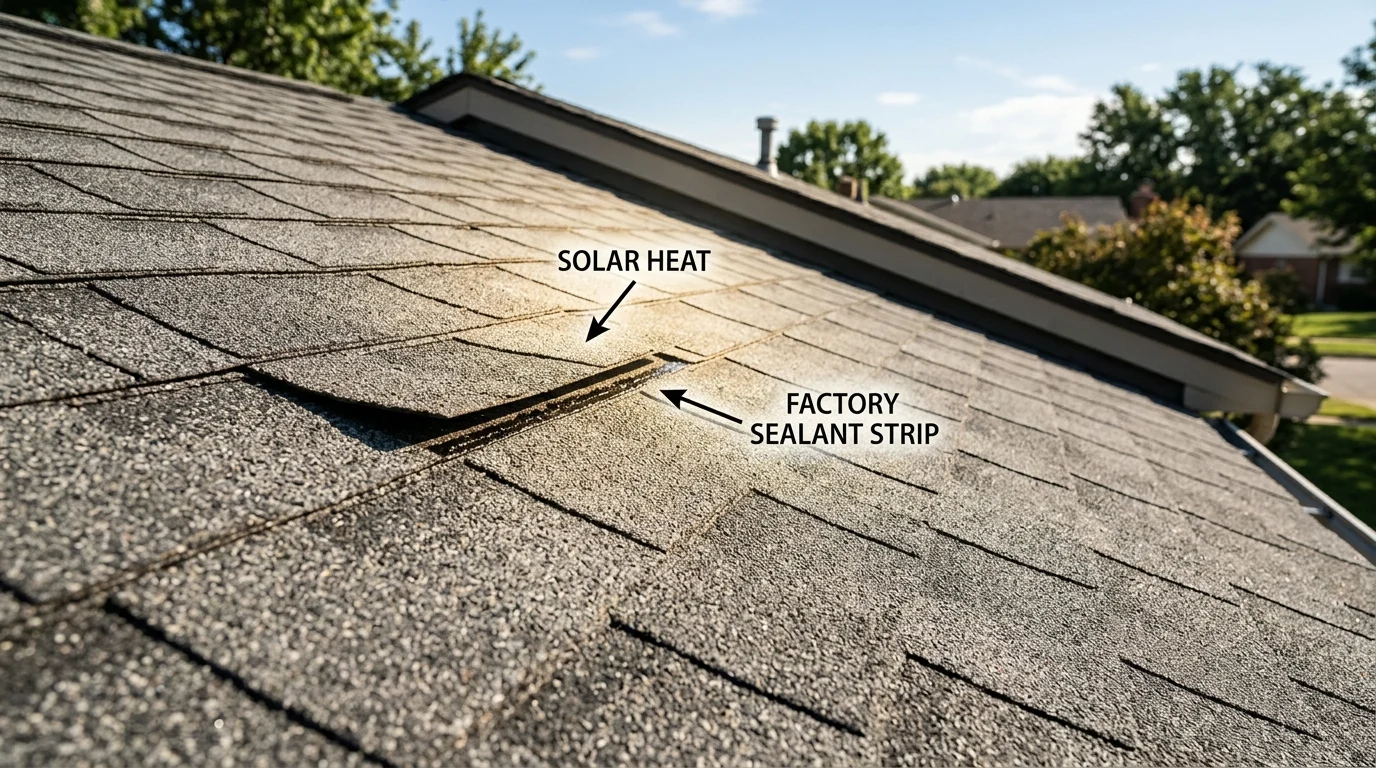
What Sealing Actually Means
Before looking at timelines, it helps to understand what is physically happening on the roof. Each asphalt shingle comes from the factory with a narrow strip of adhesive built into its surface.
This strip does nothing on its own. It needs heat, usually from direct sunlight, to soften and become tacky enough to bond with the shingle installed above it. Once that bond forms and cures, the shingles function as a connected system rather than individual pieces.
Why This Bond Matters for Wind Resistance
A single shingle sitting loose on a roof deck offers little protection against strong wind. The sealing process is what turns a stack of individual shingles into a wind resistant covering.
Without a cured seal, tabs can lift during gusts, and repeated lifting can eventually lead to full blow offs. This is precisely why installation timing and weather conditions carry so much weight in the overall process, and why an unexpected windstorm shortly after a reroof sometimes calls for emergency roofing services to secure any tabs that lifted before sealing had a chance to complete.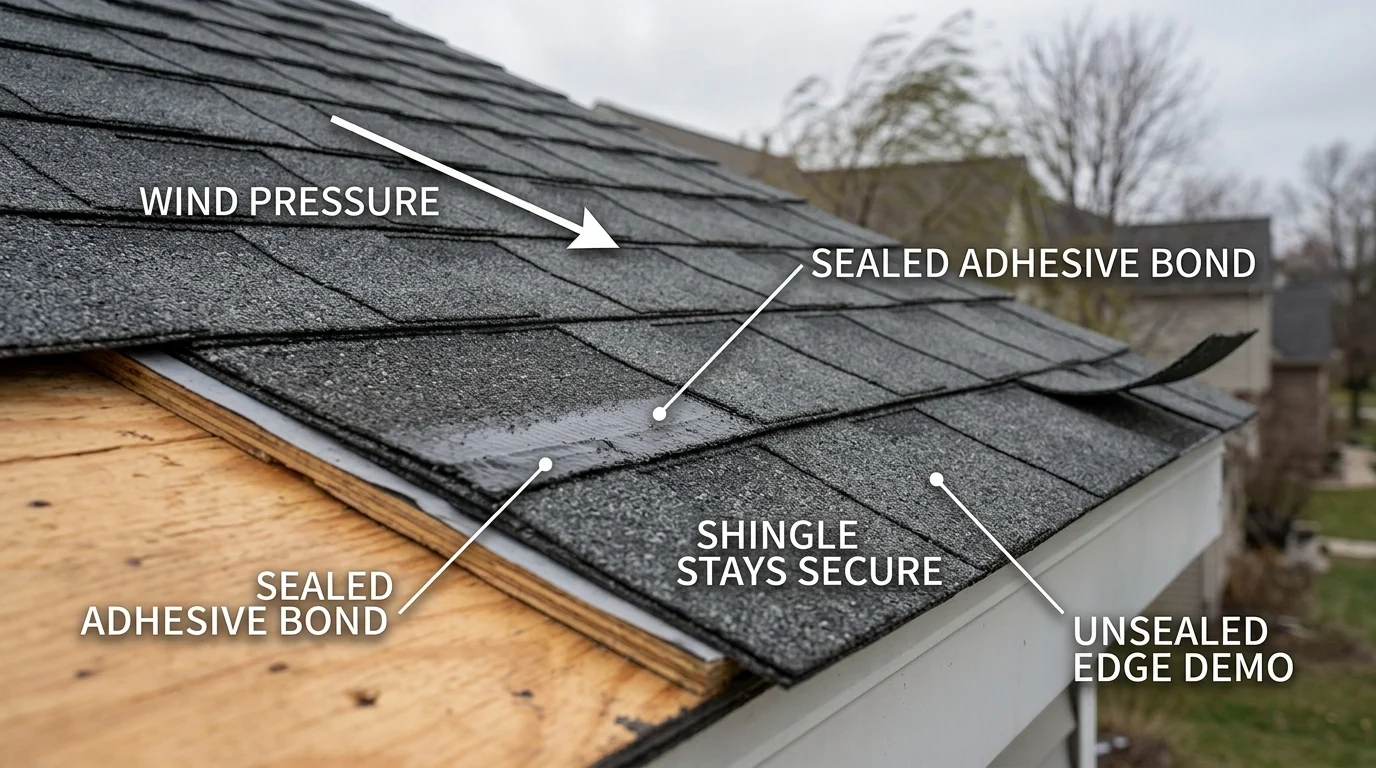
How Long Does Sealing Typically Take?
Timeframes vary based on climate, season, and sun exposure, so there is no single universal answer. Still, a few general patterns hold true across most residential installations. Here is a general breakdown of what homeowners can expect under different conditions:
- Warm, sunny weather: Shingles installed during summer with consistent direct sun exposure often seal within a few days.
- Mild spring or early fall conditions: Moderate sunlight and temperatures can stretch sealing time to one or two weeks.
- Late fall or winter installations: Reduced sun angle and cooler temperatures can delay sealing for weeks, and in some cases until the following spring.
- Shaded or north facing roof sections: Areas that receive less direct sunlight tend to seal more slowly than sun exposed sections of the same roof.
What GAF’s Warranty Documentation Says About Timing
Manufacturer warranty language offers useful insight into how the industry treats this variability. It also clarifies what does and does not count as a defect. GAF’s Shingle & Accessory Limited Warranty states it directly:
“All self-sealing shingles, including GAF’s, must be exposed to warm, sunny conditions for several days before they completely seal. Before sealing occurs, shingles are vulnerable to blow-offs and wind damage. Shingles installed in Fall or Winter may not seal until the following Spring.”
This is treated as a normal characteristic of the product rather than a manufacturing flaw, and the warranty stays in effect regardless of the air temperature at installation, as long as any required cold-weather steps, like hand sealing, were followed correctly at the time of installation.
What Temperature Do Shingles Need to Seal?
Quick answer: Asphalt shingles generally need warm, sunny surface temperatures to activate the sealant strip, and installers take extra care once air temperatures drop below about 40°F, since shingles become less flexible and more prone to cracking in cold weather.
This is also why cold-weather installations, common when a repair can’t wait for spring, follow specific handling precautions and typically require hand sealing to compensate for the lack of natural heat activation.
Factors That Influence Sealing Speed
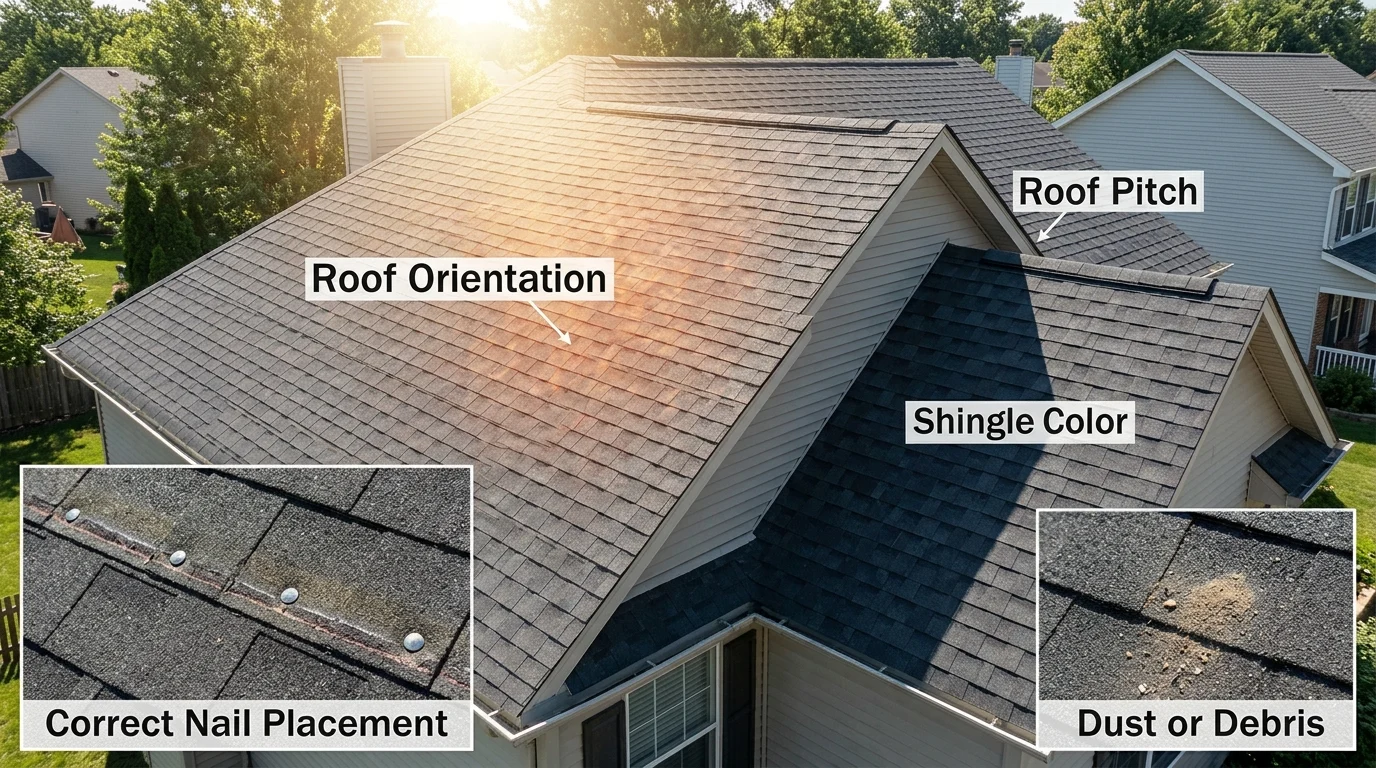
Weather is the most obvious variable, but it is far from the only one. Several other factors combine to determine how quickly a roof reaches full adhesion. Consider the following elements when thinking through your own roof’s timeline:
- Roof orientation: South facing slopes generally receive more direct sunlight and seal faster than north facing sections.
- Roof pitch: Steeper roofs are often more exposed to sun and heat, which can support quicker sealing in some cases.
- Shingle color: Darker shingles absorb more heat, which can slightly accelerate adhesive activation.
- Installation accuracy: Proper nail placement within the designated nailing zone helps the sealant strip line up and function as designed. Overdriven or misplaced fasteners can interfere with this alignment.
- Debris or dust on the roof: Dirt trapped between shingle layers can interfere with adhesion in the affected area.
Signs Your Roof May Not Be Sealing Properly
Most roofs seal without issue once conditions cooperate, but it is worth knowing what warning signs to watch for. Catching a problem early is far easier than repairing storm damage later.
- Lifted or fluttering tabs: Shingle edges that move visibly in light wind may indicate the seal has not activated.
- Consistent cold season installation with no summer follow up: A roof installed in winter without a warm season afterward may still be unsealed months later.
- Visible gaps between courses: Misaligned shingles can prevent the sealant strip from making proper contact.
- Repeated minor wind damage: Small, recurring losses of shingle tabs can point to an incomplete bond rather than a one time weather event.
If you notice any of these signs, a professional roof inspection service can confirm whether the shingles are simply waiting on warmer weather or whether an installation issue needs attention.
Sealing Timeline by Season
The table below summarizes general sealing expectations based on the season a roof is installed. Actual results can vary by region and roof exposure.
| Installation Season | Typical Sealing Behavior |
|---|---|
| Summer | Seals within days under direct, consistent sunlight |
| Spring or Early Fall | Seals within one to two weeks depending on sun exposure |
| Late Fall | Sealing may slow significantly and extend into the following months |
| Winter | Sealing may not begin until temperatures rise in spring |
For a closer look at how the colder months affect an entire roofing project beyond just sealing, see our guide on roofing in winter periods.
Can Sealing Be Speed Up?
Quick answer: Yes, through professional hand sealing, but not through DIY shortcuts like heat guns, which can damage the shingle material.
Homeowners sometimes ask whether anything can be done to speed the process along, particularly for roofs installed later in the year. The honest answer involves both what is possible and what is not recommended.
- Hand sealing during installation: Roofing crews can manually apply approved roofing cement in small dabs beneath shingle tabs in cold weather to reduce vulnerability before natural sealing occurs. This is a standard, code-recognized practice, not an improvised fix.
- Choosing installation timing wisely: Scheduling a reroof during warmer months, when practical, supports faster natural sealing.
- Avoiding walking on unsealed shingles: Foot traffic on a fresh roof can disturb the sealant strip before it has bonded.
Attempting to force the process with heat guns or other shortcuts is not advisable, since uneven heating can damage the shingle material itself.
Not Sure If Your New Roof Has Sealed Properly?
Get a professional opinion before the next storm rolls through.
Conclusion
The time it takes for asphalt shingles to seal depends mainly on sunlight, temperature, and the season the roof was installed, with warm weather producing results within days and cold season installs sometimes stretching into the following spring. Recognizing this variability helps set realistic expectations rather than assuming a slow seal signals a defect.
If you have questions about a recent installation or want a professional opinion on whether your roof has sealed properly, our team at Solaroof NY can schedule an inspection and walk you through exactly what we find. We work with homeowners throughout the region to make sure every roofing project performs the way it should, season after season.