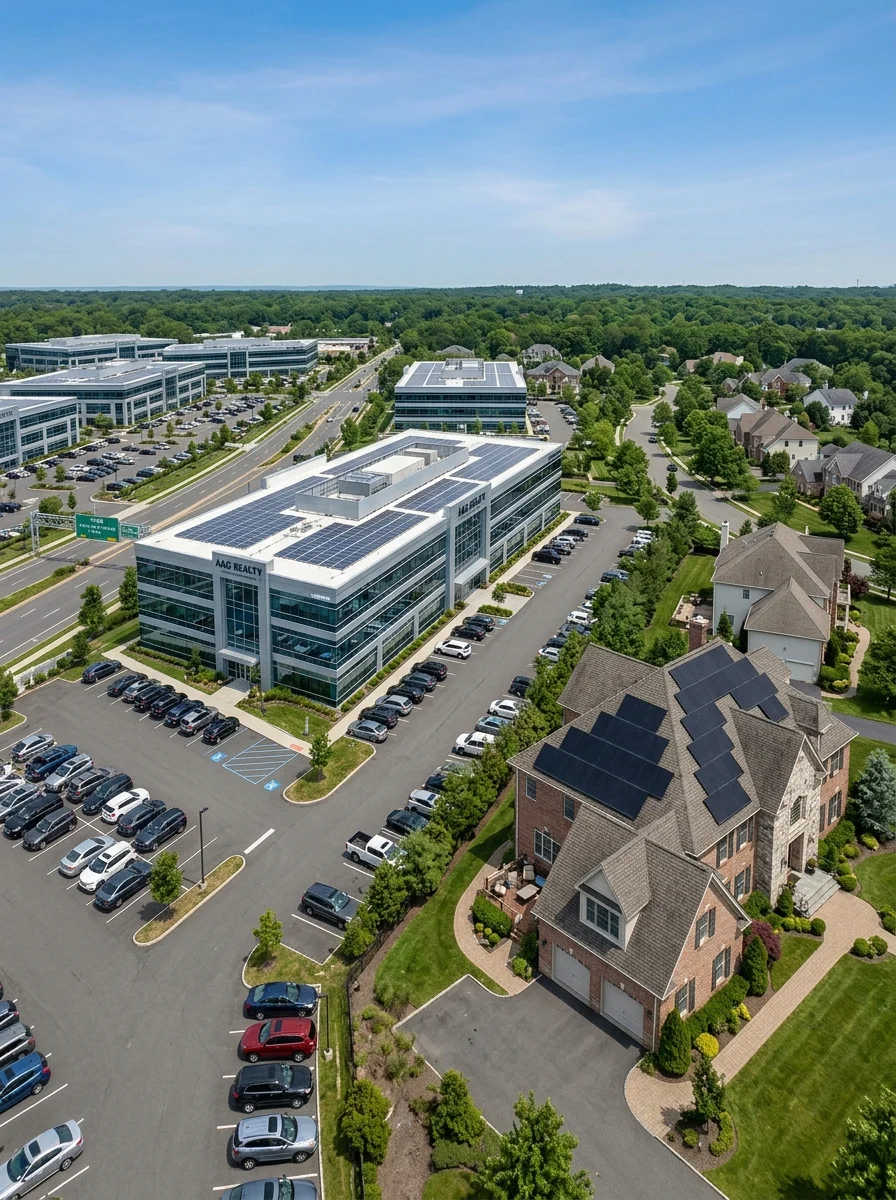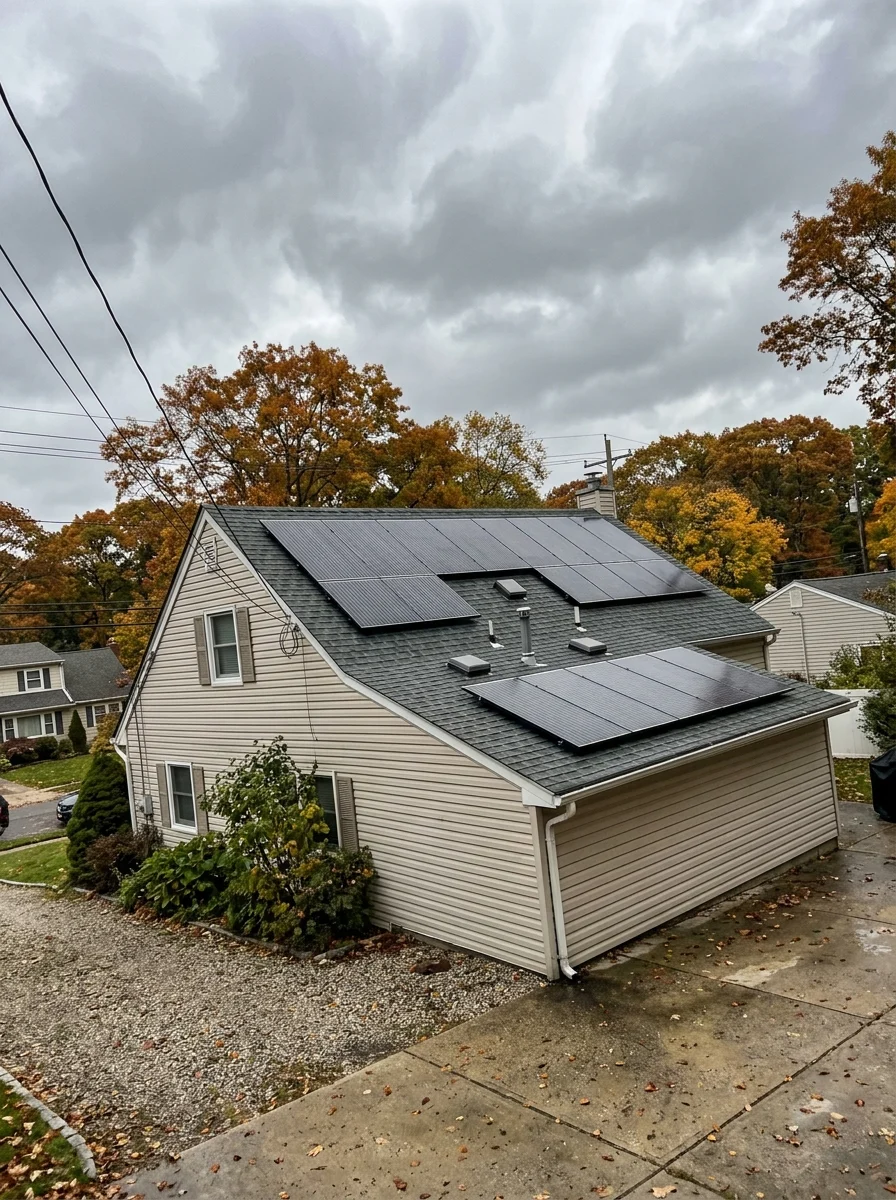

A large Jericho residence and a multitenant office building may sit only minutes apart, yet their energy demands are entirely different. Roof access, peak electricity use, ownership structure, and backup priorities can all change the appropriate solar design. Solaroof NY provides solar panel installation in Jericho for homeowners and commercial property owners seeking a system built around the way their building operates. Every proposal defines the recommended equipment and project scope before installation begins.
Solar planning is available for homes, offices, and other suitable commercial properties.
Backup recommendations reflect the circuits and operating time the customer wants to protect.
Panels are arranged around usable roof zones without ignoring drainage or future service access.
Customers receive clear information as the project advances through design and installation.
Jericho has developed around several distinct layers of Long Island history. The Jericho Cider Mill remains on Route 106, while the historic Milleridge Inn stands along North Broadway. Nearby office centers create a noticeably different setting from the residential streets surrounding them.Jericho Quadrangle and Jericho Plaza place substantial commercial properties close to the Long Island Expressway. Jericho Turnpike also supports retail and professional activity across the community. Away from these corridors, East Birchwood and West Birchwood contain established residential neighborhoods.That combination makes solar in Jericho relevant to several types of customers. A homeowner may be preparing for extended outages, while a commercial owner may be looking for better control over daytime electricity costs.
We deliver intelligent, end-to-end solar infrastructure for Jericho’s luxury residential estates and commercial properties. By blending rigorous structural design and strict local zoning compliance with tier-one hardware, advanced battery integration, and continuous optimization.

Custom solar arrays designed for Jericho’s premier homes and commercial facilities. We maximize your roof layout and peak power potential to deliver immediate overhead savings and long-term energy independence.

Upgrade aging or underperforming systems with next-generation solar technology. We swap out degraded panels and inefficient inverters to instantly boost your property’s power output and safety.

Protect your investment with advanced thermal imaging and grid diagnostic testing. Our technicians verify net metering performance and structural integrity to catch minor faults early.

Fast, reliable restoration for residential and commercial arrays. From fixing localized inverter failures to resolving storm-induced physical damage, we permanently halt your energy loss.
Backup power for a larger home cannot be planned by counting appliances alone. The design must consider how much electricity the selected equipment draws when operating and whether several high-demand systems may run at once.
A homeowner may want ordinary household functions to continue with few changes. Another may be comfortable postponing selected loads until utility service returns. Defining that expectation early creates a more realistic battery plan.
Battery capacity is only one part of the decision. A practical design considers three separate performance questions.
The system must provide enough power to start and operate the selected equipment.
The batteries must store enough energy to support the expected outage duration.
The solar array must have a practical opportunity to recharge the batteries when daylight conditions permit.
A proposal should explain these limits instead of presenting whole-home backup as an unlimited source of power.
Jericho homeowners do not necessarily have to choose between one small emergency panel and unrestricted backup for every circuit. Loads can be organized into operating tiers.
Equipment that should remain continuously available throughout an outage.
Comfort systems that operate on a selective, as-needed basis.
High-consumption equipment paused automatically as battery levels decline.
This structure can help homeowners preserve stored energy without manually switching breakers throughout an outage.
Battery location affects more than appearance. The proposed area must provide suitable working clearance and access for service. Applicable installation requirements must also be addressed before the final equipment arrangement is approved.
Larger homes may offer several potential locations, but the nearest empty wall is not automatically the best choice. Reviewing the electrical service and planned backup circuits can narrow the options.
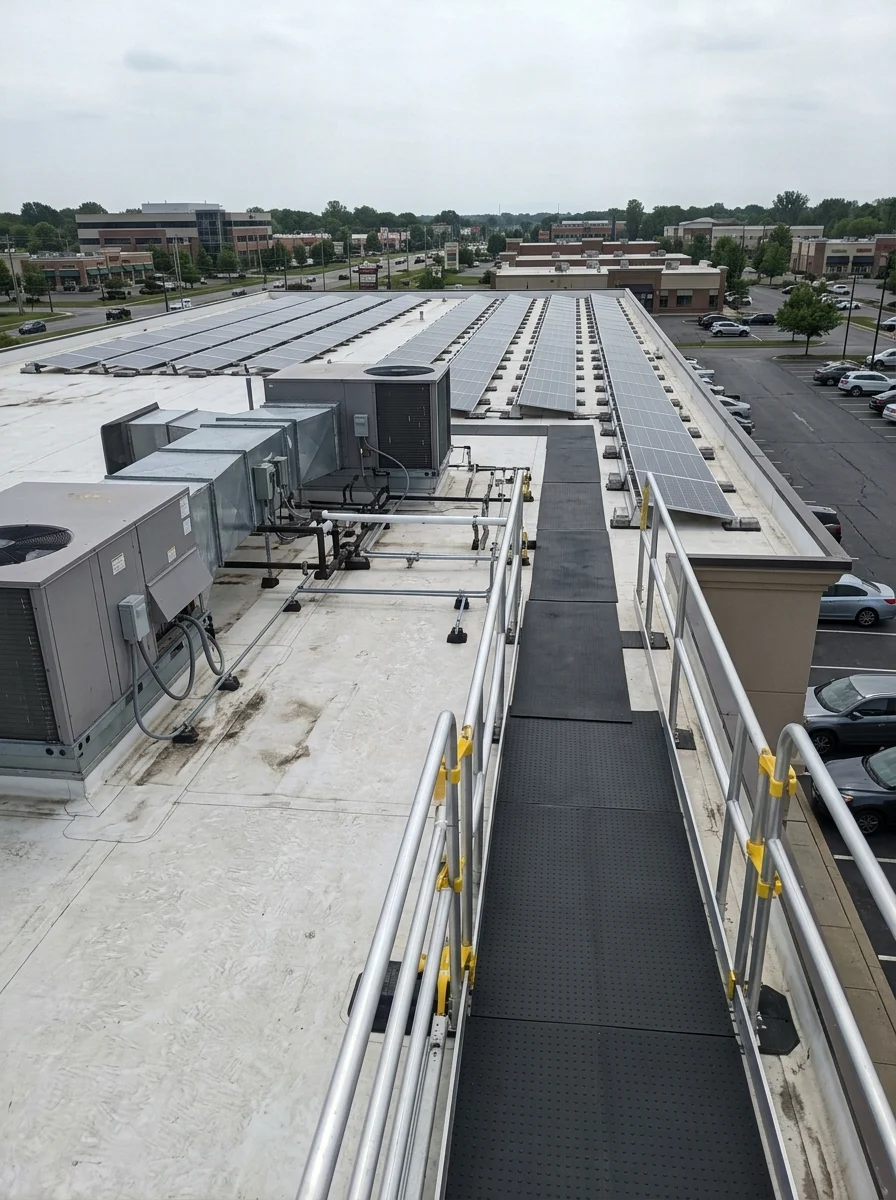
Jericho’s commercial properties include low-rise offices and retail buildings. Flex space can also be found around corridors such as Robbins Lane. These buildings may offer broad roof areas, but usable square footage must be confirmed rather than assumed. Mechanical equipment can divide a commercial roof into separate zones. Walkways may also need to remain open for technicians. The panel layout must work around those conditions while preserving access to equipment that will still require maintenance.
Commercial solar planning begins with the property's operating profile. A building that is busiest during weekday business hours may use solar production differently from a facility with evening operations.
Utility records can reveal whether consumption remains steady or changes sharply throughout the day — a stronger design basis than square footage alone.
May benefit from comparing solar production with daytime cooling and equipment loads.
May require coordination among the owner, tenants, and existing service providers.
May need to preserve roof access around ventilation or loading-related equipment.
Commercial customers should identify who controls the roof and who pays the electric bill. When those responsibilities belong to different parties, the project may require an agreement that addresses access and long-term equipment ownership.
Future leasing plans should also be considered. A solar arrangement designed for one occupant may need flexibility if the building will later be divided among several tenants.
A commercial roof with a large open area may appear ideal for solar, but membrane condition and drainage performance still require attention. Completing necessary roof work before installation can reduce the likelihood of removing panels for an avoidable repair.
Solaroof NY can coordinate the solar scope with information from the roofing team so the equipment plan reflects the roof's current condition.
A solar canopy can turn part of a parking area into an energy-producing space while providing covered parking. However, this approach requires structural planning beyond a standard rooftop installation.
Vehicle circulation and foundation locations must be reviewed. Lighting or electric vehicle charging may also be incorporated when appropriate.
The design should identify the roof zones selected for installation and explain why those areas are being recommended.
Residential battery customers should see which circuits are included. Commercial customers should understand how the proposed production relates to the building's usage pattern.
The proposal should address relevant electrical conditions and roof limitations discovered during the project review.
Future battery capacity or vehicle charging may influence the initial design even when those additions are not included immediately.
A previous addition created an irregular roofline, while ventilation components occupied part of the most visible roof plane. The homeowners also wanted to keep room available for future electrical work.
The design used two suitable roof zones and maintained clear space around existing equipment. Battery planning separated continuous household loads from optional comfort circuits.
Result: A coordinated solar and backup configuration that respected the altered roof layout.
The roof contained several mechanical units with established maintenance paths. Electricity records showed substantial weekday consumption during the same hours that the proposed array would produce energy.
Panels were organized around the usable perimeter zones while keeping designated equipment routes open.
Result: A commercial layout aligned with the building's operating schedule and roof access requirements.
Hear directly from our clients about their experience with Solaroof NY.
Absolutely satisfied with Solaroof NY! The installation was quick and clean, and their customer service was outstanding. I love how they helped me understand the benefits of solar energy. I’m already seeing a reduction in my power costs — worth every penny!
⭐️⭐️⭐️⭐️⭐️ The process was smooth from the initial quote to the final inspection. The crew replaced my roof and added solar panels in just a few days. I was amazed by how clean and efficient they were. Now I’m saving money on utilities and my house has never looked better. Total win!
They not only installed the roof perfectly, but the solar panels were a great addition, saving me money on my energy bill, and I couldn’t have asked for a better service or price.
I chose them because of the great price and reputation, and I’m glad I did, they delivered excellent service, completed the work on time, and now my home is more energy-efficient than ever.

The work was completed on time, and the solar panels were installed seamlessly, making the entire process simple, affordable, and stress-free from start to finish.
The service was top-notch, the pricing was very competitive, and the job was finished quickly and professionally, now my roof is solid, and I’m already saving money with the new solar system.
I needed a new roof and solar system, and the team did an excellent job, offering competitive pricing, great service, and completing everything exactly as scheduled.
The solar panels have already started saving me money, and the roof looks fantastic, they did an amazing job explaining everything and completed the work on time without any hidden fees.
I needed my roof replaced and solar panels installed, and they were the best in terms of price and service, they completed the project on time, and I’m already noticing a drop in my utility bills.

The tenant will generally need the property owner’s approval because the project uses the roof or another structural area. The parties should also determine who will own the equipment and receive the financial benefits.
A battery may replace a generator for some households, but the appropriate choice depends on the desired outage duration and electrical load. Some properties may use a battery alone, while others may consider a coordinated backup arrangement.
Yes. A productive design may concentrate panels on the strongest installation areas instead of filling every roof plane. Shade and equipment clearance can make a selective layout more practical.
Many systems include monitoring that allows the owner to review production. The available information depends on the selected equipment and monitoring platform.
Solar equipment may need to be removed and reinstalled before major roofing work can proceed. Reviewing the roof before installation can help the owner decide whether replacement should happen first.
The embedded map below identifies Jericho’s position near Route 106 and Jericho Turnpike. It also shows the community’s connection to the Long Island Expressway and Northern State Parkway. Homeowners and commercial property owners can request an address-specific review to confirm service availability.
Solaroof NY also works with residential and commercial customers in communities surrounding Jericho.


The best solar panels in Jericho are not simply the ones that fit on the roof. A truly efficient system must factor in your structural Jericho roofing installation, the building’s operating hours, available space, and future electricity needs.
Contact Solaroof NY for a free residential or commercial estimate. The team can review the property and prepare a defined route from initial planning through system activation.
Enter your question below and we will get right back to you!
Please enter a mobile phone number below.