Understanding Oil Canning on a Metal Roof: Causes, Prevention, and Reality
If you’ve ever looked at a metal roof and noticed subtle waves, ripples, or a slightly buckled appearance along the flat faces of the panels—even on a brand-new installation—you’ve witnessed one of the most talked-about phenomena in the metal roofing industry: oil canning. It’s one of the first questions homeowners and contractors encounter when evaluating metal roofing systems, and it often causes unnecessary alarm.
According to the Metal Construction Association, oil canning is recognized as an inherent characteristic of light-gauge cold-formed metal products and is not considered a defect. Understanding what oil canning is, why it happens, when it matters, and how to minimize it will help you make better decisions when choosing, specifying, or evaluating a metal roof. This guide covers every dimension of the topic from physics and metallurgy to installation best practices and aesthetic solutions.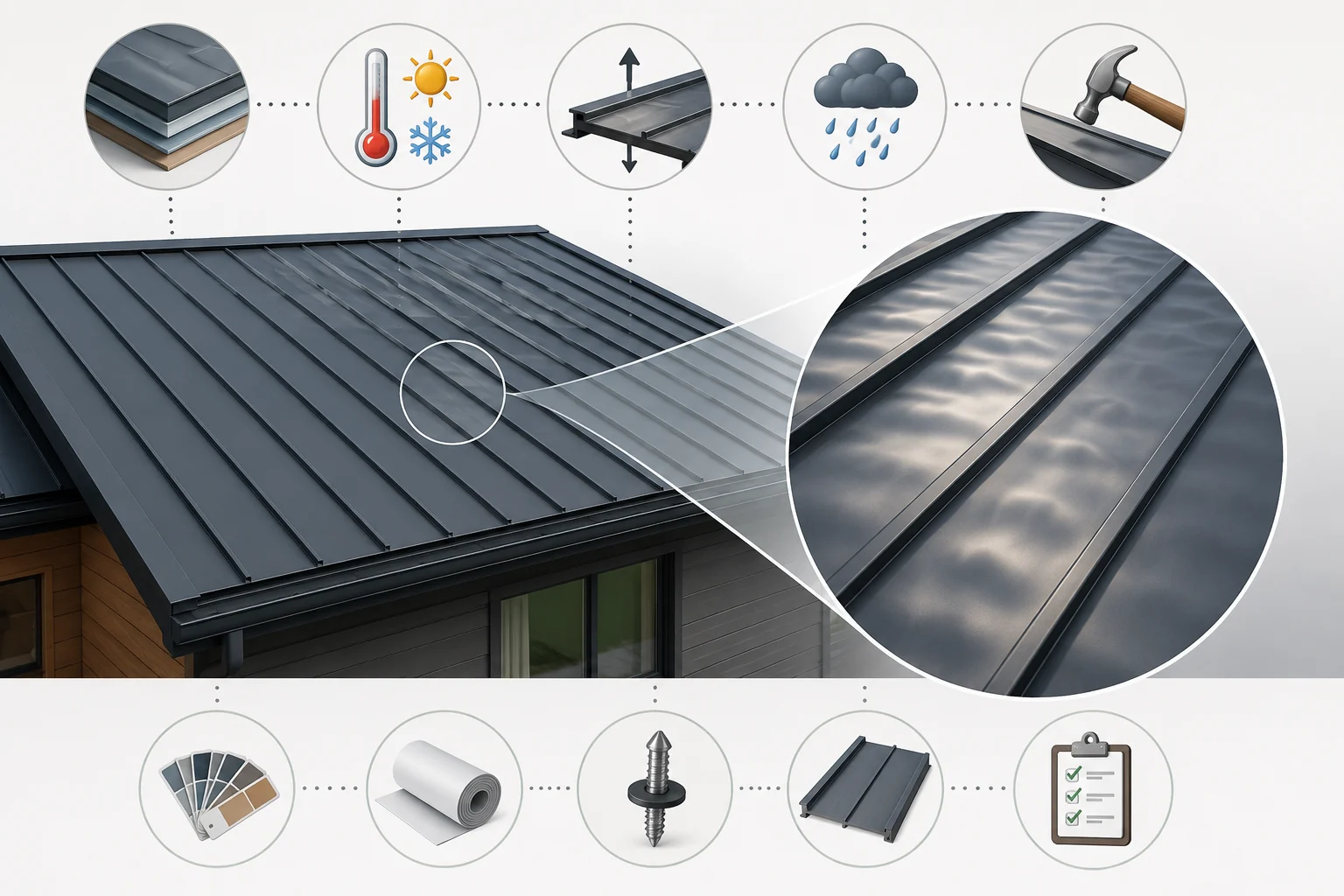
What Is Oil Canning on a Metal Roof
Oil canning is a visual phenomenon that appears as waviness, rippling, or distortion in the flat areas of metal roofing panels. It is most visible when light strikes the panel surface at a low, raking angle—such as during early morning or late afternoon—and it creates a shadowed, undulating appearance that draws attention to the irregularity of the surface.
The term oil canning comes from the old-fashioned pressed-metal oil cans used in workshops and garages. When you pressed the bottom of one of those cans, it would flex inward with a distinctive pop and return when released. That same tendency, the elastic buckling and flexing of thin sheet metal under stress, is exactly what causes the visual effect seen on metal roofing panels.
It is important to understand from the outset that oil canning is not cracking, not structural failure, and not a sign of poor-quality materials. It is a cosmetic condition inherent to the physics of thin, flat metal sheets. The metal roofing industry universally acknowledges oil canning as a characteristic of the material rather than a manufacturing or installation defect, and it is specifically excluded from most manufacturer warranties for this reason.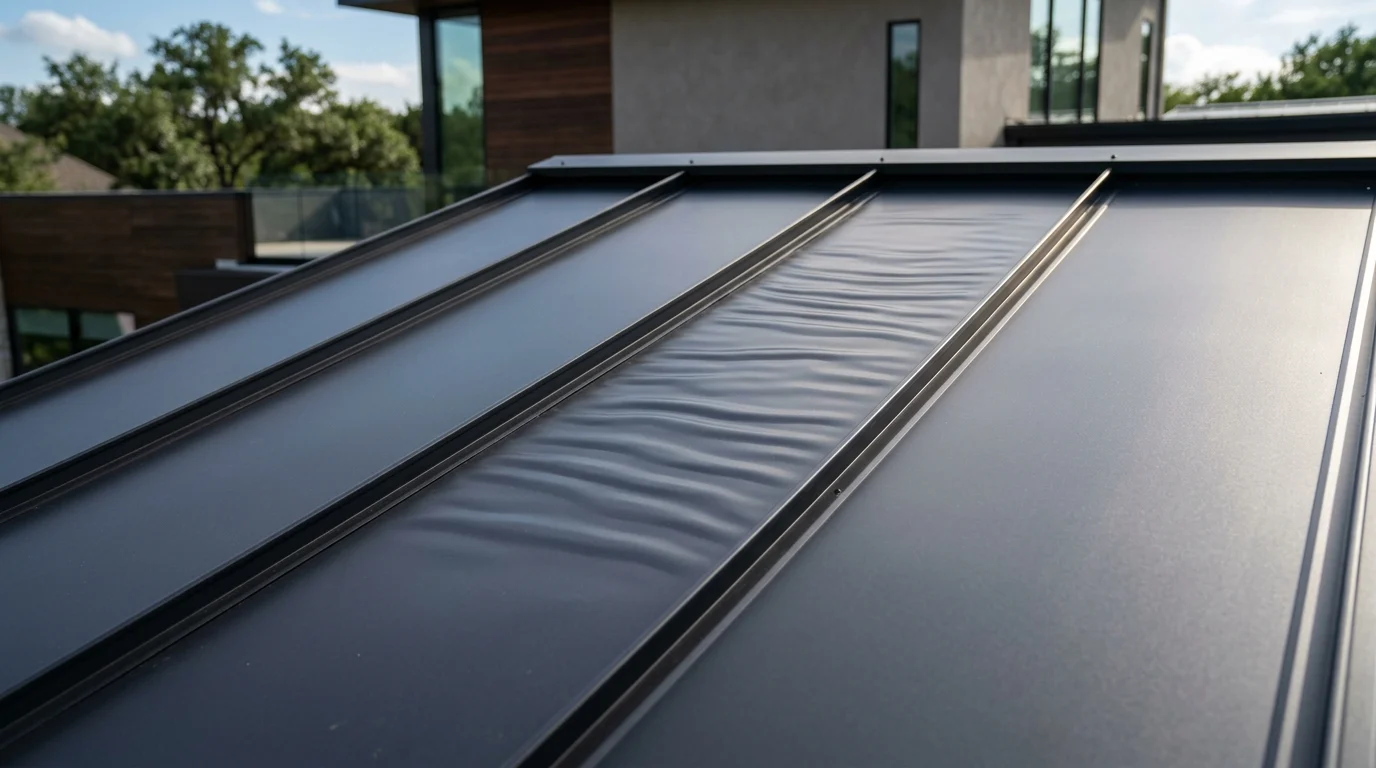
What Causes Oil Canning in Metal Roofing
Oil canning has multiple root causes, and in most cases it results from a combination of factors rather than a single isolated problem. Understanding the causes helps both contractors and homeowners take preventive steps during specification and installation:
- Residual stress: Internal stresses introduced during the roll-forming process remain locked in the metal and can manifest as surface distortion over time.
- Coil set and crossbow: Curvature introduced along the length or width of the sheet during coiling can create tension when laid flat against a roof deck.
- Thermal expansion and contraction: Daily and seasonal temperature swings cause metal to expand and contract. If movement is restricted, the panel buckles slightly.
- Improper substrate conditions: Uneven roof decks, humps, dips, or crowned rafters translate directly into visible panel distortion.
Why Oil Canning Happens More on Standing Seam Roofs
Standing seam metal roofing, the most popular premium metal roofing system for residential and commercial applications, is particularly susceptible to oil canning because of its geometry. Standing seam panels feature tall vertical seams running up the roof slope, with broad, flat panels between the seams. These wide, flat areas are exactly the geometry most prone to elastic buckling: a thin sheet of metal constrained at its edges with a large unsupported flat area in the middle.
By contrast, corrugated metal panels and exposed-fastener ribbed panels have frequent changes of plane built directly into their profile. These ribs, corrugations, and bends act as stiffeners, distributing stress across the panel and making the surface far more resistant to buckling.
Have Questions About Your Metal Roof?
Contact our experienced installation team for expert guidance and professional roofing assessments.
Metal Thickness and Its Effect on Oil Canning
Metal thickness is one of the most straightforward variables affecting oil canning susceptibility. Thicker metal is stiffer and more resistant to elastic buckling; thinner metal is more flexible and more prone to distortion under the same stress conditions.
| Panel Gauge | Approximate Thickness | Oil Canning Susceptibility |
|---|---|---|
| 29-Gauge | 0.014 inches | High (Very flexible) |
| 24-Gauge | Standard Residential | Low-Moderate (Recommended for quality finish) |
| 22-Gauge | 0.030 inches | Very Low (Stiffest, commercial grade) |
Ways to Reduce the Risk of Oil Canning
While oil canning cannot be entirely eliminated from thin metal panels, its visibility can be substantially reduced through thoughtful product specification and careful installation practice:
- Specify a thicker gauge: Moving from 29-gauge to 24-gauge dramatically reduces susceptibility.
- Choose narrower panel widths: Panels with a 12-inch or 14-inch flat are much less prone to oil canning than 18-inch or 24-inch panels.
- Select a textured or striated finish: Striated panels have subtle ribs pressed into the flat areas to stiffen the metal and scatter incident light.
- Use a matte or low-gloss finish: Minimizes specular reflection and hides minor surface variations.
- Prepare the substrate carefully: Ensure the deck is flat and check rafters for crowns before installation begins.
Can Oil Canning Affect Roof Performance?
This is the question homeowners most urgently want answered, and the good news is that in the vast majority of cases, oil canning is a purely cosmetic condition with no impact on roof performance or longevity. The waviness of oil canning represents elastic deformation: the metal has bent slightly but has not been stressed beyond its elastic limit. The panel remains fully intact, watertight, and structurally sound.