Roofs are complex systems made up of dozens of individual parts, many of which are crafted from durable metals. While the panels or shingles are the most visible, the smaller metal fixtures, caps, and vents are what truly keep your home watertight. Knowing these components helps you identify issues before they become expensive repairs, and helps you ask the right questions when planning a repair or replacement. Most roof leaks don’t start in the field of the roof itself, they start at the transition points where these metal components do their work.
The Role of Ridge Vents in Attic Ventilation
Ridge vents are long, low-profile metal or composite strips installed along the very peak of your roof. They allow hot, moist air to escape from the attic naturally, using the fact that warm air rises to create passive exhaust at the highest part of the structure. This airflow is essential for extending the life of your roofing materials and reducing energy costs, but there’s an important detail most homeowners never hear: a ridge vent cannot function properly on its own.
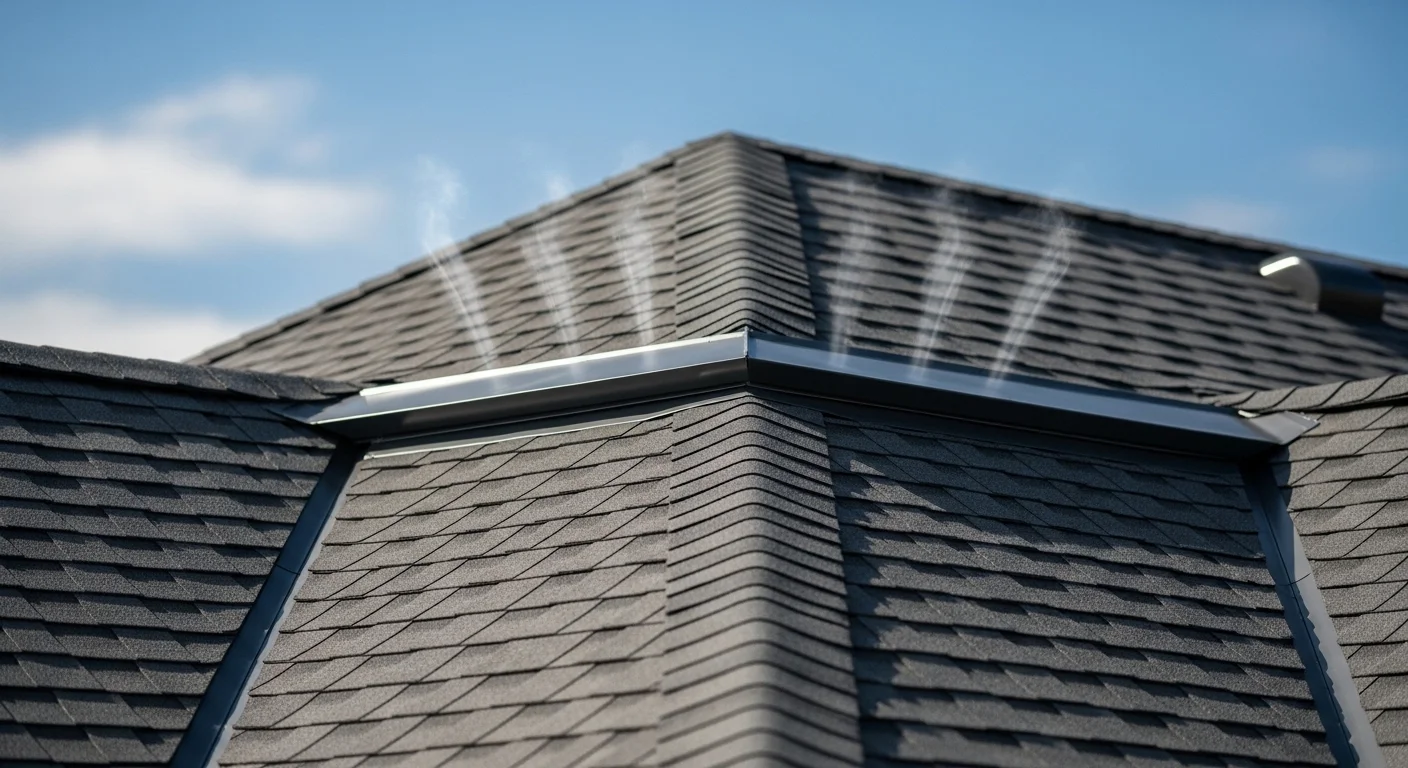
Building codes, including the International Residential Code, require attic ventilation of at least 1 square foot of net free vent area for every 150 square feet of attic floor space, and this area needs to be split roughly 50/50 between intake vents at the eaves or soffits and exhaust vents at the ridge. Without enough soffit intake feeding it, a ridge vent has nowhere to pull replacement air from, and in the worst cases it can end up drawing conditioned air out of the living space below instead of hot attic air. If your home has an unusually hot attic despite having a ridge vent, undersized or blocked soffit vents are the most common overlooked cause.
How Turbine Vents and Whirlybirds Improve Airflow
The spinning metal devices you often see on rooftops are known as turbine vents or “whirlybirds.” These wind-powered fans use curved metal vanes to draw air out of the attic. As the wind catches the turbine, it spins and creates a centrifugal effect that actively pulls hot air out through the vent. Because they require no electricity, they’re a cost-effective way to maintain airflow in windy regions like Long Island.
Important: Turbine vents and ridge vents are both exhaust vents, and they generally shouldn’t be combined on the same attic. When two exhaust points sit at different heights on the same roof, the lower one can start pulling in air meant for the higher one instead of drawing from the soffits, a problem roofers call “short-circuiting” the airflow. If your roof already has a ridge vent, adding turbine vents typically won’t help and can reduce the ridge vent’s effectiveness. Turbines make the most sense on roofs that don’t have a full-length ridge vent installed, such as hip roofs with limited ridge length.
Essential Roof Flashing for Leak Prevention
Flashing is perhaps the most important category of metal components on any roof. These are thin, shaped pieces of metal installed at joints, valleys, and wall transitions to redirect water away from vulnerable areas, and most leaks originate at these transition points rather than in the open field of the roof. “Flashing” isn’t one product, it’s a family of purpose-built pieces, each solving a specific water-flow problem:
- Step flashing: Small, L-shaped rectangular pieces layered with each row of shingles where a sloped roof meets a wall, such as alongside a dormer.
- Counter flashing: Installed over step flashing on a vertical surface, often set into a chimney’s mortar joints, to cap and seal the top edge of the step flashing beneath it.
- Valley flashing: A continuous metal channel running down the valley where two roof slopes meet, carrying the heaviest water volume on the roof.
- Kickout flashing: A small diverter placed at the bottom of a step-flashing run, redirecting water into the gutter instead of letting it run behind the siding. This piece is one of the most commonly missed details on a roof, and its absence is a frequent cause of hidden wall rot.
- Chimney flashing: Not a single piece but a full system combining an apron at the front, step flashing up both sides, counter flashing set into the masonry, and on chimneys wider than about 30 inches, a cricket or saddle on the uphill side to split water around it.

The Importance of Drip Edges and Eave Protection
A drip edge is technically its own type of flashing, an L-shaped metal strip installed along the eaves and rakes at the edges of the roof. Its job is to make sure water drips cleanly off the roof and into the gutters, rather than curling back underneath the roofing material through capillary action. Without a drip edge, water can rot your fascia boards and roof deck over time. It’s a small, inexpensive component, but it protects one of the highest-risk areas of your home’s perimeter, and many building codes now require it on new construction and re-roofs even though older homes were often built without one.
Snow Guards for Safety on Slick Metal Surfaces
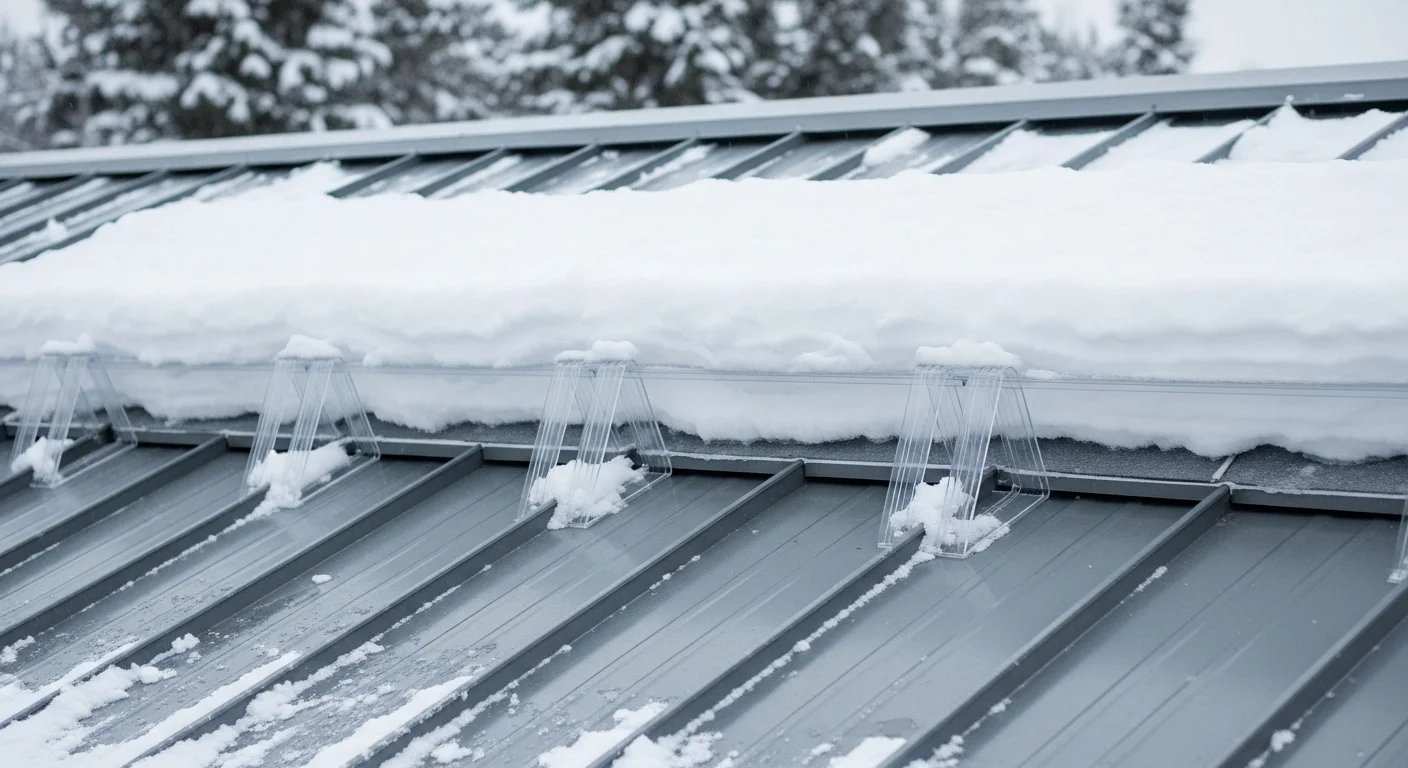
Metal roofs are naturally slick, which can lead to dangerous “roof avalanches” in snowy climates. Snow guards are small metal brackets, pads, or rails installed across the roof to hold snow in place, allowing it to melt gradually instead of sliding off in one heavy sheet. They’re installed in staggered rows rather than a single line, since one row at the eave alone often can’t hold back the sliding load on a longer roof. Typical layouts start a row about one to two feet up from the eave and add additional staggered rows every 10 to 25 feet of vertical run on longer panels, with exact spacing depending on your roof’s pitch and local snow load. This protects your landscaping, gutters, and anyone walking below the eaves. For homeowners considering solar panels on a metal roof, snow guards are an essential safety addition, since a sliding sheet of snow and ice can also damage panels mounted lower on the same slope.
Pipe Boots and Plumbing Vent Seals
Every home has plumbing pipes that exit through the roof to vent gases. These penetrations are sealed with “pipe boots,” metal collars fitted with a flexible EPDM rubber sleeve that grips the pipe. Over time, UV exposure dries out and cracks that rubber, which is one of the most common sources of small, slow leaks on any roof. A properly installed boot should leave at least an inch of the flat metal flange visible above the collar so water can’t pool against it, and shingles on the row above should be cut back from the boot rather than pressed tightly against it. Replacing these boots during a professional roof inspection service is a simple, inexpensive way to avoid major interior water damage down the line.
Decorative Finials and Architectural Metal Accents
Not all metal parts are strictly functional; some are purely aesthetic. Finials are the decorative metal points installed at the peaks of turrets or gables. While they do help cap and seal the very tip of the roof, they’re primarily used to add architectural character to Victorian or custom homes. Similarly, metal cupolas can serve as ventilation points, functioning much like a large turbine vent, while also acting as a striking focal point for a barn or residential roofline.
Get Your Roof Components Inspected
Are your vents balanced correctly? Is your flashing secure? Let our experts give you peace of mind.
Conclusion
From ridge vents to hidden kickout flashing, every metal component on your roof has a specific job to do, and several of them only work correctly when paired with the right partner component, not installed in isolation. When these parts are installed correctly, balanced, and maintained properly, they create a watertight system that protects your home for decades. If you suspect any of your roof’s metal components are rusted, missing, or mismatched, now is the time to have them checked before the next big storm. At Solaroof NY, we make sure every detail of your roof, not just the visible surface, is engineered to work together.