Homeowners know that solar panels are a smart investment, providing long-term energy savings, a bump in home value, and a smaller carbon footprint. However, many prospective buyers have a pressing question: Do solar panels damage your roof?
It’s a fair concern. Your roof provides the first layer of protection between your family and the elements.
The short answer is no—provided they are installed correctly.
When mounted by certified professionals using proper flashing and mounting standards, solar panels do not compromise roof integrity. In fact, panels can shield the underlying shingles from UV degradation and hail. However, significant damage can occur if installers use improper waterproofing methods or mount heavy racks on a roof that is already near the end of its lifespan.
In this article, we will unpack the facts, the risks, and the specific installation mechanics you need to understand to protect your home.
How Solar Panels Attach to Your Roof (The Mechanics)
To understand the risks, you must first understand that installation methods vary by roof type. While most homes require drilling, some modern systems require zero penetrations.
1. Asphalt Shingles (Standard Penetration)
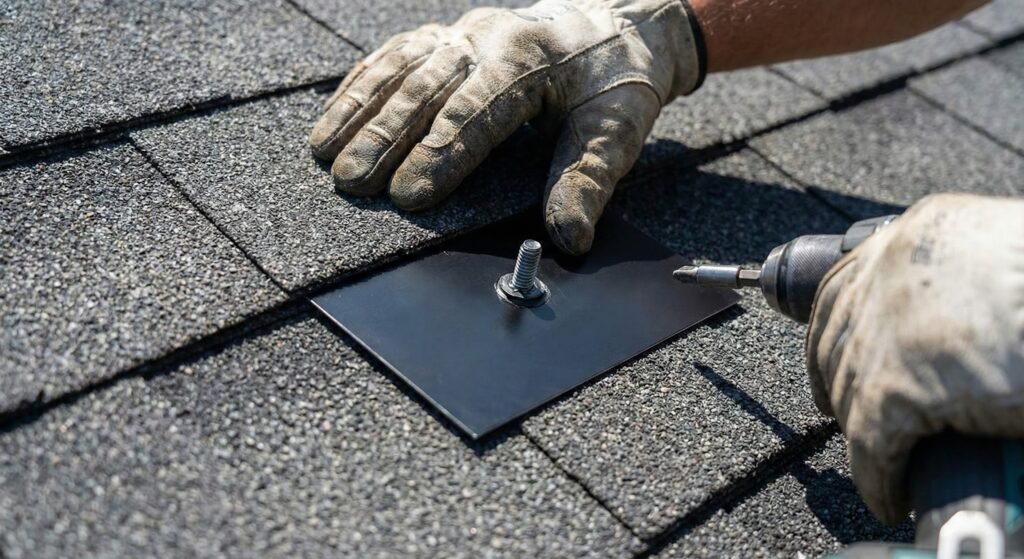
On standard homes, racking systems are bolted into the rafters or trusses using lag bolts. Because this creates holes, professional installers use flashing—specialized metal or heavy-duty rubber sheets that slide under existing shingles—to create a watertight seal around every bolt.
2. Standing Seam Metal Roofs (No-Drill)
If you have a metal roof with raised seams, the risk of damage is near zero. Installers use Standing Seam Clamps (such as S-5! clamps) that grip the metal seams without drilling a single hole. This preserves the roof’s waterproofing completely.
3. Flat Roofs (Ballasted)
Commercial or flat residential roofs often use Ballasted Racking. Instead of bolts, heavy concrete blocks hold the panels down by gravity. This eliminates the need to puncture the roof membrane (EPDM or TPO), removing the risk of leaks entirely.
Common Causes of Roof Damage During Solar Installation
Solar panels themselves do not damage the roof; poor workmanship does. Here are the primary causes of roof failure associated with solar projects:
Faulty Flashing & Waterproofing
The number one cause of water intrusion is improper flashing. If an installer relies solely on caulk or sealant rather than installing dedicated metal or rubber flashing kits, leaks are inevitable as the sealant degrades over time.
Overloading Old Structures
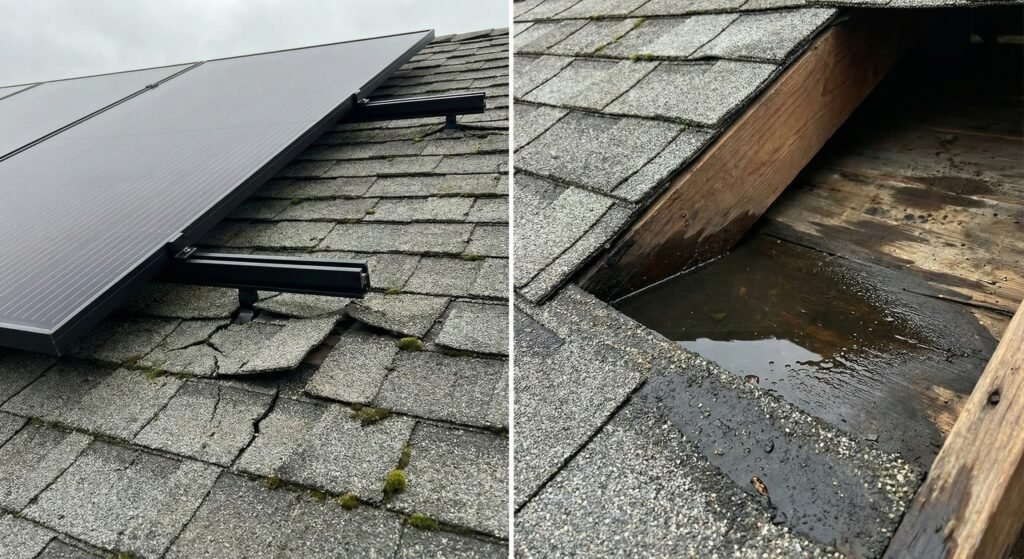
Solar panels have a lifespan of 25+ years. If your asphalt shingles only have 5 years of life left, installing solar over them is a mistake. The foot traffic during installation can cause micro-cracks in brittle shingles, and removing panels later to replace the roof is costly.
Excessive Roof Penetrations
Inexperienced contractors may miss the rafter when drilling, resulting in “swiss cheese” holes that aren’t properly sealed. A professional crew uses stud finders and structural maps to minimize penetrations.
How to Prevent Damage: The “Pre-Install” Checklist
Roof damage shouldn’t be something you deal with after the fact. Use this checklist to vet your installer and prepare your home:
- Clarify the Warranty Situation
Your Existing Roof Warranty: Many homeowners worry that solar voids their roof warranty. In most cases, it only voids the warranty for the specific area where penetrations are made, not the whole roof.
The Solar Workmanship Warranty: This is your safety net. Ensure your installer provides a 10-25 year Workmanship Warranty that explicitly covers roof leaks. This fills the gap left by your original roof manufacturer. - Request a Structural Review
Ask to see the engineering report confirming your rafters can support the additional static load (roughly 2-4 lbs per sq. ft.). - Plan for Winter (Ice Dams)
In colder climates, solar panels can change how snow melts. Ensure your installer leaves enough space at the bottom of the array to prevent ice dams from forming in your gutters, which can back up water under your shingles. - Install Critter Guards
Squirrels and birds love nesting under panels. Installing a mesh critter guard prevents them from chewing wires or scratching roof granules.
Can Solar Panels Protect the Roof Instead?
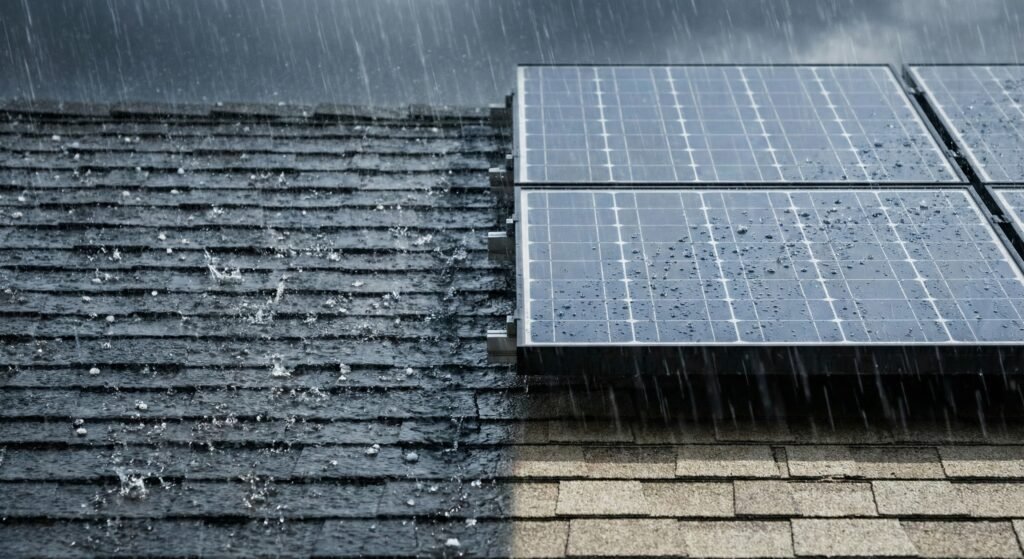
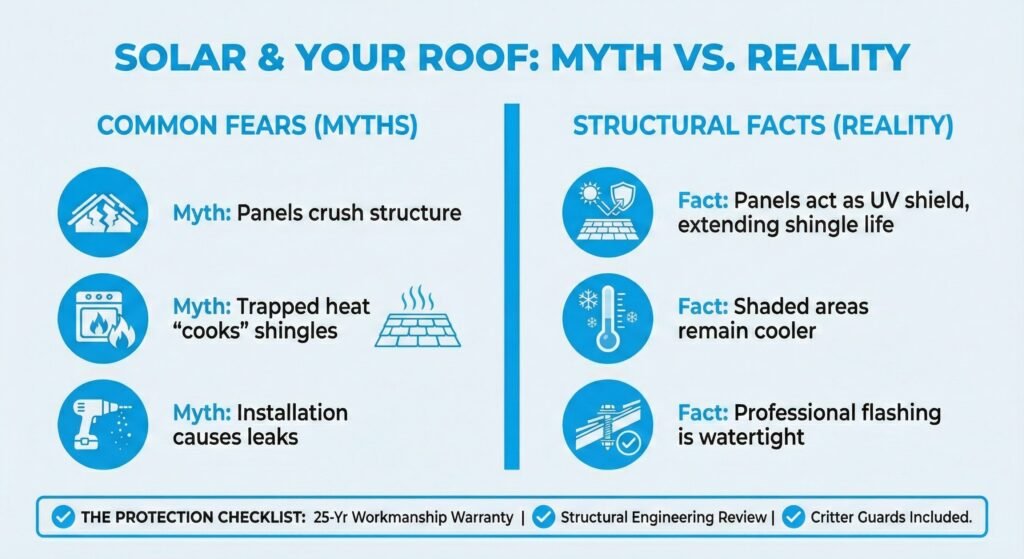
Here’s the thing a lot of homeowners don’t realize: Solar panels can actually extend the life of the roof sections they cover. The panels act as a “roof for your roof,” absorbing the brunt of rain, snow, hail, and heavy UV exposure—the primary cause of asphalt shingle degradation.
| Common Concern (Myth) | Structural Reality (Fact) |
|---|---|
| “Panels cook the shingles underneath.” Assumption that heat trapped under panels damages the roof. |
“Panels cool the roof.” Studies indicate shaded roof sections experience less thermal expansion/contraction, preserving structural integrity. |
| “The roof will degrade faster.” Fear that the added weight and hardware wear out the roof. |
“Protected shingles look brand new.” It is not uncommon to remove panels after 20 years and find the protected shingles looking new compared to exposed sections. |
When Damage Is Likely: Red Flags to Watch For
If you already have solar installed, keep an eye out for these distress signals:
- Sagging Roofline: Visible dips near the array suggest the structure cannot support the weight.
- Water Spots: Damp spots on your attic ceiling, particularly after heavy rain, indicate flashing failure.
- Debris Buildup: Leaves trapped under panels can hold moisture against the roof, leading to rot.
- Unexplained Power Drops: This could indicate water disrupting connections or rodents chewing wires under the array.
What to Do If You Suspect Damage
If you spot any of the red flags above, do not wait. Water damage compounds quickly, leading to mold and structural rot.
- Schedule an Inspection: Get a third-party roof inspection to assess the condition objectively.
- Contact the Installer: If the damage is related to the installation, leverage your workmanship warranty immediately.
- Emergency Repair: If you have active leaks during a storm, you need immediate mitigation.
Need help now? Reach Solaroof NY for emergency roof repair. Our team is uniquely qualified to repair roof damage caused by solar setups because we understand both systems inside and out.
Conclusion
Does installing solar panels ruin your roof? Not if installed correctly.
In reality, solar panels offer benefits and shelter for your home—but only if your roof is considered, prepared, and maintained correctly. With Solaroof NY, you no longer have to decide between clean power and a safe roof. At our core, we are roofers and solar experts with an integrated approach that puts your home first. We ensure that every lag bolt is sealed and every shingle is respected.
Are you ready to start?
Schedule an inspection to protect your roof and your investment today.