When planning a roofing project, most homeowners focus on color or material, but panel width is actually one of the most critical decisions you will make. It dictates the structural integrity of the roof, the overall aesthetic, and the total cost of installation. Metal roofing panels are not a one-size-fits-all category; they range from narrow architectural strips to wide commercial sheets. Understanding the difference between actual width and effective coverage width is essential to ensure you order the correct amount of material for your property.
The Important Distinction Between Actual Width and Coverage Width
Every metal panel has two measurements that you must understand. The actual width is the physical size of the sheet as it leaves the factory. However, because panels must overlap to remain watertight, the coverage width is the amount of roof surface the panel actually covers once installed. According to the Metal Roofing Alliance, coverage width is usually 2 to 4 inches narrower than the actual sheet. Always use the coverage width for your calculations to avoid being short on materials during the job.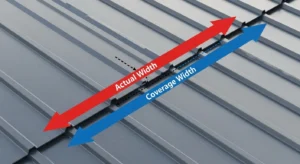
Standard Widths for Standing Seam Metal Panels
Standing seam systems are highly popular in residential areas due to their sleek look and concealed fasteners. These panels typically range from 12 to 18 inches in coverage width, with 16 inches being the most common standard for homes. Narrower panels provide a more refined, architectural appearance and are excellent for managing thermal expansion. If you are considering solar panels on a metal roof, standing seam widths often dictate the spacing of your solar mounting clamps.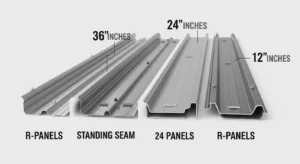
Corrugated Metal Panel Dimensions and Overlap Requirements
Corrugated panels are valued for their classic look and cost-effectiveness. Standard corrugated sheets usually have an actual width of 26 to 32 inches. Once you account for the necessary 1.5 corrugation overlap for weatherproofing, you are left with an effective coverage width of about 24 to 28 inches. These are ideal for agricultural buildings or secondary structures where speed of installation is a priority. For more complex projects, a professional roof inspection service can help determine if these wider panels are suitable for your specific roof pitch.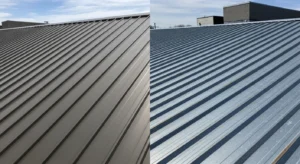
Common Sizes for Commercial Exposed Fastener R Panels
In the commercial and industrial world, 36-inch coverage width is the industry standard. These are often referred to as R-panels or PBR panels. Their wide profile allows for faster coverage of large surface areas, which significantly reduces labor costs. While they are highly efficient for flat or low-slope commercial buildings, they require regular maintenance of the exposed fasteners to prevent leaks over time. Before installing these, it is wise to consult a licensed installation service to ensure your structural purlins can support the wider span.
How Roof Geometry and Pitch Affect Panel Selection
The shape and slope of your roof play a major role in which panel width looks best. Steep-pitched roofs often benefit visually from narrower panels (12 to 16 inches) because they create a rhythmic, vertical aesthetic that enhances curb appeal. On the other hand, a low-slope roof where the panels are not highly visible from the street can utilize wider, 36-inch panels to save on costs. If you aren’t sure which style fits your home, determining if your roof can be repaired instead of replaced might give you more time to weigh your options.
Structural Considerations for Wider Metal Roof Panels
From an engineering standpoint, wider panels often require a heavier gauge to maintain strength over a long span. If you choose a very wide panel but use a thin metal, the roof may deflect or “oil can” under heavy snow loads. Manufacturer span tables provide the maximum allowable distance between supports for each width. Always match your panel width to the existing rafter or purlin spacing of your building to avoid structural failure or fastener pull-through.
Conclusion
Choosing the right metal roof panel width is a balance between your budget, the desired look, and the structural needs of your building. Whether you opt for the premium 16-inch standing seam or the economical 36-inch R-panel, getting the measurements right at the start will save you from expensive material waste. At Solar Roof NY, we help homeowners navigate these technical details to ensure their new roof is as durable as it is beautiful. With the right panel width and expert installation, your roof can protect your home for 50 years or more.
Expert Metal Roofing Consultations
Not sure which panel width is right for your home? Let our specialists help you choose the perfect fit.