Wondering if your solar panels are working optimally? Testing solar panels with a multimeter is more than just a technical task; it is the most reliable way to ensure your system functions at its peak. Regularly diagnosing your solar health from home allows you to maximize energy output and protect your long-term investment in sustainable energy. Factors like dust, debris, and shading can hinder efficiency, and knowing how to use a multimeter enables you to spot trouble before it becomes an expensive repair. This guide provides a practical approach to solar panel diagnostics for every homeowner.
Why You Should Regularly Test Your Solar Photovoltaic Systems
Solar panels convert sunlight into electricity using photovoltaic cells, but environmental factors can impact their efficiency over time. Monitoring your voltage and current output ensures your panels are working properly. Even a slight drop in performance means your energy production is going to waste. Routine testing helps catch issues like loose connections, cell degradation, or environmental obstructions. By maintaining a proactive testing schedule, you reduce energy costs and increase your ROI, ensuring the system runs efficiently for decades.
Understanding Key Electrical Parameters for Testing
To determine how well a solar panel is working, you must understand the basic electrical characteristics of a solar cell. A digital multimeter is the primary tool used to measure these specific metrics. Before you begin, check the label on the back of your panel for the manufacturer’s rated values. This data serves as your baseline for comparison during the diagnostic process.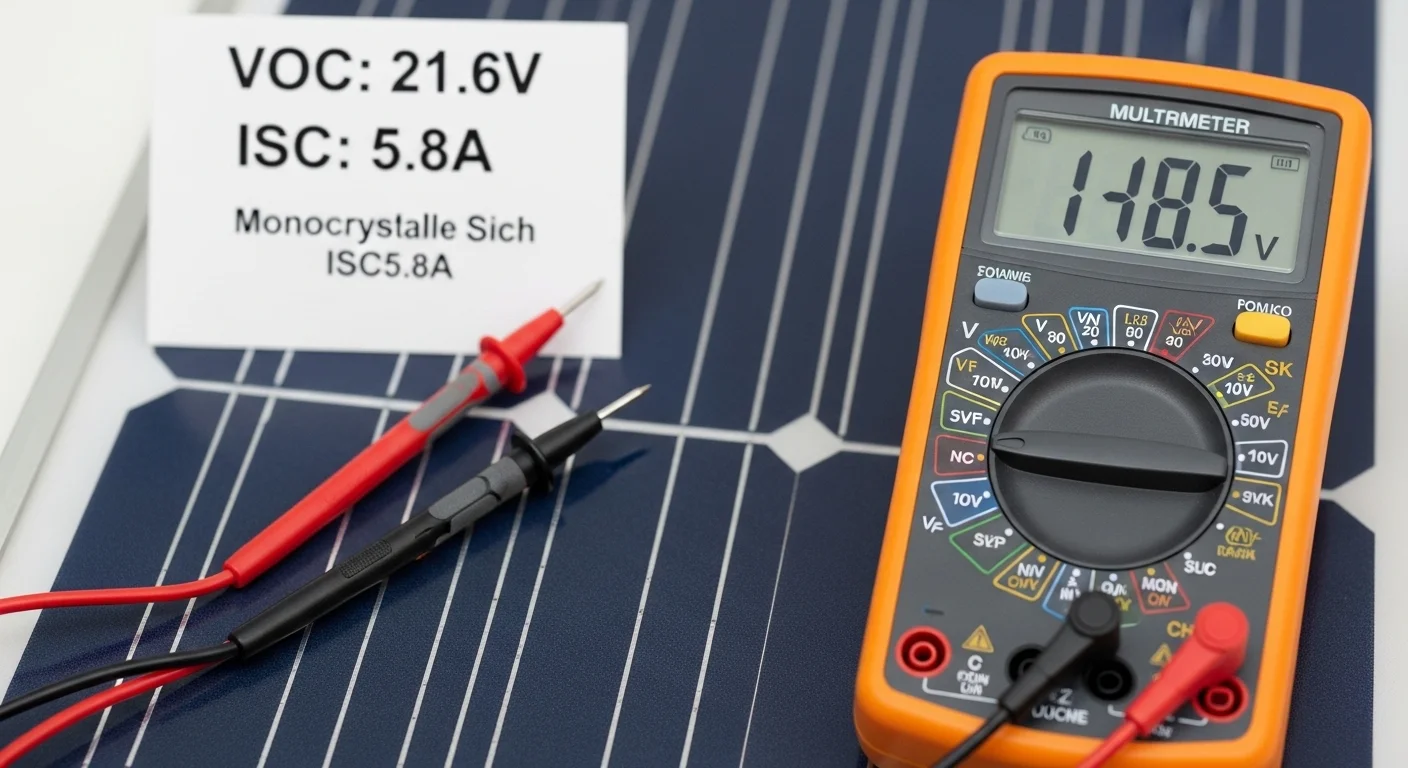
Measure Open Circuit Voltage Voc Correctly
VOC represents the open circuit voltage of a solar panel when there is no load connected. It indicates the maximum potential difference between the positive and negative terminals. To test this, identify the output terminals on your panel and connect the red probe to the positive and the black probe to the negative. Under full sunlight, note the voltage reading. If the reading is significantly lower than the manufacturer specifications, it might indicate dirt buildup or internal cell damage that requires a professional roof inspection service.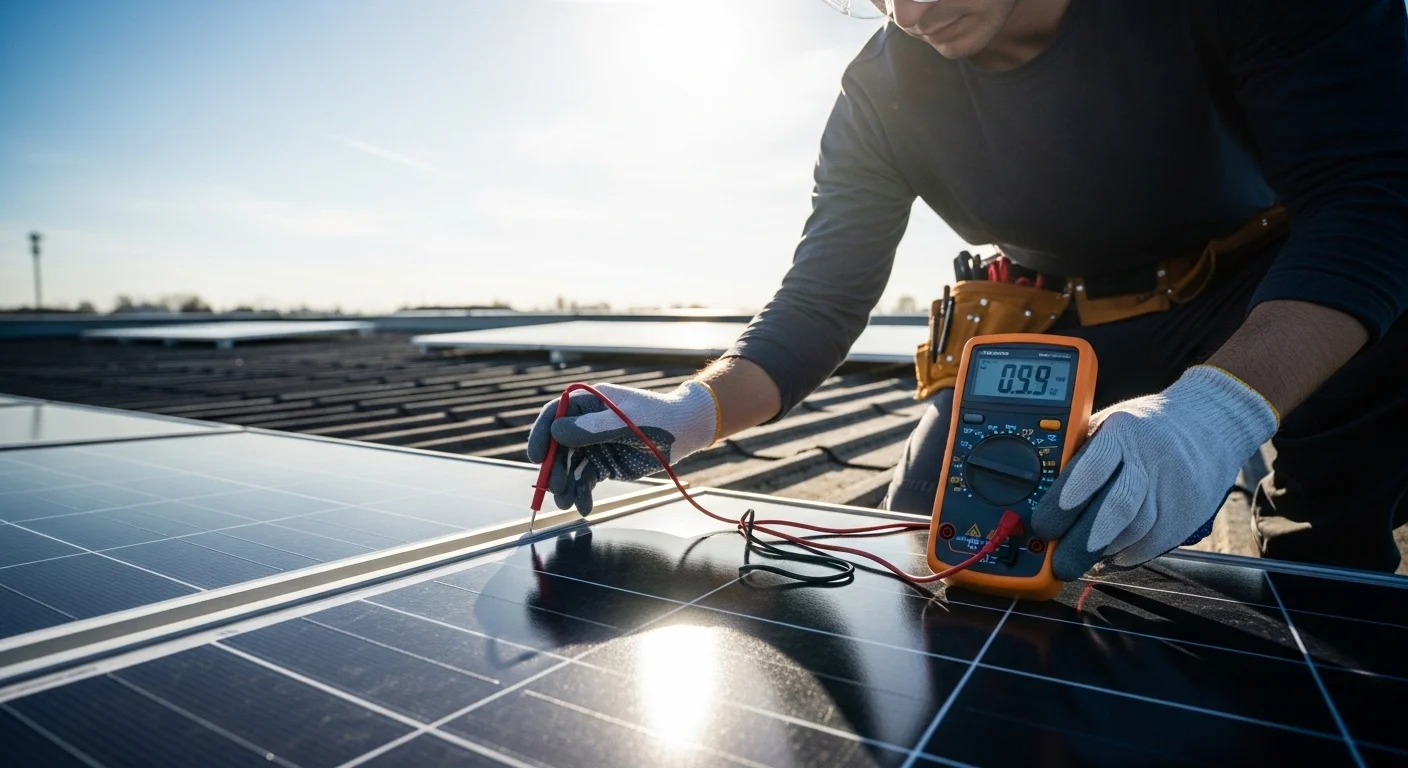
Determine Short Circuit Current Isc for Efficiency
ISC is the current produced when the positive and negative terminals are directly connected. This represents the highest current the panel can supply in ideal sunlight. To measure this, switch your multimeter to the DC current mode. Since solar panels produce high current, ensure your multimeter is rated for the expected amperage to avoid blowing a fuse. Lower than expected current readings often point toward shading issues or severe degradation of the PV cells. If you suspect an electrical fault, consulting a licensed installation service is the safest path forward.
Step by Step Multimeter Configuration for Solar Panels
Getting accurate results depends on setting up your tool correctly. Follow these simplified steps:
- Select DC Voltage: Ensure the dial is set to DC (indicated by a straight line) rather than AC.
- Set the Range: Choose a voltage range that exceeds your panel’s rated VOC, typically 40V to 60V for residential units.
- Check Probes: Confirm the black lead is in the ‘COM’ port and the red lead is in the voltage port.
- Verify Sunshine: Always perform tests during peak sun hours (10 AM to 2 PM) for the most accurate performance data.
Evaluate Solar Panel Power Output under Real World Conditions
For a comprehensive analysis, you should test the panel while it is under a known load. This simulates normal operating conditions. By measuring both voltage and current together while connected to a resistor or small appliance, you can calculate the actual wattage (Power = Voltage x Current). This helps you understand if your solar panels on a metal roof or asphalt roof are meeting the energy expectations of your household.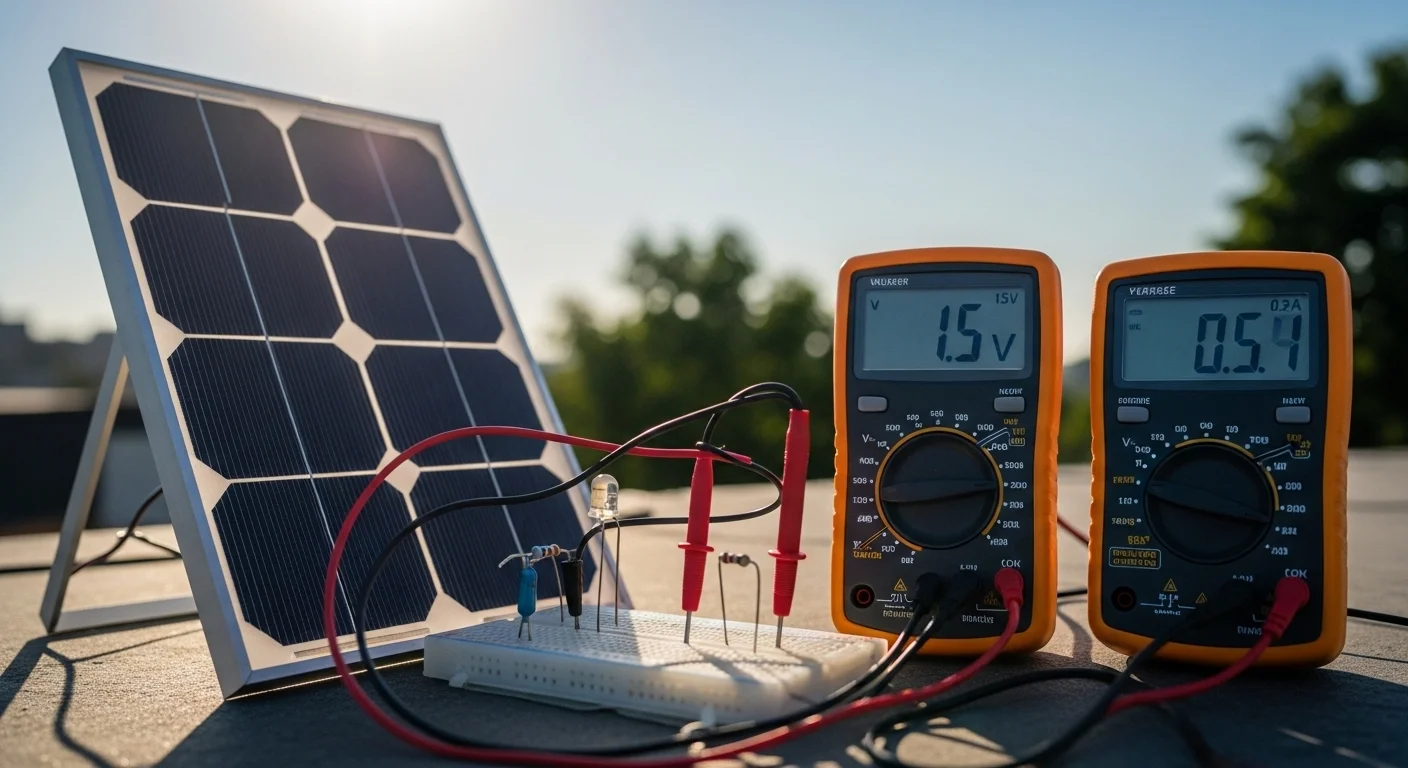
When to Choose Professional Testing Over DIY
Testing with a multimeter is a great DIY task for homeowners comfortable with basic electrical safety. However, if your system involves high voltage strings or complex micro-inverters, professional assistance is recommended. Specialists have advanced thermal imaging cameras and curve tracers that can spot micro-cracks or “hot spots” that a standard multimeter might miss. If you find significant deviations in your readings, it is best to check if your roof can be repaired instead of replaced during the maintenance process.
Conclusion
Using a multimeter to test your solar panels is a vital step in ensuring your renewable energy system works reliably. Regular maintenance maximizes energy production, protects the health of your PV cells, and secures your financial investment. Whether you prefer a DIY approach or professional servicing, staying informed about your system’s output will help you make better decisions regarding cleaning and repairs. At Solaroof NY, we are dedicated to helping homeowners optimize their solar output through expert maintenance and high quality installations.
Get a Professional Solar Performance Audit
Ensure your system is producing maximum power with our comprehensive testing and maintenance services.