Snow may look light and harmless, but when it builds up on a roof, it adds real weight. Many homeowners only think about snow after a storm, but the pressure it puts on your roof structure can become serious if it is not managed properly. Understanding how much snow a roof can hold helps prevent structural damage, leaks, and costly repairs. It also helps you recognize when it is time to take action before small warning signs turn into bigger problems.
How Much Snow Is Too Much for a Roof
Most residential roofs are designed to handle around 20 pounds per square foot of snow load, although this can vary depending on the age of the home and how it was built. The challenge is that snow weight is not always the same. Light, fluffy snow is relatively low in weight, while wet, dense snow can be extremely heavy. Just a foot of wet snow can place significant stress on the roof structure.
As snow continues to accumulate, the weight increases quickly. When snow becomes packed or turns into ice, the load becomes even heavier. At that point, the roof may begin to experience strain, especially if drainage is poor or the structure is already weakened.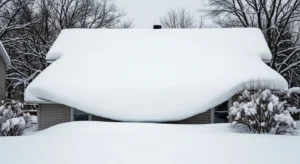
Can Snow Collapse a Roof
Yes, snow can collapse a roof when the weight exceeds what the structure can safely support. This is more likely to happen when snow builds up over time without melting or sliding off. Before a collapse occurs, there are often warning signs. Homeowners may notice sagging along the roofline or hear unusual creaking sounds inside the home. Doors and windows may become harder to open due to shifting pressure, and cracks can appear in ceilings or walls. These signs should never be ignored. They indicate that the roof system may already be under stress and needs immediate attention.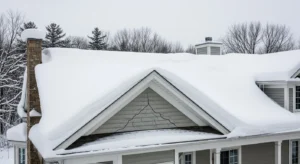
Types of Roofs That Handle Snow Better
Roof design plays a major role in how snow behaves after it lands. Some roofing systems allow snow to slide off more easily, while others tend to hold it in place for longer periods. Metal roofs are known for shedding snow efficiently because of their smooth surface. This reduces the amount of weight that stays on the roof. Asphalt shingle roofs are very common and can handle normal snow loads, but snow tends to remain on the surface longer.
Cedar roofs offer durability and natural insulation, but their textured surface can slow down snow movement. Flat roofs are the most vulnerable because they do not have enough slope to encourage snow to slide off. This allows snow to build up quickly, increasing the risk of excess weight on the structure, especially for large commercial roofing projects.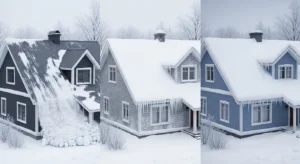
Does Snow on a Roof Insulate Your Home
Some people believe that snow acts as a natural layer of insulation. While it is true that snow can trap air and reduce heat loss slightly, this benefit is often overstated. In practice, snow accumulation creates more problems than advantages. It can lead to moisture buildup, ice formation, and added weight on the roof. Proper attic insulation and ventilation are far more effective at maintaining indoor comfort and protecting the roof structure.
What Are Snow Guards on Roofs
Snow guards are small components installed on roofing systems to control how snow slides off the surface. They are especially useful on metal roofs, where snow can release suddenly in large sections. By slowing down the movement of snow, these components help prevent sudden shifts that could damage gutters or create safety concerns below. They also help distribute snow more evenly across the roof surface, which is vital for homes with rooftop solar panels.
How to Remove Snow From a Roof Safely
When snow buildup becomes excessive, removing it may be necessary to reduce the load on the roof. However, this process needs to be handled carefully to avoid damaging the roofing system. Using improper tools or walking directly on a snow covered roof can cause more harm than good. It can damage shingles, loosen flashing, or affect the protective underlayment beneath the surface. In many cases, it is safer to remove snow from the ground using proper equipment or to rely on professionals who understand how to protect the roof while reducing the load.
When to Call a Roofing Professional
If snow buildup appears heavy or warning signs begin to show inside the home, it is important to have the roof inspected. A roofing professional can assess the condition of the structure and identify any areas of concern. They evaluate important components such as the roof decking, flashing around penetrations, and ventilation systems. Early inspection can prevent minor issues from developing into serious structural problems.
Free Roof and Solar Readiness Inspection
Ensure your roof is safe and ready for the winter season with a professional assessment.