A typical 400 watt solar panel on Long Island or in New York City produces roughly 1.2 to 1.5 kWh of electricity per day, averaged across the year. That works out to about 37 to 47 kWh per month and 440 to 560 kWh per year. Your real number depends on your roof’s direction, tilt, shade and the season, so treat these as planning figures, not a promise.
Below, we show how that number is calculated, what it looks like for 350, 400 and 430 watt panels, how New York winters change it, and how to use your own electric bill to figure out how many panels your home actually needs.
Quick definitions
Watts (W) and kilowatts (kW) measure power, the rate a panel can produce at a given moment. A 400 W panel is rated at 0.4 kW under standard lab test conditions.
Kilowatt hours (kWh) measure energy, the amount produced over time. Your electric bill is measured in kWh, so kWh is the number that matters for your home.
Peak sun hour means one hour of sunlight at an intensity of 1,000 watts per square meter. A long summer day with 14 hours of daylight still delivers far fewer peak sun hours than that, because morning and evening light is weak.
How to Calculate How Much Energy a Solar Panel Produces Per Day
Every solar production estimate starts from the same simple idea. Multiply the panel’s rating in kilowatts by the peak sun hours your roof receives, then reduce the result for real world losses such as heat, wiring, the inverter and dust. That last step is the one most online calculators skip, and it is why many quoted numbers look higher than what homeowners actually see.
Daily kWh = (Panel watts ÷ 1,000) × Peak sun hours × System factor
New York example: 0.4 kW × 4.25 peak sun hours × 0.80 = 1.36 kWh per day
Per month: 1.36 × 30.4 days = about 41 kWh. Per year: 1.36 × 365 days = about 496 kWh.
Assumptions: we use 4.0 to 4.5 peak sun hours as a yearly planning range for Long Island and NYC, and a system factor of 0.75 to 0.85 (0.80 in the tables). For your exact address, the free PVWatts calculator from the National Laboratory of the Rockies (formerly NREL) lets you test your own roof direction, tilt and losses.
Solar Panel Output Per Day, Per Month and Per Year by Wattage
Most residential panels sold today fall roughly between 350 and 450 watts. The table applies the formula above with a 0.80 system factor and 4.0 to 4.5 peak sun hours. The bottom row shows output per 1 kW of system size, which makes it easy to scale to any system.
| Panel rating | Per day (kWh) | Per month (kWh) | Per year (kWh) |
|---|---|---|---|
| 350 W | 1.12 to 1.26 | 34 to 38 | 409 to 460 |
| 400 W | 1.28 to 1.44 | 39 to 44 | 467 to 526 |
| 430 W | 1.38 to 1.55 | 42 to 47 | 502 to 565 |
| Per 1 kW of system | 3.2 to 3.6 | 97 to 109 | 1,168 to 1,314 |
Higher wattage does not automatically mean a better roof result. A 430 W panel is physically larger or more efficient than a 350 W panel, so the question for your home is how many kilowatts fit on the sunny parts of your roof, not which single panel has the biggest number.
Why a Real System Produces Less Than the Panel Rating
A panel’s wattage is measured in a lab at 25°C cell temperature with ideal light. On a real roof, the panels run hotter in summer, the inverter converts DC power to the AC power your home uses with some loss, wires add resistance, and dust or pollen blocks some light. That is why we apply a system factor instead of multiplying watts by sun hours alone.
It also helps to separate two words that often get mixed up. Efficiency is the share of sunlight a panel converts into electricity, which mostly affects how much power fits in a given space. Output is the actual kWh your system produces, which depends on efficiency plus your roof, your weather and your equipment. If you want practical ways to protect output over time, our guide on how to increase solar panel efficiency covers maintenance and upgrades in detail.
How Much Do Solar Panels Produce in a New York Winter vs Summer?
Daily production on Long Island swings a lot through the year. Summer brings long days and a high sun, while December brings short days and a low sun angle, so a winter day produces much less than a summer day. The yearly averages above smooth that out, which is why sizing a system always starts from annual kWh, not a single day.
Does Cold Weather Help Solar Panels?
Yes, but only per hour of sun. Solar cells produce a higher voltage when they are cold, so a crisp, clear day in March can be very productive for every hour the sun is strong. Panel spec sheets list this as a temperature coefficient. Cold does not make up for short winter days, though, so total winter production is still lower than summer.
What Happens When Snow Covers the Panels?
A light dusting often slides off tilted panels within a day or two once the sun hits the dark glass. Heavy snow cover can stop production until it melts or slides off. Please do not climb on an icy roof or scrape panels with a shovel, since that is dangerous and can scratch the glass. A few snowy days have a small effect on a full year of production.
Do Solar Panels Work When It Is Cloudy?
Panels keep producing from diffuse light on cloudy days, but output drops well below what you see in direct sun, and heavy overcast cuts it the most. Tools like PVWatts account for typical cloudy weather, which is one reason their results are more realistic than a simple sun hours shortcut.
Want numbers for your roof instead of averages?
We start with your roof, then talk through what a system could realistically produce. Ask for a free estimate.
How to Use Your Electric Bill to Size a Solar System
The most reliable way to size solar is to start from what your home actually uses. On your electric bill, look for the kWh used during the billing period, usually shown with a 12 or 13 month usage history chart. Add up the last 12 months to get your annual kWh. Using a full year matters, because summer air conditioning and winter heating change usage a lot from month to month.
For context, the U.S. Energy Information Administration reports that the average New York residential customer used 571 kWh per month in 2024, compared with 863 kWh per month for the U.S. as a whole. That state average includes many apartments, so a single family house on Long Island can use quite a bit more. If you plan to add an electric vehicle, a heat pump or a pool, tell your installer, because those can raise usage noticeably.
Once you have your annual kWh, divide it by what one panel produces in a year on your roof. That gives you a panel count. Then check whether that many panels fit on the sunny, unshaded parts of your roof.
How Many Solar Panels Does a New York Home Need?
The table below uses 400 W panels producing 467 to 526 kWh per year each, from the wattage table above. Panel counts are rounded up. These are planning estimates to show the math, not a design for your home.
| Monthly use (kWh) | Yearly use (kWh) | 400 W panels needed | Approx. system size |
|---|---|---|---|
| 500 | 6,000 | 12 to 13 | 4.8 to 5.2 kW |
| 571 (EIA NY average, 2024) | 6,852 | 14 to 15 | 5.6 to 6.0 kW |
| 750 | 9,000 | 18 to 20 | 7.2 to 8.0 kW |
| 1,000 | 12,000 | 23 to 26 | 9.2 to 10.4 kW |
| 1,250 | 15,000 | 29 to 33 | 11.6 to 13.2 kW |
| 1,500 | 18,000 | 35 to 39 | 14.0 to 15.6 kW |
Two things often change the final number. First, roof space: a home may not have room for every panel the math calls for, especially with dormers, skylights, chimneys or a north facing section. Second, the design of the system itself, since the final size depends on your roof, your equipment and what you want the system to cover.
What Affects How Much Energy Solar Panels Produce on Your Roof
Roof Direction and Tilt
In New York, south facing roof planes generally produce the most over a year. East and west facing planes can still work well, with production shifted toward the morning or afternoon. Very steep or very flat roofs change how the panels catch the sun across the seasons.
Shade From Trees, Chimneys and Neighboring Buildings
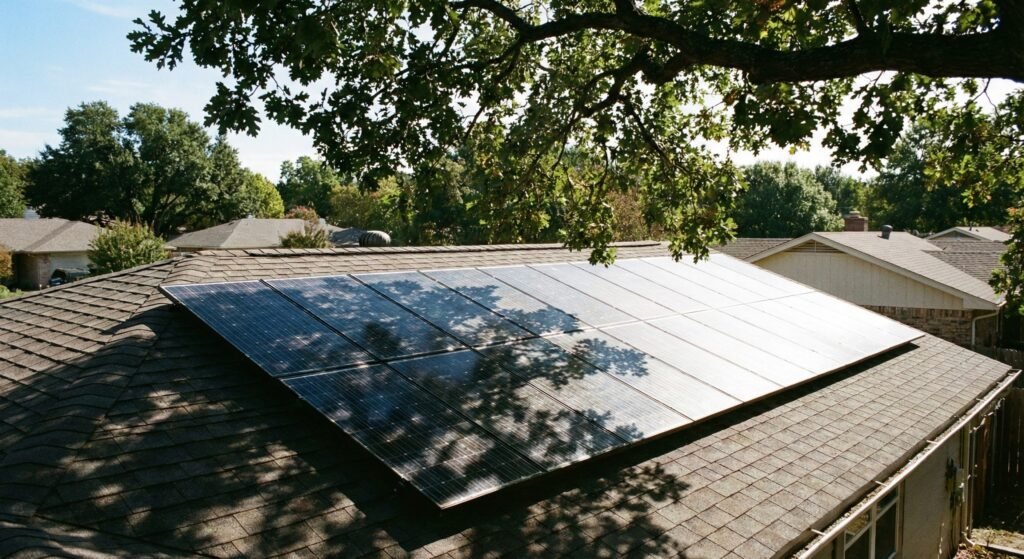
Shade is often the single biggest difference between two similar homes on the same street. Mature trees are common on Long Island, and in Queens and Brooklyn neighboring buildings can shade a roof for part of the day. A shade review belongs in every honest estimate, and it should cover winter, when the sun is low and shadows are long.
Heat and Airflow
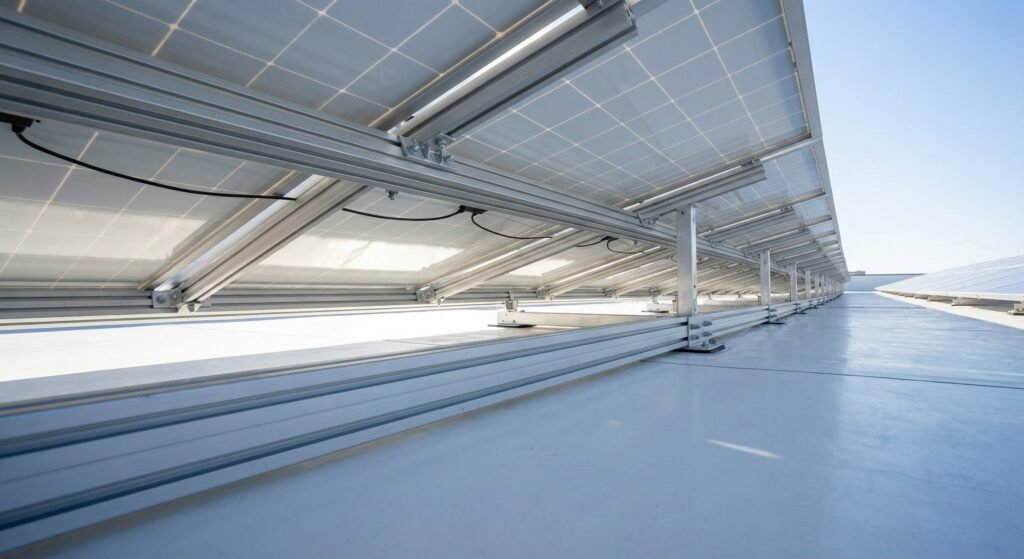
Panels lose some efficiency as they heat up, so a hot July afternoon is not as productive as you might expect. Good mounting leaves an air gap under the panels to help them cool. If you are curious how panels affect the temperature of your home, we cover it in do solar panels keep your house cooler.
Dirt, Pollen, Bird Droppings and Salt
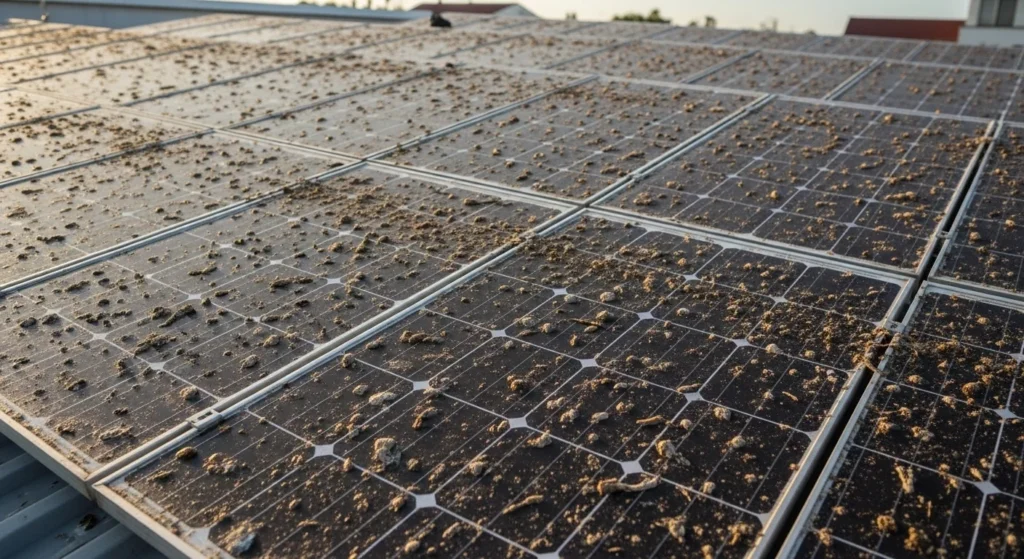
Anything sitting on the glass blocks light. Rain rinses tilted panels fairly well, but bird droppings, heavy pollen and salt residue near the shore can stick. How much output you lose depends on how dirty the panels get and where the dirt sits, so we do not quote a single percentage. If your production seems to be slowly declining and does not recover after rain, a professional solar panel inspection can help confirm whether dirt or something else is the cause.
The Inverter
Panels make DC power, and the inverter converts it to the AC power your home uses. If an inverter faults, part or all of the system can stop producing even on a perfect day. Warning lights and error messages on your inverter or monitoring app are worth paying attention to.
Panel Age: New vs Older Panels
Panels slowly lose output over time. A review by NREL researchers Dirk Jordan and Sarah Kurtz, published in Progress in Photovoltaics in 2013, looked at nearly 2,000 measured degradation rates and found a median of 0.5 percent per year. At that rate, a panel would still produce roughly 95 percent of its original output after 10 years and about 88 percent after 25 years. Older systems also tend to use lower wattage panels than today’s models. If your system is aging or damaged, our solar panel replacement service page explains the options.
Roof Condition and Age
Roof condition does not change how much sunlight hits a panel, but it affects how long your panels can stay put. Panels are meant to stay on a roof for years. If the roof underneath needs replacement along the way, the panels have to come off and go back on, which adds cost and downtime. We cover the common worries in will solar panels damage my roof.
How to Tell If Your Solar Panels Are Underperforming
Start with your monitoring app or inverter display and look at kWh, not kW. Compare each month with the production estimate you received when the system was installed, and compare it with the same month last year. Weather changes from year to year, so a modest difference is normal. A sudden drop, a section of panels reading zero, an inverter warning, or a decline that keeps getting worse is a reason to look closer.
Our step by step guide on how to know if your solar panels are working walks through what to check yourself. If something looks wrong, our team also offers solar panel repair on Long Island.
Why Solaroof NY Checks Your Roof Before Pricing Panels
Solaroof NY has been in business since 1998, and we started on the roof. That shapes how we approach solar. Before we talk about panel counts, we look at the roof that will carry them: its age, its condition, and where the sunny, unshaded planes are. A production estimate is only useful if the roof is ready for the system.
If your roof is close to the end of its life, it usually makes sense to handle it first, either with a roof replacement or a new roof installation, so the panels go onto a fresh surface. Many homes and buildings in Queens and Brooklyn have flat or low slope roofs, so flat roofing condition and drainage matter just as much there. If you already have panels and need roof work, we also offer solar panel removal and reinstallation, so one team can plan both the roof and the solar together.
Questions to Ask Any Solar Installer
Whoever you hire, ask for the estimated annual kWh in writing, along with the assumptions behind it and how shade was measured. Ask what happens if the roof needs work in ten years, and what removing and reinstalling the panels would involve. Ask how you will monitor production once the system is running. Clear answers to these questions tell you more than any single panel spec.
Serving Long Island, Queens and Brooklyn
We work with property owners across Nassau County, Suffolk County, Queens and Brooklyn. If you are ready to plan a system, our solar panel installation service page is the best place to start.
Find out what your roof can produce
One team for your roof and your solar. Ask for a free estimate and we will look at your roof first.
Frequently Asked Questions
How much energy does a 400 watt solar panel produce per day?
On Long Island and in New York City, a 400 watt panel produces roughly 1.2 to 1.5 kWh per day averaged over a year. That comes from 0.4 kW x 4.0 to 4.5 peak sun hours x a 0.75 to 0.85 system factor. Summer days produce more and winter days produce less.
How many kWh does a solar panel produce per month and per year?
Using the same New York assumptions, a 400 watt panel produces about 37 to 47 kWh per month and about 440 to 560 kWh per year. A 350 watt panel produces a little less and a 430 watt panel a little more. Your roof direction, tilt and shade decide where you land in that range.
What is the difference between kW and kWh in solar?
kW (kilowatts) is power, the rate a panel or system can produce at a given moment. kWh (kilowatt hours) is energy, the amount produced over time. Your panels are rated in watts or kW, but your electric bill is measured in kWh.
Do solar panels produce less energy in a New York winter?
Yes. Winter days are shorter and the sun is lower, so daily production drops compared with summer. Cold temperatures help panel efficiency, but they do not make up for fewer hours of strong sun. Sizing a system from your yearly usage helps account for the difference between seasons.
How many solar panels does a New York home need?
Divide your annual electricity use in kWh by what one panel produces in a year. A home using 750 kWh per month (9,000 kWh per year) needs about 18 to 20 panels of 400 watts under our New York assumptions. EIA reports the average New York residential customer used 571 kWh per month in 2024, which works out to about 14 to 15 panels.
Do solar panels work on cloudy days or with snow on them?
Panels still produce some electricity on cloudy days from diffuse light, but much less than in direct sun. Light snow often slides off tilted panels, while heavy snow cover can stop production until it clears. Do not climb on the roof or scrape panels yourself; ask a professional if snow or ice is a concern.
How do I know if my solar panels are producing less than they should?
Compare the kWh in your monitoring app with your original production estimate for the same month, and compare this year with the same month last year. A sudden drop, an inverter warning light, or one section reading zero are signs to schedule a solar panel inspection.
Should I replace my roof before installing solar panels?
If your roof is near the end of its life, replacing it first is usually the better plan, because removing and reinstalling panels later adds cost. A roof inspection before solar pricing tells you which situation you are in.
How do I get a solar estimate from Solaroof NY?
Call 516-744-0300 or contact us online. We look at your roof first, then talk through what a system could realistically produce for your home.