Quick answer: Most exposed-fastener metal roofing panels need approximately 80 screws per square (100 square feet) for standard 3-foot-wide panels, or roughly 40 screws per square for 2-foot-wide panels. On a single sheet, that typically works out to 20-30 screws depending on panel dimensions. But this number is a starting estimate, not a final answer, because your actual count depends on panel profile, support spacing, roof zone (field, perimeter, or corner), and the engineered wind load for your specific Long Island address.
If you are planning a metal roof installation on Long Island or anywhere in New York State, getting this number right is not optional. Underscrew your roof, and you risk panels lifting in a nor’easter or hurricane-strength wind event. Overscrew without engineering guidance, and you create stress concentration points that accelerate corrosion and thermal cracking. If you’re also wondering can you put solar panels on a metal roof, your fastener plan becomes even more important, since solar mounting adds its own load path to the same roof deck.
This guide breaks down real fastener counts by panel type, the actual New York wind load requirements behind those numbers, and why standing seam metal roofing changes the entire fastener conversation. Before starting any project, a professional roof inspection service can confirm your deck’s structural capacity to hold the fastener count your roof actually needs.
How Many Screws Per Square for Metal Roofing?
The industry planning standard for exposed-fastener metal roofing is approximately 80 screws per square for 3-foot-wide panels, based on manufacturer installation guides. For 2-foot-wide panels, that figure is closer to 40 screws per square, since narrower panels have fewer ribs and lap points per 100 square feet. When choosing the best roofing material for your home, always confirm the fastener schedule the manufacturer specifies for that exact panel profile.
- 3-foot wide by 8-foot exposed-fastener panel: typically around 24 screws in the field, before edge and lap adjustments.
- 3-foot wide by 12-foot exposed-fastener panel: typically 32 to 36 screws.
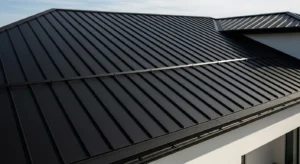
- Standing seam panels: zero exposed screws through the panel face. Panels attach to concealed clips fastened to the deck, so no fastener ever penetrates the weather surface.
- R-panel and PBR panel (16-foot length): typically 20 to 28 screws, with panel-to-purlin fastening at 12 inches on center and doubled fastening at endlaps.
These figures are planning estimates. Your actual count will vary based on support spacing, panel profile, and the wind load calculation for your property, so treat the manufacturer’s written fastening schedule as the final word, not this list.
Why Screw Placement Matters as Much as Screw Count
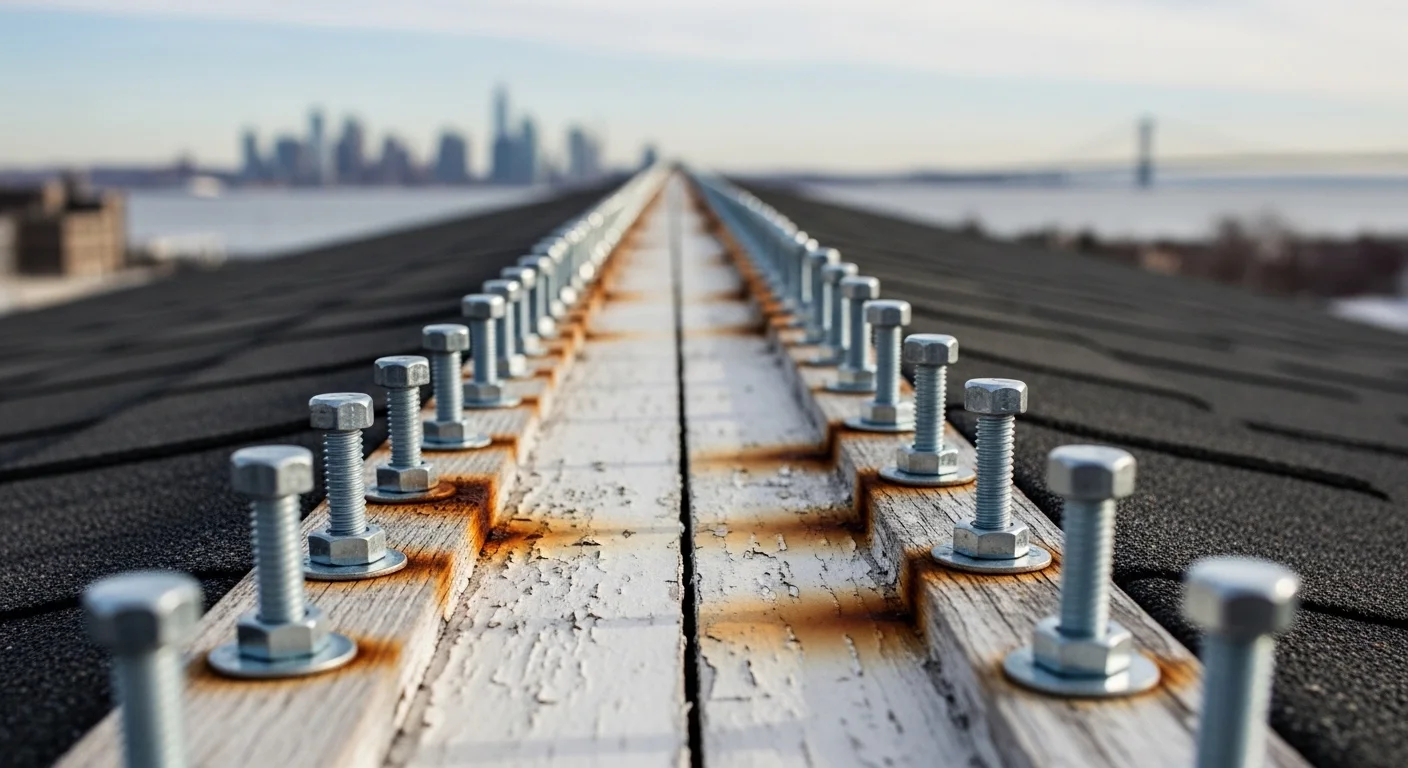
Where you place screws matters just as much as how many you use. A professional pattern divides the roof into three zones: the Field Zone (the large interior area), the Perimeter Zone (roof edges), and the Corner Zones (the highest-pressure areas on any roof). Wind flow separates sharply at corners and edges, which is why uplift forces in those zones commonly run two to three times higher than in the field. In high-wind areas, tighter fastener spacing at perimeters and corners isn’t a suggestion, it’s a wind-load engineering requirement.
What Wind Speed Does Long Island Roofing Actually Need to Withstand?
Quick answer: Long Island’s current ASCE 7-22 design wind speed for typical homes (Risk Category II) runs approximately 115 to 130 mph, with oceanfront eastern Suffolk County (Montauk, the Hamptons, Fire Island) at the higher end near 125-130 mph, and inland Nassau and central Suffolk (Hicksville, Garden City, Hauppauge) closer to 115-120 mph. Higher wind speed figures in some older references apply only to critical-use buildings like schools and hospitals, not standard residential construction.
Exposure category matters as much as the mapped wind speed itself. A home directly on open water (Exposure D) faces substantially higher wind pressure at roof height than a similar home set back among trees and other buildings (Exposure B), even at the identical mapped wind speed, because open water offers almost no friction to slow the wind near the ground. This is one of the biggest reasons two homes a few miles apart on Long Island can have very different fastener requirements. If you are building a green home, confirming your site’s exposure category with a licensed professional is the first real step in sustainable, storm-ready design.
What Type and Length of Screw Should You Use?
Quick answer: Metal roofing screws need at least three full threads, roughly 3/4 to 1 inch, of solid penetration into the substrate beneath the panel. A 1.5-inch screw is a common length for panels installed over plywood or OSB decking, but that number describes the screw’s total length, not the required engagement depth.
Using the wrong screw leads to leaks and voided warranties. In coastal New York, stainless steel or hot-dip galvanized screws are required, not optional. FEMA’s guidance specifically recommends that all fasteners within 3,000 feet of the coastline be hot-dip galvanized or stainless steel, with 300-series stainless preferred closest to the shoreline. For much of Long Island’s South Shore and East End, this applies directly to your project. Every screw must also include an EPDM washer to create a watertight seal at the penetration point. If you ever need to perform maintenance or are concerned about removing solar panels from an exposed-fastener roof, these penetration points must be handled carefully to avoid creating new leak paths.
How Long Do Exposed Fasteners Last Before They Leak?
Every screw penetration on an exposed-fastener roof is a potential future leak point. EPDM washers gradually harden and lose elasticity as they age, and how long that takes varies more than most homeowners expect: economy washers in harsh sun exposure can start failing in as little as 5 to 10 years, while quality UV-stabilized EPDM washers commonly last 15 to 20 years or more. Thermal cycling, the roof expanding and contracting with temperature, works screws back and forth over time and gradually enlarges the holes around them. This is why many homeowners eventually ask whether a roof can be repaired instead of replaced. Regular inspection and washer replacement is the only way to extend the working life of an exposed-fastener system.
Is Standing Seam Metal Roofing Actually Better for Wind Resistance?
Quick answer: Yes. Standing seam metal roofing eliminates exposed penetrations entirely and achieves a UL 580 Class 90 rating, the highest classification available, corresponding to 105 psf of combined wind uplift resistance. When properly engineered for your specific site, standing seam systems typically outperform exposed-fastener panels by a wide margin, resisting design winds well beyond what Long Island’s building code requires.
Rather than screwing through the panel face, standing seam panels lock into concealed clips fastened to the deck, so the weather surface has zero penetrations. This is also why standing seam is the preferred roof type for solar panel installation services: solar racking can clamp directly onto the raised seams using non-penetrating hardware, so the array is added without a single new hole in your roof, preserving both the roof’s weathertightness and its manufacturer warranty.
Need an Engineered Fastener Plan for Your Long Island Roof?
Don’t guess on your roof’s wind rating. Contact Solaroof NY for a site-specific structural and wind-load assessment.
Conclusion
How many screws do you actually need? Enough to satisfy the wind-load engineering for your specific Long Island address, not a single generic number pulled from an online calculator. Whether you’re working with a budget-friendly exposed-fastener panel or investing in a fully engineered standing-seam solar-ready roof, the right screw count, spacing, and material grade depend on your panel profile, your exposure category, and your distance from the coast. A properly fastened roof, sized to real wind data rather than guesswork, is one of the most durable investments a Long Island homeowner can make.