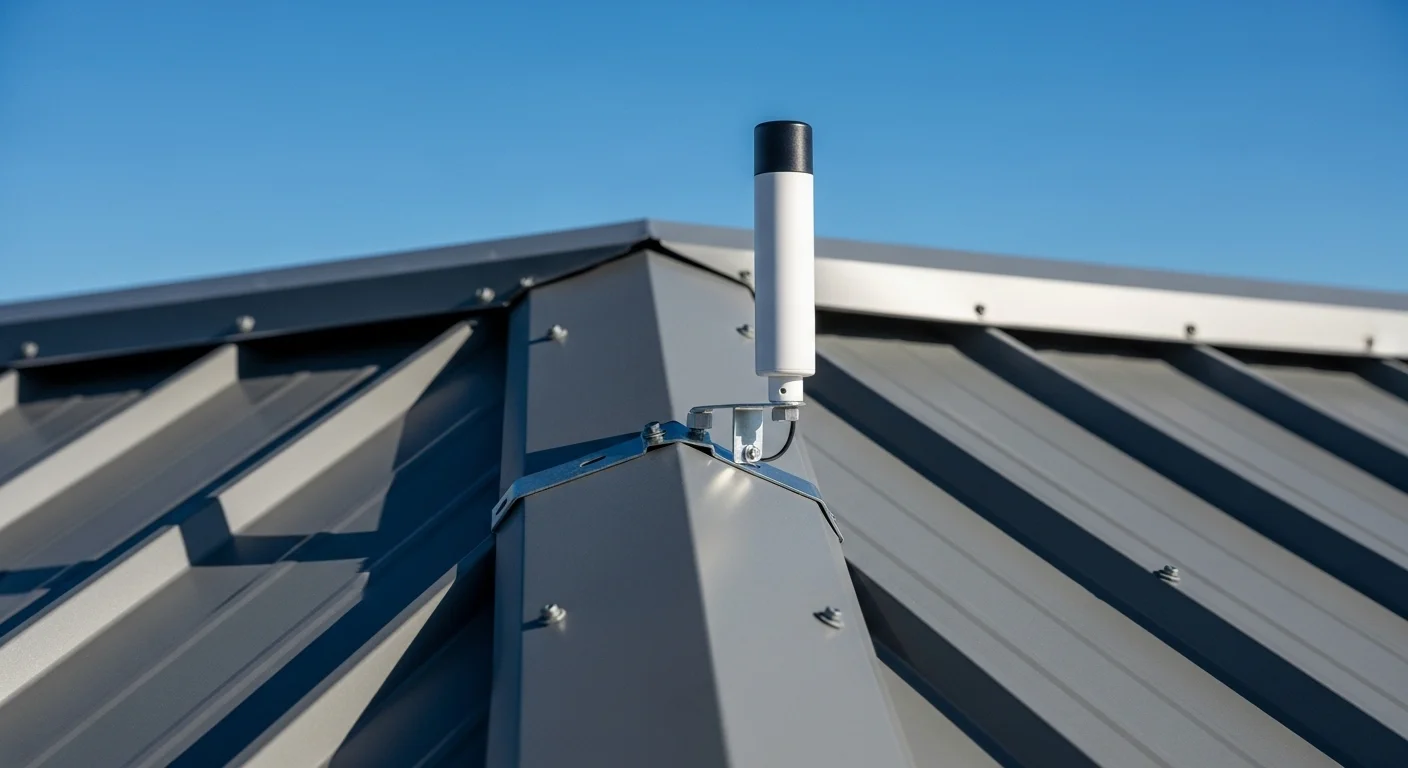
If you’ve installed a metal roof recently or are considering it and have found your phone signal weakening when you go inside, you’re not imagining it. Metal roofs can affect cell phone reception, and this is one of the most common questions homeowners have when considering this roofing style.
But here’s the point that most articles get wrong, and where industry sources genuinely disagree: a metal roof is rarely the only culprit, and in many cases the signal drop-off is far less extreme than people worry. Some sources, particularly those selling signal boosters, describe severe attenuation numbers. Others, including building-science engineers, point out that big-box stores like Home Depot have expansive metal roofs and customers use their phones inside constantly without noticing a problem. The truth sits between these two positions and depends heavily on your specific home. Knowing what is really going on, why metal reacts the way it does to radio frequency signals, how this compares with other roofing materials, and what your response can be gives you the knowledge to make reasoned, informed decisions about your home-improvement project. This guide covers everything, from the physics of signal interference to practical solutions that work in real homes.
Why Metal Materials Can Weaken Signal Strength
To understand why metal roofs can affect your cell phone reception, you first need a basic understanding of how cell signals travel. Your phone transmits to and receives from nearby cell towers using radio frequency (RF) waves, electromagnetic signals that travel through the air, and ideally through the walls and roof of your home, to connect with your device indoors. Metal’s defining characteristic is that it conducts electricity.
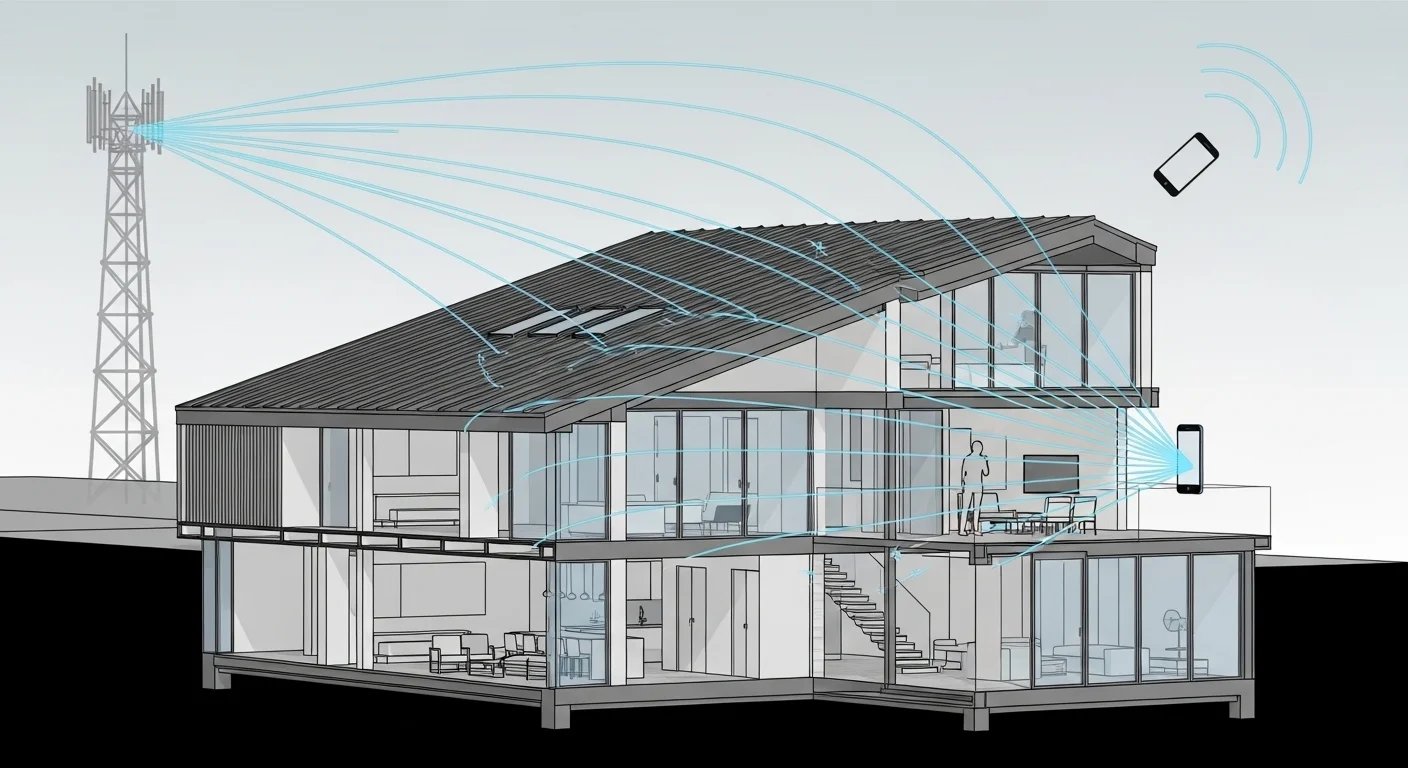
Conductive materials respond to electromagnetic waves in a particular manner: they reflect and absorb RF signals instead of passing through them.
Technical Insight: The Faraday Cage Effect
This phenomenon is referred to as electromagnetic shielding, or in technical terms, the Faraday cage effect. A true Faraday cage, essentially the interior of a sealed metal box, would fully block electromagnetic signals. A metal roof does not create a true Faraday cage, since your home still has non-metal walls, windows, and openings through which signals can enter. What it does is weaken the signal that would otherwise come down from directly above, which can lead to noticeably weaker reception on upper floors or in rooms with few windows.
The degree of interference varies for several real reasons: the thickness and type of metal used on your roof, whether there’s an underlayment or insulation layer beneath it, how your walls and windows are constructed, how far you are from the nearest cell tower, and which frequency bands your carrier uses. Higher-frequency signals, like those used by 5G millimeter-wave systems, are blocked more easily by physical barriers than lower-frequency signals, like older 4G LTE bands, which bend around and pass through obstacles more readily.
Metal Roof vs. Other Roofing Materials
The honest answer is yes, there is a real difference, but the size of that difference is debated and depends heavily on your specific home. Most common residential roofing materials, like asphalt shingles, are largely transparent to radio frequency signals. They contain no conductive material and do very little to block or reflect cell signals. Tile roofs made of clay or concrete, along with wood shakes and slate, perform similarly, with minimal signal loss.
Metal roofing reduces signal more than any of these alternatives, but sources disagree sharply on how much. Signal booster manufacturers commonly cite attenuation figures in the 30 to 50 decibel range for metal roofing, numbers that would represent a very large reduction in signal power. Other sources, including building-science professionals, argue that real-world impact on a typical single-family home is often much smaller, since the roof is only one surface of many and the house isn’t a sealed enclosure. One useful reference point: standard steel framing and metal studs in commercial construction are documented to cause signal loss in a similar 32 to 50 dB range, while Low-E window glass, which contains a thin metallic coating for energy efficiency, can reduce signal 8 to 10 times more than clear glass. If your home combines a metal roof with Low-E windows and steel framing, the effects compound. If it has a metal roof but plenty of standard glass windows and wood-framed walls, the real-world impact is often much milder.
A well-installed metal roof on a home with large windows and good proximity to a cell tower may produce barely noticeable signal reduction. The same roof on a home with few windows in an already weak-signal area can produce a genuinely frustrating reception problem. Other materials like concrete, brick, and reinforced structural framing also contribute to signal blockage, so a metal roof is rarely acting alone.
Common Signs Your Roof May Be Affecting Reception
Not every indoor signal issue is the fault of your roof, but some signs point to it being at least partially responsible:
- Your reception drops noticeably inside the house and returns as soon as you step outside.
- Reception improves significantly when standing near windows or exterior doors.
- Interior rooms with fewer windows have consistently weaker signal than rooms with more windows.
- Signal is stronger on lower floors than on the top floor, suggesting a block from directly above.
- Voice calls become choppy or drop indoors, and mobile data speeds slow noticeably.
- Multiple carriers all show poor reception inside your home, which points to structural interference rather than a carrier-specific coverage gap.
How to Improve Cell Phone Reception Inside a Metal Roof Home
The good news is that reduced cell reception from a metal roof is a solvable problem. There are several effective approaches:
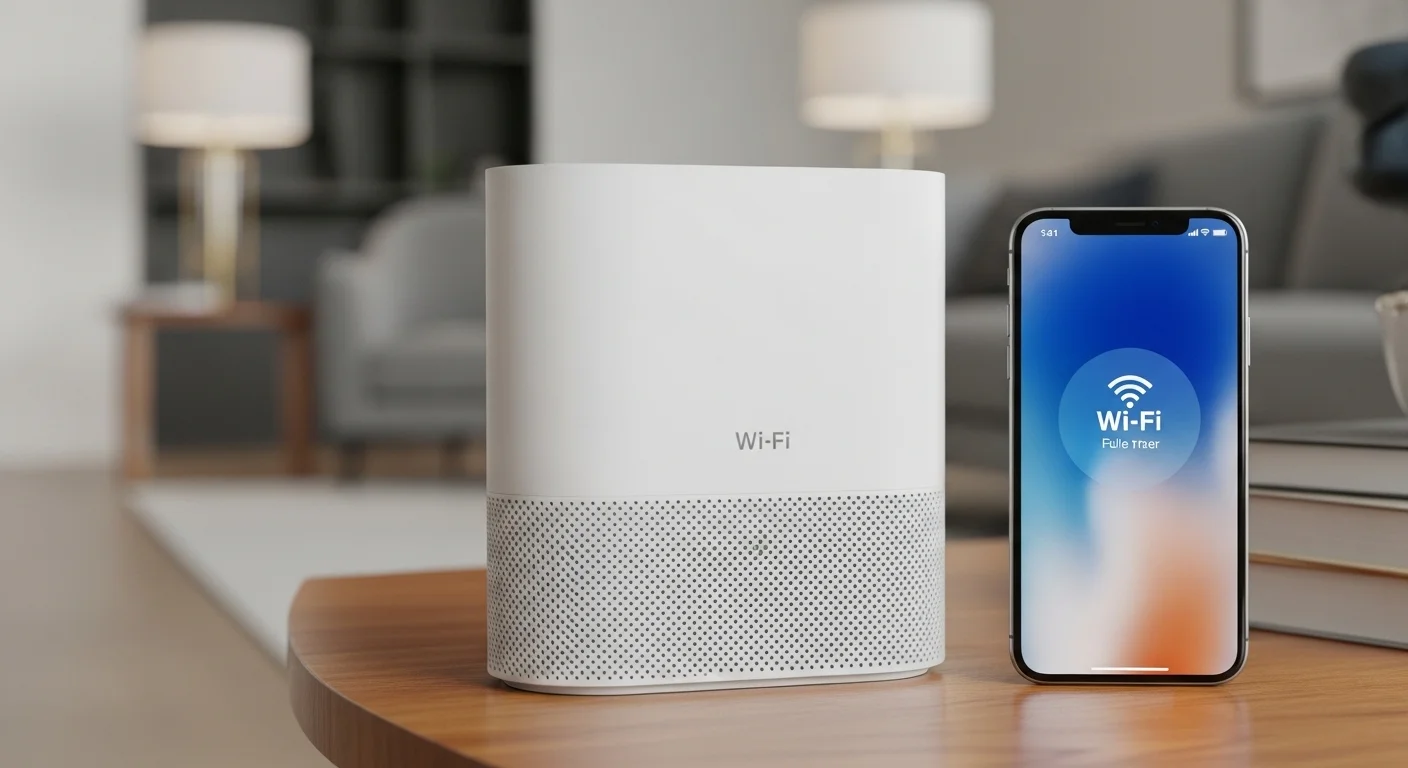
Use Wi-Fi Calling: For most people, this is the easiest and quickest fix. All major carriers support Wi-Fi calling, which routes voice calls and text messages over your home’s Wi-Fi instead of your cell network. Activate it in your phone’s settings, and calls will automatically route over Wi-Fi when the cellular signal is weak.
Locate your router properly: For Wi-Fi calling to work well, your router needs strong coverage throughout the house. Mesh Wi-Fi systems work well in metal-roofed homes since they spread uniform coverage without depending on a cellular signal that has to pass through the roof.
Cellular signal booster systems: For homes with genuine reception problems, a correctly installed signal booster is the most effective technical solution. These systems use an external antenna to capture the outdoor signal, an amplifier to strengthen it, and an internal antenna to rebroadcast it, bypassing the metal roof entirely. One detail many homeowners miss: the FCC has required all consumer signal boosters sold in the United States since March 2014 to be FCC-certified and registered with your carrier before use. Buying a certified booster and registering it takes a few minutes and ensures the device won’t cause interference issues with your carrier’s network.
| Solution | How It Works | Cost Level |
|---|---|---|
| Wi-Fi Calling | Uses your internet connection for calls and texts. | Free (built into most phones) |
| Mesh Wi-Fi | Ensures uniform internet coverage to support Wi-Fi calling. | Moderate ($150–$400) |
| FCC-Certified Signal Booster | External antenna bypasses the roof to bring outdoor signal inside. | Higher ($300–$1,000+) |
Smart Roofing Solutions That Minimize Signal Interference
If you’re in the planning stages of a metal roof installation, there are design and material choices that can minimize signal interference. Thinner-gauge metal generally attenuates less than heavier industrial-grade panels. Between the two most common residential options, steel typically reflects and absorbs more signal than aluminum of a similar gauge, since steel is denser and more electrically reflective. If minimizing signal impact is a priority alongside durability, this is worth discussing with your contractor rather than assuming the difference is negligible.
Underlayment and insulation choices also matter. Beyond signal strength, these materials must align with safety standards such as those defined by the International Code Council (ICC) to ensure the roof remains fire-resistant and structurally sound. Foil-faced radiant barrier insulation, in particular, can add a meaningful layer of RF shielding on top of whatever the metal panels themselves cause, since a continuous foil layer behaves similarly to the metal roof above it. Discussing signal-conscious material selection with your contractor during the planning phase is worth the conversation, especially if you already know your area has a weak outdoor signal.
Plan Your Metal Roof with the Experts
Balance durability with connectivity. Contact us today for an expert consultation on your roofing project!
Conclusion
Will a metal roof interfere with cell phone reception? Yes, it can, but the truth is more nuanced than a simple yes suggests. Metal is conductive and does attenuate radio frequency signals more than asphalt, tile, or wood roofing materials. How much it actually affects your home depends on your windows, walls, distance from the nearest tower, and whether other conductive materials like Low-E glass or steel framing are compounding the effect. Fortunately, this problem is entirely solvable through Wi-Fi calling, certified signal boosters, and sensible design choices at the planning stage. You don’t have to trade poor cell reception for the longevity and energy efficiency of metal roofing. Understand the real factors at play, plan for solutions upfront, and you can have all the advantages of metal roofing without sacrificing connectivity.