Thousands of New York homeowners switch to solar every year for lower bills and energy independence. However, a common question arises before the panels arrive: do you actually need permission? The short answer is yes, but the process is highly manageable with the right partner. In 2026, understanding these requirements is essential for protecting your investment and ensuring eligibility for state rebates through a professional residential solar installation.
Understanding the Legal Framework for Home Solar
New York State requires that any structural modification to a residence, including rooftop solar, be reviewed by the local building department. This ensures that your home remains safe and the installation meets all structural standards. According to NYSERDA, following official permitting pathways is the only way to guarantee that your system qualifies for the NY-Sun incentive program.
Common Misconceptions About Local Solar Regulations
Many homeowners believe that small systems do not require paperwork or that property ownership overrides municipal codes. These are persistent myths. Regardless of size, every solar array triggers building and electrical permit requirements. Skipping these steps can lead to significant fines, voided equipment warranties, and major complications when you eventually decide to sell your home. Our solar panel installation service includes handling all this paperwork for you.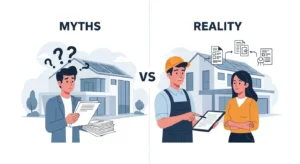
The Critical Role of Building and Electrical Permits
Building permits focus on the structural integrity of your roof, ensuring it can handle the additional load of the panels. Electrical permits, on the other hand, cover the wiring and interconnection to your home’s main panel. Both are vital for safety. In New York, these permits must typically be filed by a licensed contractor who provides detailed engineering drawings and load calculations for review, especially when dealing with commercial solar energy systems.
Navigating Town Building Codes and Utility Standards
Permitting requirements vary drastically between Nassau County, Suffolk County, and the five boroughs. Some towns have adopted “solar ready” streamlined processes that fast-track approvals, while others maintain more traditional review cycles. Your installer must also navigate utility-specific portals for providers like PSEG Long Island or Con Edison to secure the necessary interconnection agreements for your custom solar design.
Essential Permissions for a Compliant Solar Installation
Beyond municipal permits, you may also need approval from a Homeowners Association (HOA) or a local landmark committee. While New York law prevents HOAs from banning solar panels entirely, they can still request specific design or placement adjustments. A professional team manages these interactions, ensuring your project remains compliant with both state law and community guidelines.
Professional Feasibility Studies for Your Home
Before filing any permits, a feasibility study is the foundation of a successful project. This assessment evaluates your roof’s pitch, orientation, and structural health. It also includes a shading analysis to confirm your property receives enough direct sunlight across all seasons. Identifying these factors early prevents delays and is often combined with a roof inspection service to ensure your shingles are ready for panels.
Long Term Benefits of Certified Solar Installations
A permitted and certified solar system is an asset that increases your home’s marketability. It provides peace of mind that the installation was inspected by a third-party official and meets the National Electrical Code. Furthermore, most homeowner’s insurance policies require proof of permitted work to provide coverage for system damage, which is a key reason to choose a licensed solar contractor.
Unlocking Financial Incentives Through Proper Certification
To claim the 30% Federal Investment Tax Credit (ITC) and the New York State tax credit (up to $5,000), your system must be installed by a licensed professional with all local permits closed out. These financial benefits significantly lower the upfront cost, often leading to a fast payback period for Long Island residents who prioritize a compliant solar transition.
Schedule Your Free Permit and Feasibility Review
Not sure what your local town requires? We handle all the paperwork for you from start to finish.
Conclusion
Permission is a requirement, but it doesn’t have to be a hurdle. By working with an experienced team, the complex world of building codes and utility interconnection becomes a seamless background process. Proper permits protect your home, your family, and your financial investment for the next 25 years. Ensure your journey to clean energy starts on solid legal ground.