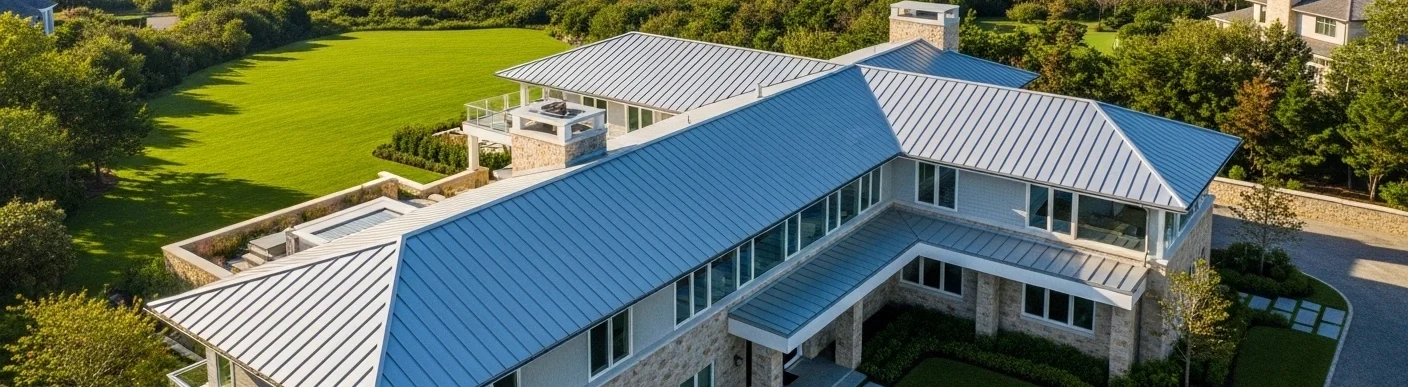
Flat roofs are common on modern homes, garages, and commercial buildings, but they can also bring recurring problems. Many property owners deal with water pooling, membrane wear, and frequent repairs over time. Because of these issues, homeowners often begin exploring longer lasting roofing options. One question that comes up often is whether a metal roof can be installed on a flat roof. Metal roofing has become popular because of its durability, weather resistance, and modern appearance. The answer is yes in many cases, but the roof must be designed correctly to ensure proper drainage and protection. Understanding how metal roofing performs on low slope structures helps homeowners make informed decisions when considering a roof upgrade.
Understanding How Metal Roofing Works on Low Slope and Flat Roof Structures
Metal roofing systems are designed to move water away from the roof surface efficiently. Unlike traditional flat roofing materials such as rubber membranes or built up roofing, metal panels rely on the roof’s slope to guide water toward drainage points. Most flat roofs are not perfectly flat. They are built with a slight pitch that helps water travel toward drains or gutters. This slope allows metal roofing systems to function effectively when properly designed.
A complete metal roof system includes several important elements working together. These include the metal panels themselves, waterproof underlayment beneath the panels, flashing around roof penetrations, and secure fasteners that keep the panels firmly attached to the roof decking. When installed correctly, these components form a strong protective barrier that shields the structure from rain, snow, wind, and ultraviolet exposure.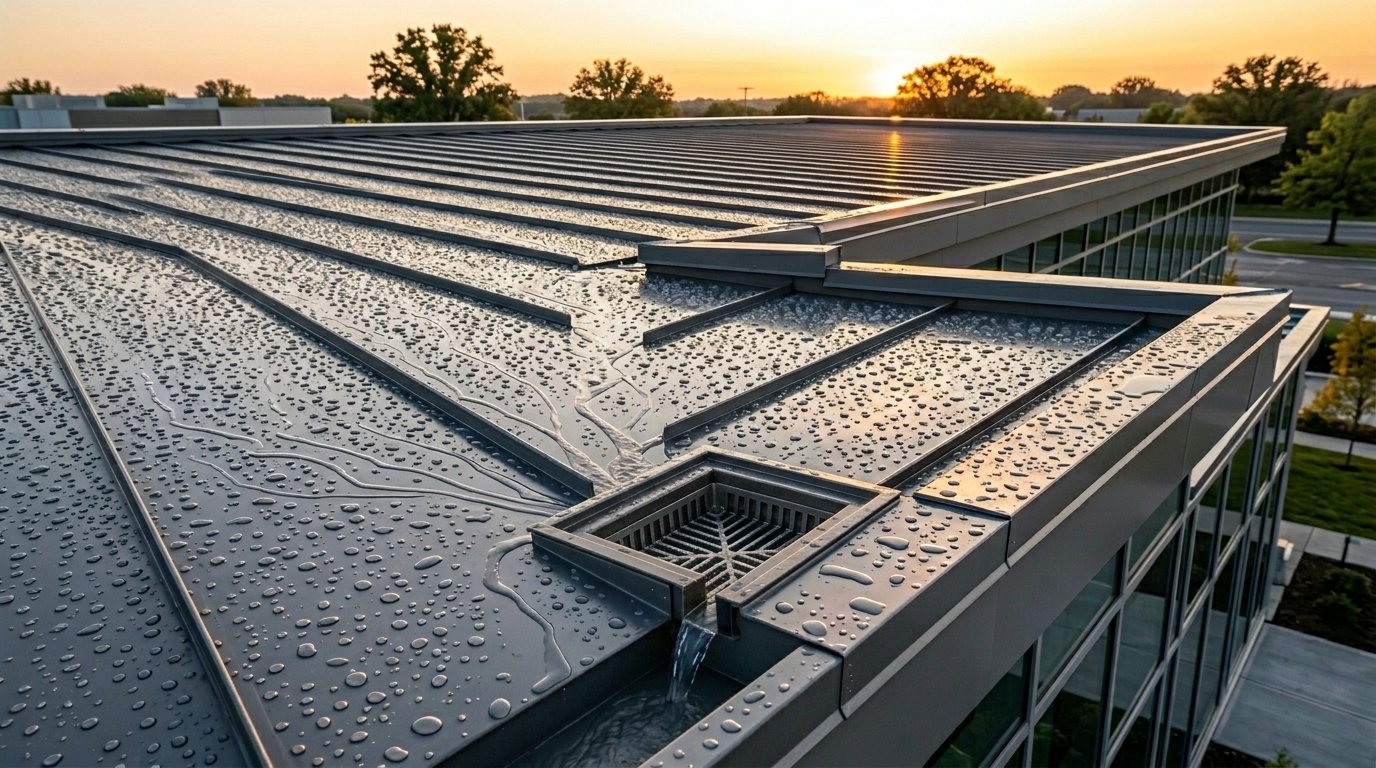
Key Insight: The Importance of Design
Proper roof design ensures that water flows away from vulnerable areas. Roofing contractors also inspect attic ventilation and insulation because these components influence moisture control and overall roof health. By addressing structural and drainage factors early, contractors can help ensure the metal roof performs reliably for decades.
Minimum Roof Slope Requirements for Metal Roofing Systems
The slope of the roof plays a critical role in how well a metal roofing system performs. Because metal panels are designed to shed water, they require a minimum amount of pitch to prevent water from sitting on the roof surface. Low slope roofs typically include a gentle incline that helps guide water toward drainage areas. Metal roofing manufacturers provide specific slope requirements that ensure proper water flow and prevent moisture from entering seams or flashing areas.
If the slope is too low, water may move slowly across the surface or collect near panel joints. Over time, this can increase the risk of leaks and moisture damage. Roofing professionals evaluate the existing roof pitch before recommending a metal roofing system to ensure it will perform as intended.
Best Types of Metal Roofing for Flat or Low Slope Roofs
Not every metal roofing system is suitable for flat or low slope applications. Some panel designs are specifically engineered to handle slower water movement and provide stronger protection against leaks. Standing seam metal roofing is one of the most reliable choices for low slope structures. The raised seams between panels sit above the water channel, which helps prevent water from entering the roof system. This design also hides the fasteners beneath the panels, providing additional protection from weather exposure.
| Roofing Option | Structural Benefit | Best Environment |
|---|---|---|
| Standing Seam | Concealed fasteners; raised water channels. | General low-slope residential use. |
| Structural Standing Seam | Deeper seams; stronger locking mechanisms. | Commercial or high-wind areas. |
| Aluminum Systems | Naturally corrosion resistant. | Coastal properties with salt-air exposure. |
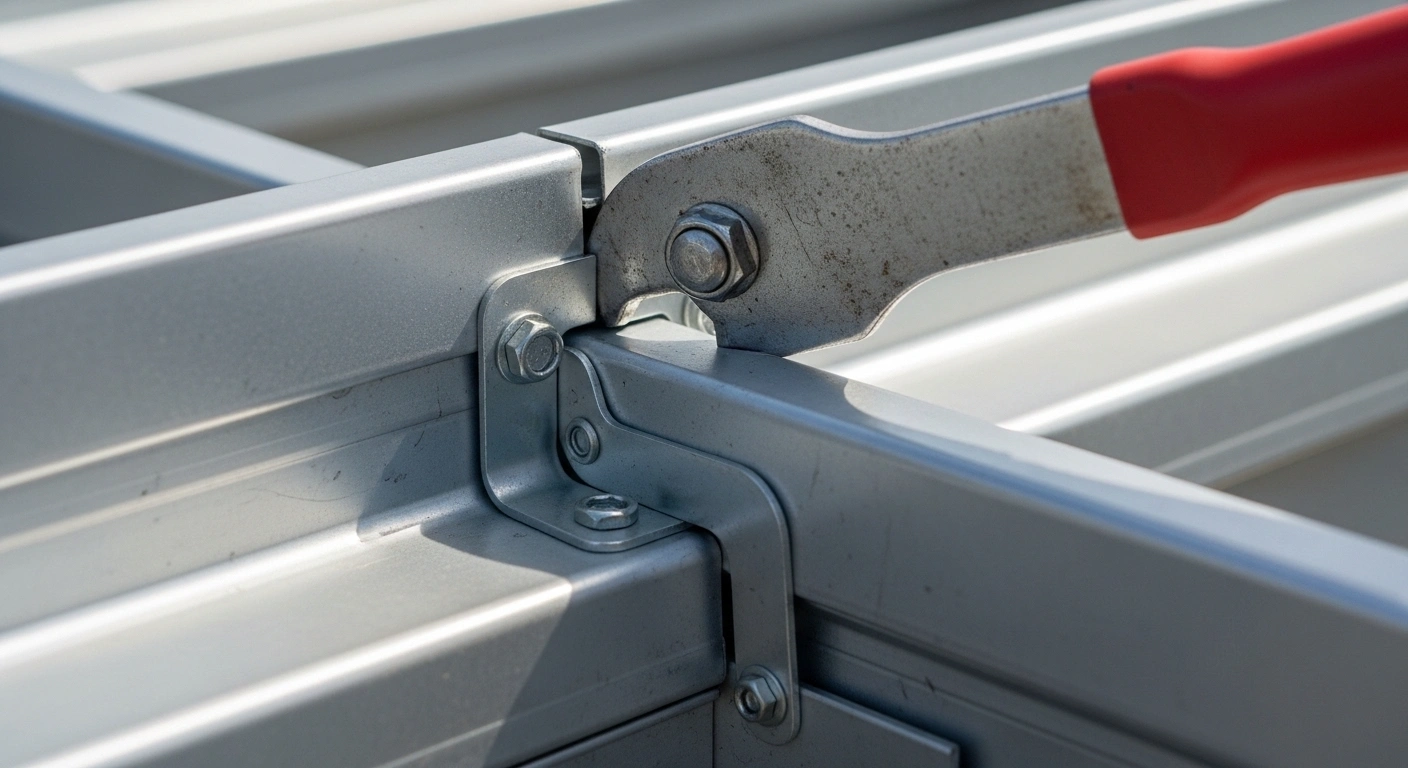
Structural standing seam systems are also commonly used for low slope roofs. These panels are designed with deeper seams and stronger locking mechanisms that improve durability and weather resistance. Different metals can be used depending on the building’s location and environmental conditions. Aluminum is often chosen for coastal areas because it resists corrosion from salt air, while coated steel panels provide strong durability for residential roofing systems.
Structural and Drainage Considerations for Flat Metal Roof Installation
Before installing a metal roof on a flat structure, roofing professionals carefully evaluate the existing roof system. The condition of the roof decking, ventilation, and drainage all play important roles in long term performance. Drainage is especially critical for flat roofs. Water must be able to move toward designated exit points such as drains, scuppers, or gutters. If water is allowed to remain on the roof surface, it can eventually affect flashing, seams, and the underlying roof structure.
Metal Roofing vs Other Flat Roof Materials
When property owners consider replacing a flat roof, they often compare metal roofing with traditional roofing materials such as EPDM rubber, TPO membranes, or modified bitumen systems. Traditional flat roofing systems are designed to handle standing water and provide flexible waterproof membranes. These materials are widely used and can perform well when maintained properly. However, they generally require more frequent maintenance over time.
Metal roofing systems offer a different set of advantages. They provide exceptional durability, strong resistance to wind and storm damage, and a lifespan that can extend several decades when properly installed. Another benefit is curb appeal. Metal roofing offers a modern architectural look that can enhance the appearance of residential and commercial buildings. Reflective coatings on many metal roofs can also help reduce heat absorption, which may improve energy efficiency during warmer months.
Building Code Requirements and Professional Installation
Roofing projects must follow local building codes to ensure structural safety and long term performance. These regulations address important factors such as roof slope, wind resistance, fire ratings, and proper fastening methods. Building codes also help ensure roofing systems are designed to handle the environmental conditions specific to the region. In areas that experience heavy storms, strong winds, or snow accumulation, these requirements become even more important.
While many homeowners enjoy taking on home improvement projects, roofing systems require specialized knowledge and equipment. Metal roofing on flat or low slope structures involves careful planning, proper drainage design, and precise installation methods. Working with experienced roofing professionals provides peace of mind. Contractors can evaluate the existing roof, recommend appropriate materials, and ensure the roofing system is installed according to industry standards.
Request a Flat Roof Consultation
Ensuring long term performance of your metal roof starts with the right partner. Contact us today!
Conclusion
A properly designed metal roof can provide decades of reliable protection. However, maintaining the system is important for ensuring long term performance. Regular roof inspections help identify potential issues before they develop into serious problems. Contractors may check flashing around roof penetrations, evaluate seams, and confirm that drainage systems remain clear of debris. Routine maintenance also protects the roof decking and underlayment beneath the metal panels. By addressing minor concerns early, property owners can extend the lifespan of the roofing system and maintain its performance.