The global rooftop solar PV market is valued at approximately $64.8 billion in 2025. Upgrading to solar power is one of the most intelligent investments you can make for your home. Solar panels not only reduce your monthly utility bills, but they also help raise property value while reducing your carbon footprint. But if you’re interested in the specifics, “Can I put solar panels on my roof?” The response is a function of a series of variables. Not all roofs are necessarily solar-ready. At Solaroof NY, we focus on helping New York residents understand their roof’s potential and build solar designs that work.
In this post, we’ll help you figure out what it takes to determine if solar is right for your roof. We’ll cover everything roof-related in this guide—from how to establish if your roof is ideal for solar panels, to installation, how much it will cost you, and groundwork for what to expect of the process.
Key Market Drivers
Environmental and Energy Goals
The growing need for clean and sustainable energy sources and reducing carbon emissions are driving installations worldwide.
Government Incentives
Solar roofs are driven by tax credits, rebates, and even some mandates to have them on new homes to ensure long-term sustainability.
Cost Reduction
Lower panel prices, better technology, and more straightforward installation make it easier for people to adopt renewable energy than ever before.
Technology Innovation
The emergence of smarter solar panels, BIPV, solar shingles, and integrated systems that run your water heater on solar power are changing the industry.
Roof Suitability: Is Your Roof Compatible With Solar?
Before any panels go up, your roof will be assessed for its age, condition, material, angle, orientation, and structural soundness. This ensures the longevity of your solar installation.
Roof Age and Condition
Standard solar panels last 25–30 years. It would be unwise to install them before replacing or fixing an aging roof. For example, most asphalt shingle roofs last 15–25 years, while metal roofs can last 40-70 years. If your roof is nearing the end of its life, we highly recommend a solar panel replacement or a full roof refresh during the project.
Roof Material Compatibility
Roof type dictates mounting methods. While panels can be placed on nearly any substance, some are easier and cheaper than others. Asphalt shingles are the most popular and straightforward. Standing seam metal roofs are ideally suited for solar because panels can be clamped to seams with no drilling necessary. Clay or slate tiles are more delicate and might need specialized mounting brackets to ensure no breakage occurs.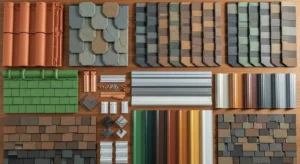
Roof Angle and Orientation
For the best energy production in New York, panels should ideally be pointed south at an angle of 30°–40°. That said, east- or west-facing roofs can still generate significant power. It is critical for professional system design to guarantee that the panels capture enough energy all year long, especially as seasonal sunlight fluctuates.
Structural Integrity Requirements
Solar panels impose an additional weight of 3–5 lbs per square foot. Most recent roofs can support this without difficulty, although older roofs may need to be reinforced. Our team performs a thorough solar panel inspection to evaluate rafters, truss condition, and load-bearing capacity, ensuring your home meets all local building codes.
Installation Challenges and Expertise
Conventional roof shapes, dormers, or skylights do not have to put solar out of reach. These issues can typically be solved with creative design and custom fitting. If you have odd rooflines, we can break up the array, and for shaded areas, we use microinverters that allow each panel to work independently. Rather than considering obstacles as deal breakers, think of them as opportunities to design a system that is ideal for your home.
Energy Efficiency and Long-Term Savings
Installing solar panels is a sound financial investment. With utility rates increasing in New York, generating your own electricity locks in predictable costs for decades. Homeowners can save tens of thousands of dollars over the life of the system. Extra energy can even be credited to your bill via net metering programs, providing additional savings during the sunniest months.
The Solar Installation Process
Consultation and Inspection: We evaluate your roof’s age, material, and shading. We also analyze your household energy usage to determine exactly how many panels are necessary.
Custom System Design: Our engineers design a solution that specifies placement for optimal exposure and creates a 3D model so you can see how the solar will look on your roof.
Permitting and Approvals: We handle all of the paperwork, including permits from local building departments and coordinating with utility companies to tie into the grid.
The Build: Our expert crew coordinates the solar panel installation service, usually completing the project within one to three days with precision and safety.
Final Connection: After local building inspectors perform a final check, we coordinate with your utility to hook your system into the grid, allowing you to start saving money immediately.
Why Solaroof NY is Your Best Partner
The success of your solar journey hinges on selecting the right partner. It takes a specialized skill set to build a system that lasts for decades, especially in New York where conditions vary from coastal winds to urban shade. We provide personalized service design, complete installation management, and post-installation support to keep your system performing at its peak. If you ever experience issues, our solar panel repair team is always ready to assist.
Ready to turn your home into a clean-energy powerhouse?
Contact Solaroof NY today for a comprehensive roof assessment and custom solar design.
Final Thought
Can you put solar panels on your roof? The answer is almost always yes, as long as you have hired a professional and made modifications that account for your particular roof. By assessing your roof’s condition and taking advantage of New York incentives, you can secure a smooth path from inspection to long-term savings.