Solar panels involve electricity. Electricians work with electricity. So surely a licensed electrician can handle a solar installation right? It is a logical assumption that leads a significant number of Long Island homeowners into costly, complicated, and sometimes dangerous situations every year.
The reality is more precise than the assumption. A licensed electrician possesses skills and credentials that are genuinely relevant to solar photovoltaic installation but relevant is not the same as sufficient. Solar PV systems are specialised systems governed by distinct codes, utility interconnection requirements, equipment certifications, and safety standards that go well beyond the scope of general electrical licensing.
According to the Solar Energy Industries Association, improper solar installations are among the leading causes of system underperformance, failed utility interconnection, voided equipment warranties, and, in serious cases, electrical fires and roof structural damage. This guide explains clearly what electricians can and cannot do in a solar context, why certifications matter, what the specific risks of using a non-specialised installer look like in practice.
Understanding the Role of a Licensed Electrician in Solar Projects
A licensed electrician’s training covers the full range of electrical systems used in residential and commercial construction: wiring, panels, circuits, outlets, switches, lighting systems, grounding, and the safety protocols that govern them under the National Electrical Code (NEC). That training is rigorous, the licensing requirements are demanding, and the competence a licensed electrician brings to their work is genuine and valuable.
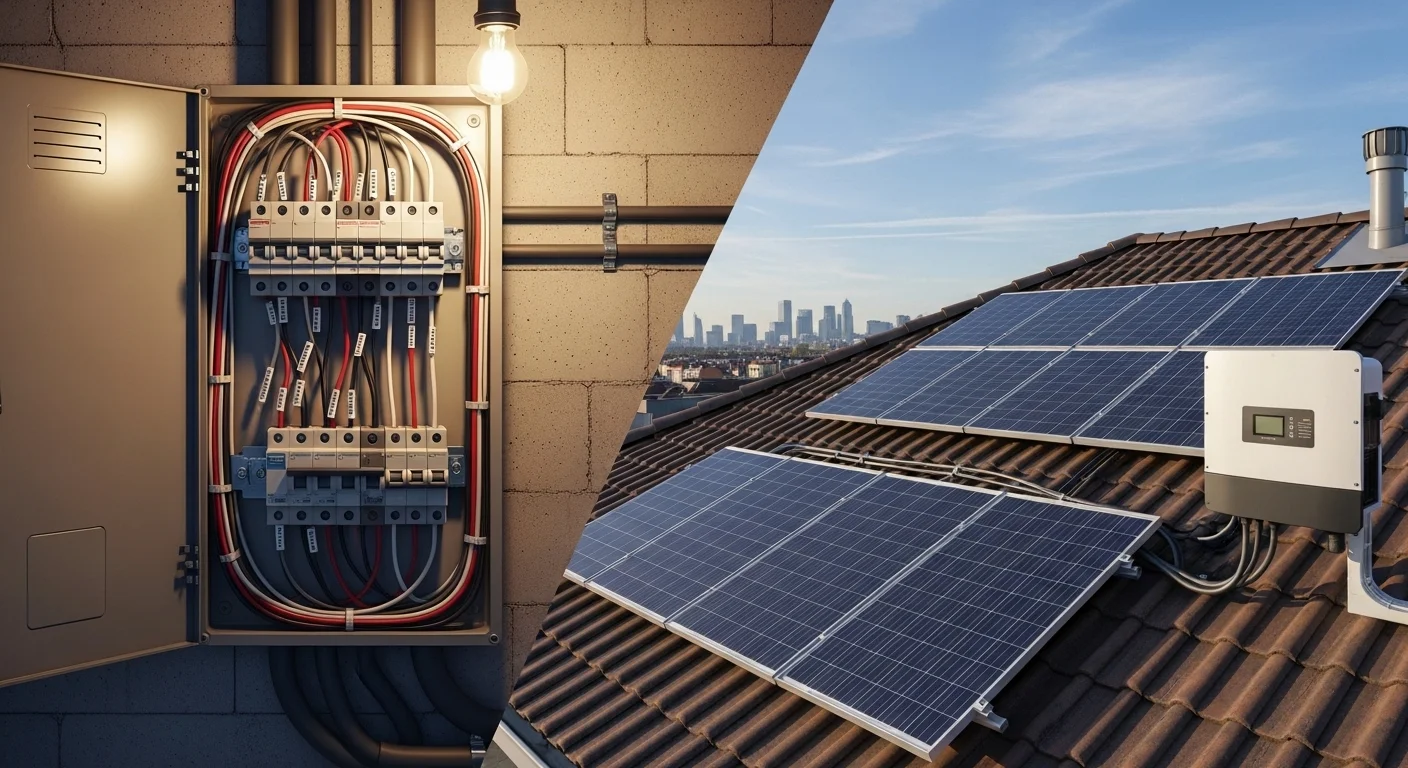
Within a solar photovoltaic installation, a licensed electrician plays an important and necessary role but it is one role within a broader system of specialisations, not the complete picture. The electrical work involved in connecting a solar system to a home’s main service panel, running conduit from the inverter to the panel, sizing the interconnection wiring correctly, and ensuring proper grounding of the array falls squarely within electrical licensing scope.
This work must be performed by or under the supervision of a licensed electrician, and it must be inspected and approved as part of the permit process. What falls outside general electrical licensing scope is everything that precedes and surrounds that interconnection work: the structural assessment of the roof to confirm it can carry the panel load.
Key Differences Between General Electrical Work and Solar PV Systems
The technical differences between conventional electrical work and solar photovoltaic installation are significant enough that the industry has developed entirely separate training pathways, certification programs, and code sections to address them. Understanding those differences helps homeowners ask the right questions before signing a contract with any installer.
DC versus AC systems
Conventional residential electrical work operates entirely in alternating current (AC), the type of electricity that flows from the utility grid through your panel and to every outlet, appliance, and fixture in your home. Solar panels generate direct current (DC) electricity, which flows from the panels to an inverter that converts it to AC before it enters the home’s electrical system. DC systems carry different safety risks than AC systems; DC arcing is harder to interrupt than AC arcing, DC circuits do not have the natural zero-crossing that makes AC circuits easier to break safely, and the high voltages present in a solar array under direct sunlight create shock and fire hazards that require specific training to manage safely.
Rapid shutdown requirements
New York State and the NEC require that rooftop solar systems include rapid-shutdown functionality and the ability to de-energise the array quickly in the event of a fire or other emergency, protecting first responders who may need to access the roof. The design, specification, and installation of compliant rapid-shutdown systems require familiarity with the available equipment options, their compatibility with different inverter platforms, and the NEC 2020 requirements governing their implementation. This is a solar-specific requirement with no direct analogue in general electrical work.
String sizing and inverter selection
Designing a solar array that performs optimally requires calculating string configurations of how many panels are wired together in series based on each panel’s electrical characteristics, the inverter’s input voltage and current ranges, the roof’s exposure to sunlight, and shading patterns across different times of day and seasons. Incorrect string sizing produces systems that underperform, trip protective devices, or damage inverter equipment. This calculation requires solar-specific training and software tools that general electrical licensing does not encompass.
Why Specific Solar Certifications Matter for Long Island Homeowners
The solar industry’s primary professional certification program is administered by the North American Board of Certified Energy Practitioners (NABCEP). The NABCEP PV Installation Professional credential is the gold standard for solar installers. For Long Island homeowners, NABCEP certification matters for several specific reasons that go beyond general professional credentialing.
- Technical Training Aligned With Long Island’s Specific Requirements: NABCEP-certified installers are demonstrably trained in the technical areas that determine whether a Long Island solar installation succeeds. This includes NEC Article 690 compliance, PSEG interconnection requirements, rapid-shutdown system design, and the structural-electrical coordination that rooftop solar demands.
- Equipment Warranties That Stay Intact: Many solar equipment manufacturers require NABCEP-certified installation as a condition of their product warranties. A solar panel or inverter installed by a non-certified contractor may have its warranty voided. Equipment warranties on quality residential solar panels run 10 to 25 years, and preserving them requires installation by certified professionals from day one.
- Smooth Navigation of NY-Sun Incentives and PSEG Net Metering: New York’s NY-Sun incentive program through NYSERDA and PSEG Long Island’s net metering programs carry documentation requirements that certified installers navigate as a matter of routine.
Risks of Using a Non-Specialised Electrician for Rooftop Solar Arrays
The risks of proceeding with a solar installation performed by a licensed but non-specialised electrician are specific, well-documented, and, in some cases, severe.
System underperformance is the most common consequence of a non-specialised installation. A system designed with incorrect string configurations or inadequate shading analysis will produce less electricity than intended.
Failed utility interconnection creates situations where a solar system is physically installed but cannot legally operate because the system does not meet PSEG’s technical requirements. This can lead to a roof inspection failure and months of delays.
Structural damage occurs when rooftop racking is installed without proper structural assessment. Roof penetration is one of the most consequential aspects of a solar installation, and doing it incorrectly creates water damage that can take years to manifest. This is why specialized solar panel installation service is essential.
How SolarRoofNY Ensures Full Compliance With Local Utility Regulations
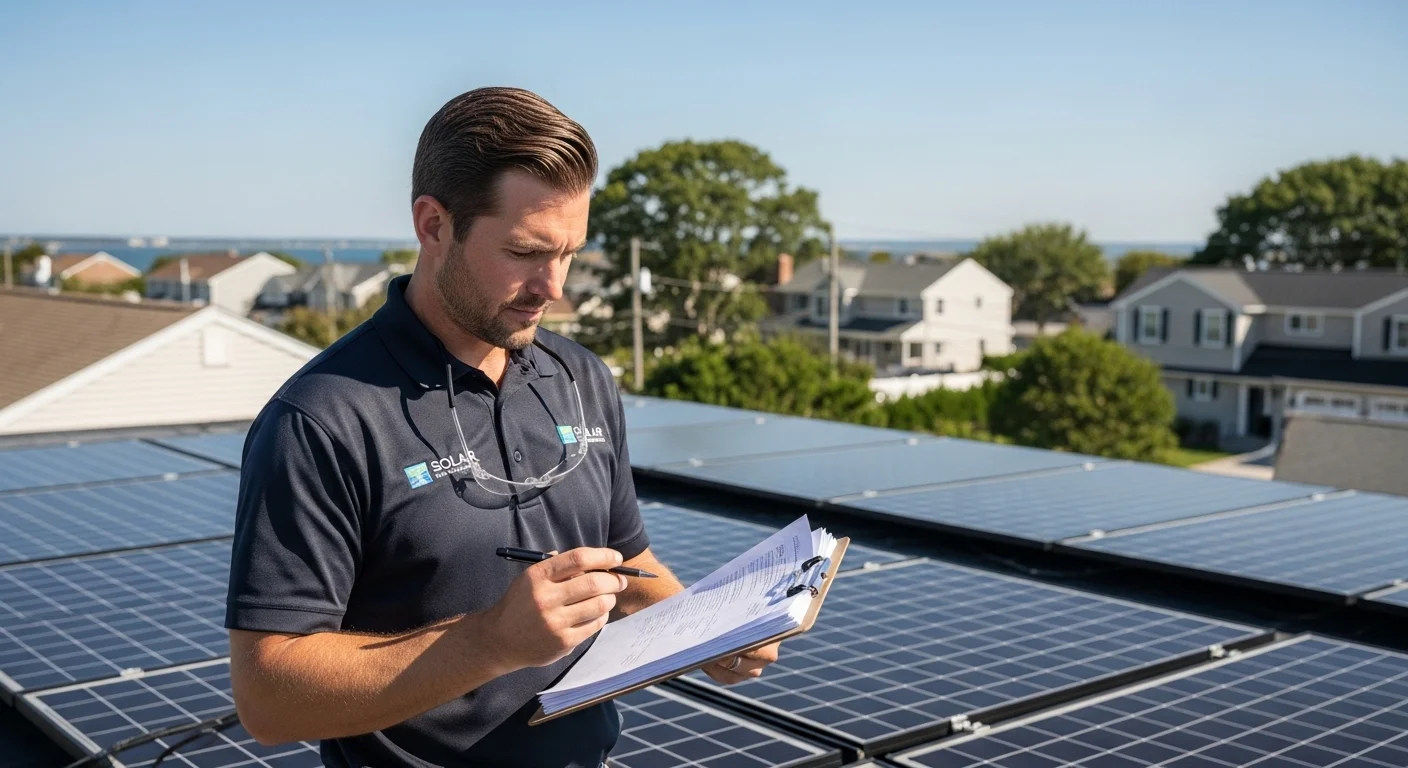
SolarRoofNY’s approach to solar installation on Long Island is built around the specific regulatory, utility, and technical environment that governs solar PV systems in Nassau and Suffolk Counties. Every SolarRoofNY installation begins with a comprehensive site assessment that evaluates roof condition and structural capacity, shading analysis across seasonal sun angles, and electrical service capacity.
Protecting Your Investment With Master Electrician Supervised Installations
Every SolarRoofNY installation has its electrical work supervised by a New York State licensed master electrician with specific experience in solar PV systems. This supervision ensures the electrical interconnection, grounding, rapid shutdown system, and conduit work meet both NEC Article 690 requirements and the specific requirements of the local authority having jurisdiction.
Equipment warranty protection is maintained through SolarRoofNY’s certified installer status with the major solar equipment manufacturers, including solutions for commercial solar installation.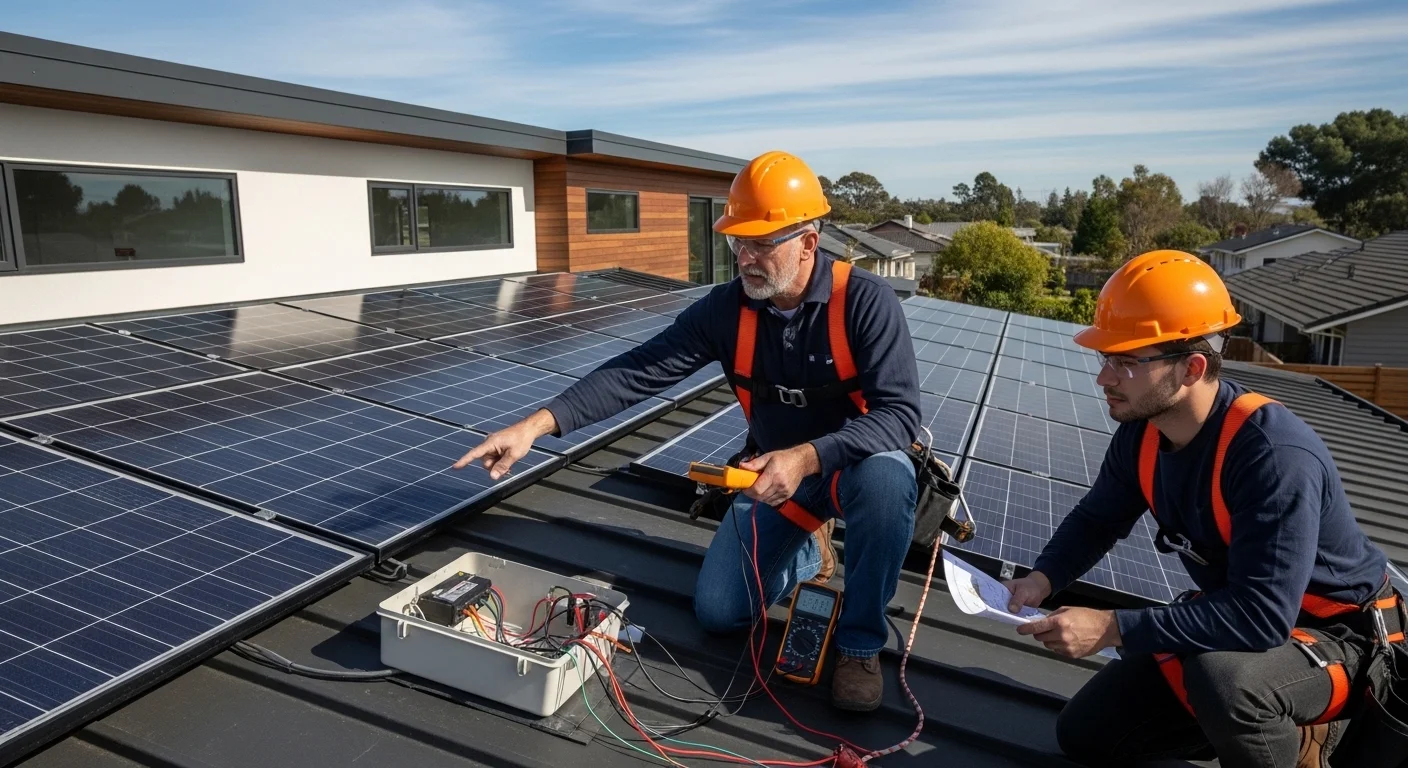
Schedule Your Certified Solar Assessment With SolarRoofNY Today
If you are considering solar for your Long Island home, the right starting point is a professional site assessment that provides accurate, property-specific information on your solar potential, optimal system size, and realistic production estimates. SolarRoofNY’s certified solar assessments are conducted by NABCEP-credentialed professionals who know the Nassau and Suffolk County permitting environment.
Conclusion
Can an electrician install solar panels? Technically, parts of a solar installation fall within electrical licensing scope and those parts must be performed by or under the supervision of a licensed electrician. But a solar PV installation is not primarily an electrical project. It is a complex, multi-disciplinary project that integrates structural engineering, system design, utility interconnection, and code compliance into a single coordinated process.
For Long Island homeowners, the answer is not whether to involve a licensed electrician; it is whether to hire a solar installation company that employs NABCEP-certified installers and supervises every installation with a licensed master electrician whose credentials are on the line with every project they approve.
Start Your Long Island Solar Journey
Get an assessment from NABCEP-certified professionals who understand PSEG and local codes.