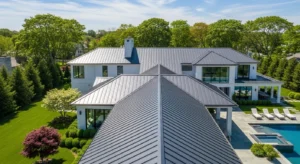
Your roof is a supersize shield between you and the sun, making a big difference in how much you spend on heating and cooling your home. When you’re considering a new roof, energy efficiency should be among your top priorities. One reason standing seam metal roofs surged in popularity over the last several years is their energy efficiency. But are they actually as energy-efficient? Is a metal roof really more energy-efficient, or are there better, cost-effective ways to manage your energy expenses?
Standing seam metal roofs are among the most energy-efficient choices for a new roof. The shiny surfaces reflect solar heat rather than absorbing it and can lower cooling costs by 10-25%. In the colder months, they may even contribute to heating costs. Let’s take a closer look at how they work, why they work so well, and whether they’re the right choice for your home and climate.
What Is a Standing Seam Metal Roof?
Standing seam roofs are composed of vertical metal panels that run from the ridge (the top of your roof) to the eaves (the bottom). The panels overlap and join with raised seams that stand above the roof’s surface. These are generally constructed from steel, aluminum, zinc, or copper and are finished with specialized paint to improve performance.
The Three Key Energy Efficiency Factors
First, let’s talk about what makes standing-seam metal roofs different from other roofing materials when it comes to energy efficiency. There are three main scientific metrics to consider:
- Solar Reflectance: Measures how much solar energy bounces off your roof. Traditional dark shingles reflect only 5-15%, while metal roofs can reflect 25-70% of solar energy before it ever becomes heat in your home.
- Thermal Emittance: The ability to release absorbed heat. Metal roofs have high thermal emittance, meaning they quickly radiate heat back out rather than holding onto it.
- Low Thermal Mass: Metal does not act as a “heat battery.” It cools down rapidly after sunset, whereas materials like concrete or clay tiles store and slowly release heat into the home all evening.
How Standing Seam Metal Roofs Reflect Heat
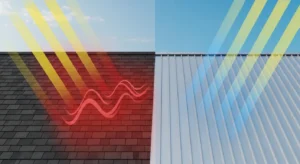
When sunlight strikes your roof, it carries energy that wants to be transformed into heat. A dark asphalt shingle absorbs most of this, often reaching 150-190°F. A metal roof with a reflective coating performs differently. Highly reflective or painted metal reflects 60-70% of solar energy and absorbs significantly less than shingles. The surface temperature of a metal roof may be only 100-120°F, creating a difference of up to 60°F or more.
This cooler surface has a spiraling effect on your home’s climate. The heat dissipation can make your attic 20-30°F cooler. The cooler the attic, the less heat seeps through your ceiling insulation, requiring less energy from your air conditioner to keep your space comfortable. Recent research indicates that in hot climates, this can lower cooling energy bills by 10-25%.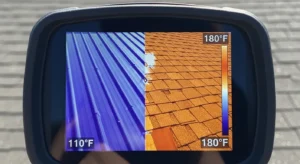
| Metric | Dark Asphalt Shingles | Standing Seam Metal |
|---|---|---|
| Solar Reflectance | 5 – 10% | 25 – 70% (Cool Coatings) |
| Surface Temp (Summer) | 170 – 190°F | 100 – 130°F |
| Cooling Savings | Baseline | 10 – 25% Reduction |
The Role of Cool Roof Coatings
Not all metal roofs are created equal. The coating makes a massive difference. Cool Roof Pigmented Coatings (CRPC) use advanced pigments to reflect infrared light that our eyes can’t see. Even darker colors like bronze or brown can achieve 30-40% solar reflectance. Premium coatings, such as Kynar 500 (PVDF), are known for their durability and high reflectance, ensuring the roof stays efficient for decades. Standards for these materials are often evaluated by organizations like the International Code Council (ICC) to ensure they meet rigorous safety and performance benchmarks.
Seasonal Temperature Performance
Metal roofs provide the greatest benefit during peak cooling loads in the summer. They protect against excessive heat gain and improve indoor comfort by reducing the radiant heat that warms ceiling surfaces. In the winter, the impact is more limited, but metal’s low thermal mass prevents it from drawing heat away from the home once the sun goes down. In extremely cold climates, studies have shown that the summer cooling benefits still outweigh minimal winter penalties, especially when paired with good insulation.
50-Year Lifetime Cost Comparison
While a standing seam metal roof costs more initially—roughly $16,000 to $28,000 compared to $7,000 to $11,000 for asphalt—the long-term story is different. Over 50 years, asphalt shingles typically require 2 to 3 full replacements, potentially costing over $33,000 when factoring in inflation and repairs. Metal roofs typically last 50+ years without needing replacement. When you add cooling savings of approximately $150 per year ($7,500 over 50 years), the total effective expense for metal drops significantly, offering a potential $17,000+ advantage over asphalt.
Installation Quality and Insulation Impact
The thermal efficiency of a metal roof depends heavily on proper installation. Even the most reflective standing seam will underperform without proper ventilation and air sealing. High-quality synthetic underlayment and ridge/soffit ventilation are essential for letting trapped heat escape. Additionally, maintaining insulation levels between R-38 and R-60 helps even out indoor temperatures. A radiant barrier system, coupled with professional air sealing, allows your roof to work in concert with your HVAC system to minimize utility bills.
Invest in Long-Term Efficiency
Ready to lower your energy bills for the next 50 years? Contact our experts for a custom metal roofing quote!
Conclusion
A standing seam metal roof with a cool roof coating is one of the best energy-efficient investments you can make for your home. The physics is solid: by reflecting solar heat and cooling down rapidly, these roofs significantly lower the workload on your HVAC system. While the upfront cost is higher, the unparallelled durability and annual energy savings ensure that the long-term ROI is overwhelmingly positive. If energy efficiency and long-term value are your priorities, standing seam metal roofing should be at the top of your list.